Say Goodbye to Dry Hair with These Chicago Spa Hair Masks
July 5, 2026
The Best Organic Skin Firming Wraps for a Natural Glow
July 9, 2026
Half of All Adults Deal With Scalp Flaking — Here’s What Actually Works
Finding the right dry scalp and dandruff treatment can feel overwhelming, especially when the two conditions look almost identical but need completely different fixes.
Quick answer — the most effective treatments by condition:
| Condition | Best First Step | Key Ingredients to Look For |
|---|---|---|
| Dry scalp | Moisturizing, sulfate-free shampoo | Hyaluronic acid, aloe vera, glycerin |
| Mild dandruff | OTC anti-dandruff shampoo | Pyrithione zinc, selenium sulfide |
| Moderate dandruff | Antifungal shampoo | Ketoconazole 1%, ciclopirox |
| Severe dandruff / seborrheic dermatitis | See a dermatologist | Prescription-strength ketoconazole 2%, topical corticosteroids |
Up to 50% of adults worldwide experience scalp flaking or itching at some point. Yet most people reach for the wrong product — treating dandruff like dry scalp, or vice versa — and wonder why nothing works.
The core problem is simple: dry scalp comes from too little moisture, while dandruff comes from too much oil. One needs hydration. The other needs an antifungal or exfoliating approach. Using the wrong treatment can actually make things worse.
This guide cuts through the confusion. Whether you have a few minutes between meetings or you’re ready to invest in a professional scalp treatment, you’ll find a clear, practical path to relief.
Dry Scalp vs. Dandruff: Key Differences and Causes
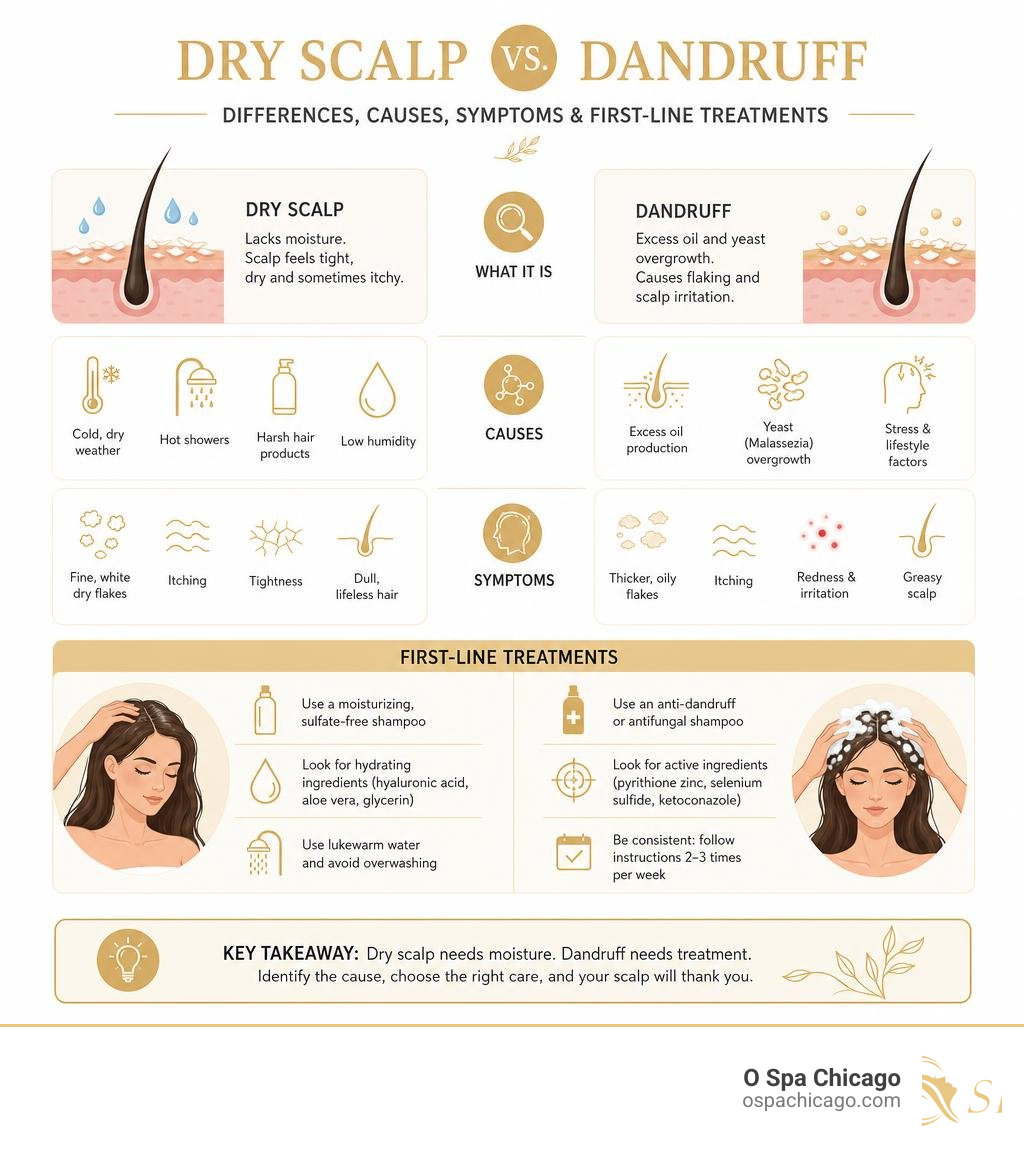
To pick the correct dry scalp and dandruff treatment, you must first play detective and identify what is happening on your head. Misdiagnosing your scalp health can lead to weeks of frustration. If you treat a dry scalp with harsh, oil-stripping anti-dandruff shampoos, you will likely deplete whatever precious moisture you have left. Conversely, piling heavy oils onto active dandruff will only feed the yeast causing the issue.

The root causes of these two conditions are fundamentally different:
- Dry Scalp (Moisture Loss): This is a hydration issue. Just like the skin on your face or hands, your scalp can lose its natural moisture barrier. This causes the skin cells to dry up, shrink, and flake off. It is often triggered by cold winter air, dry indoor heating, or over-washing with harsh, synthetic soaps.
- Dandruff (Excess Oil and Yeast overgrowth): True dandruff is an inflammatory condition. It is closely linked to an overgrowth of Malassezia, a yeast-like fungus that naturally lives on everyone’s scalp. Malassezia feeds on sebum (the natural oil produced by your hair follicles). When there is an excess of sebum, this yeast multiplies rapidly, breaking down the oil into irritating byproducts. This triggers an inflammatory response that causes your body to shed skin cells at an accelerated rate.
When dandruff becomes more severe and widespread, it is classified as seborrheic dermatitis. This chronic inflammatory condition has a general prevalence of 1% to 5% in the population, but it can jump significantly higher in immunocompromised individuals. For a deep dive into the clinical characteristics of this condition, you can refer to the Seborrheic Dermatitis – Dermatology – Merck Manual Professional Edition.
Beyond simple dryness and fungal overgrowth, other underlying medical conditions can cause flaking:
- Contact Dermatitis: An allergic reaction or irritation from hair dyes, fragrances, or harsh preservatives. Choosing clean, botanical hair care can prevent this. You can read about how avoiding synthetic irritants protects your skin barrier in our guide on The Benefits of Choosing Natural Spa Services Over Synthetic Options.
- Psoriasis: An autoimmune condition that causes rapid skin cell turnover, resulting in thick, well-demarcated silvery plaques rather than loose, powdery flakes.
- Tinea Capitis: A highly contagious fungal infection (ringworm) that requires prescription oral antifungals and is characterized by localized hair loss and crusting.
To help you tell them apart, look closely at your flakes in the mirror:
| Symptom | Dry Scalp | Dandruff / Seborrheic Dermatitis |
|---|---|---|
| Flake Color | Translucent or white | Yellowish, off-white, or greyish |
| Flake Texture | Dry, tiny, loose, powdery | Large, oily, sticky, clumped |
| Scalp Sensation | Tightness, mild itching | Intense itching, burning, inflammation |
| Scalp Appearance | Dry, pinkish, or normal | Red, irritated, oily, or shiny |
| Other Areas | Dry skin elsewhere (arms, legs, face) | Oily patches on eyebrows, nose, or ears |
Choosing the Right Dry Scalp and Dandruff Treatment for Your Hair Type
Once you have identified your scalp’s primary struggle, you can select a targeted dry scalp and dandruff treatment. Finding the right routine requires looking closely at your sebum production and your hair’s unique texture.

According to the Dandruff – Diagnosis and treatment – Mayo Clinic, effective management requires matching the active ingredients to the severity of your symptoms.
How to Assess Your Scalp Type in 4 Steps
Before buying any new product, run this quick self-assessment:
- The Pinch Test: Gently pinch the skin on your scalp (where possible, such as near the hairline). If it feels tight, inflexible, or dry, you are likely dealing with a hydration deficiency.
- The Touch Test: Part your hair and press a clean fingertip firmly against your scalp. If your finger comes away shiny or greasy, your scalp is producing excess sebum, making it a prime environment for dandruff.
- The Flake Inspection: Brush your hair over a dark towel. Powdery, snow-like dust indicates a dry scalp. Sticky, yellowish clumps that cling to your hair shafts indicate dandruff.
- The Redness Check: Use a hand mirror to inspect your parts. Significant redness, scaling, or patches of raised skin point toward seborrheic dermatitis or psoriasis rather than simple dry skin.
Over-the-Counter Dry Scalp and Dandruff Treatment Ingredients
If your assessment points toward dandruff, look for over-the-counter (OTC) medicated shampoos. These products rely on specific active ingredients to target Malassezia yeast and break down scaling:
- Ketoconazole: A powerful, broad-spectrum antifungal. It is widely considered the gold standard for treating moderate dandruff. It works by disrupting the yeast’s cellular membranes.
- Pyrithione Zinc: A gentle yet effective antimicrobial and antifungal agent. It helps reduce yeast populations on the scalp and is commonly found in everyday anti-dandruff shampoos.
- Selenium Sulfide: Another potent antifungal that slows down the rate at which your scalp cells shed while actively killing yeast. It can sometimes discolor light, blonde, or color-treated hair if not rinsed thoroughly.
- Salicylic Acid: A beta-hydroxy acid (BHA) that acts as a keratolytic agent. It chemically exfoliates the scalp, softening and lifting away thick, stubborn scales so they can be washed away easily.
- Coal Tar: An ingredient that slows the rapid growth of skin cells on the scalp and reduces inflammation. It is highly effective for psoriasis and severe seborrheic dermatitis but can make your scalp more sensitive to sunlight and can darken light-colored hair.
For an international perspective on managing these symptoms, the JLE – European Journal of Dermatology – A comprehensive literature review and an international expert consensus on the management of scalp seborrheic dermatitis in adults highlights the importance of rebalancing the scalp microbiome rather than just aggressively stripping away oils.
If your issue is a dry scalp, avoid aggressive antifungal ingredients, which can strip away your natural barrier. Instead, look for hydrating ingredients like:
- Hyaluronic Acid: A powerful humectant that holds up to 1,000 times its weight in water, delivering instant hydration to parched skin cells. In clinical studies, over 75% of participants reported a significant reduction in scalp itchiness after 4 weeks of using a hyaluronic acid-based scalp treatment.
- Aloe Vera and Glycerin: Natural soothing agents that draw moisture into the skin while calming redness and irritation.
- Tea Tree Oil: A natural essential oil with mild antiseptic and anti-inflammatory properties. While it can help soothe an itchy scalp, it should be used in low concentrations to avoid causing allergic contact dermatitis.
Professional Dry Scalp and Dandruff Treatment Options
When over-the-counter options fail to provide relief, it may be time to seek professional treatments.
For severe, stubborn dandruff or seborrheic dermatitis, a medical professional can prescribe stronger topical solutions:
- Prescription Antifungals: Stronger formulations, such as 2% ketoconazole shampoos or ciclopirox gels, which eliminate stubborn yeast populations.
- Topical Corticosteroids: Short-term anti-inflammatory solutions (like hydrocortisone, fluocinolone, or clobetasol solutions) that quickly reduce intense itching, swelling, and redness.
- Calcineurin Inhibitors: Non-steroidal topical creams (such as tacrolimus or pimecrolimus) that calm the immune response on the scalp without the long-term side effects of steroids, such as skin thinning.
For a thorough medical review of these clinical options, consult the Seborrheic Dermatitis: Diagnosis and Treatment review.
If you are dealing with dry scalp and hair damage, professional salon and spa treatments offer deep, restorative hydration. Deep-conditioning masks, scalp steaming, and professional exfoliation can clear away buildup while restoring moisture. To learn how to treat dry, brittle hair alongside your scalp care, explore our guide on how to Say Goodbye to Dry Hair with These Chicago Spa Hair Masks.
Tailoring Treatments for Textured, Curly, and Color-Treated Hair
One size does not fit all when it comes to scalp care. Hair texture and grooming habits vary across different ethnic groups, and your treatment plan must adapt accordingly.
Dandruff and scalp dryness affect people differently across populations. Research shows that dandruff prevalence is highest in African Americans (ranging from 81% to 95%), compared to 66% to 82% in Caucasians, and 30% to 42% in Asian subjects.
- Textured, Coiled, and Kinky Hair: Coiled hair is naturally drier because sebum has a harder time traveling down the spiral hair shaft. Washing daily with medicated shampoos can dry out the hair, leading to severe breakage. If you have textured hair, limit medicated shampoo sessions to once a week. Apply the active treatment directly to your scalp, leave it on for 5 to 10 minutes, and follow up with a rich, moisture-restoring conditioner or leave-in oil (like argan or coconut oil) on the lengths of your hair.
- Color-Treated and Chemically Processed Hair: Many traditional dandruff shampoos contain harsh sulfates (like sodium lauryl sulfate) that strip away hair dye and moisture. Look for sulfate-free, color-safe anti-dandruff formulas. Avoid coal tar and selenium sulfide, which can discolor light or chemically lightened hair. Always follow up with a deeply hydrating, color-safe conditioner to keep your hair healthy and vibrant.
Lifestyle Adjustments and Home Remedies for Lasting Relief
While targeted products are crucial, long-term scalp health relies on daily habits. Making small adjustments to your lifestyle can prevent flare-ups and keep your scalp comfortable.
- Stay Hydrated: Drink plenty of water throughout the day. Your skin is your body’s largest organ, and cellular hydration starts from within.
- Manage Stress: High stress levels trigger the release of cortisol, which can disrupt your skin barrier and cause inflammatory flare-ups, including dandruff. Incorporate relaxation techniques like meditation, yoga, or professional massage into your weekly routine.
- Adjust Your Wash Frequency: If you have a dry scalp, try waiting an extra day or two between washes to let your natural oils hydrate your skin. If you are prone to dandruff, washing your hair regularly (two to three times a week) prevents sebum buildup that feeds yeast.
- Turn Down the Water Temperature: Hot showers strip away the scalp’s protective lipid barrier, worsening dryness and irritation. Wash your hair with lukewarm water instead.
- Use a Humidifier: If you live in a dry climate or experience cold winters, run a cool-mist humidifier in your bedroom overnight to keep the air—and your skin—hydrated.
- Get Safe Sun Exposure: A few minutes of daily sunlight can help control the yeast that causes dandruff. Just be sure to protect your face and neck with sunscreen.
For more evidence-based self-care strategies, you can review the Seborrheic dermatitis – Diagnosis and treatment – Mayo Clinic guidelines.
Frequently Asked Questions
When should I see a dermatologist for scalp flaking?
You should schedule an appointment with a dermatologist or healthcare provider if your symptoms do not improve after two to four weeks of consistent over-the-counter treatment. Seek professional help sooner if you experience persistent, severe itching that disrupts your sleep, extreme redness, swelling, oozing, or if you notice patches of hair loss. A professional can rule out conditions like scalp psoriasis or fungal infections. For those in the Chicago area looking for clinical care, you can read about professional medical evaluations at the Dandruff Treatment | Chicago Skin Clinic.
Can anti-dandruff shampoos make a dry scalp worse?
Yes. Many over-the-counter anti-dandruff shampoos are formulated with strong surfactants and active ingredients designed to strip away excess oil. If your flaking is caused by a dry scalp rather than dandruff, these products will strip away whatever natural moisture you have left, worsening dryness, irritation, and flaking. If you must use a medicated shampoo, rotate it with a gentle, sulfate-free moisturizing shampoo to protect your scalp’s moisture barrier.
How does the scalp microbiome affect flaking?
Your scalp is home to a complex ecosystem of bacteria and fungi, known as the scalp microbiome. In a healthy state, beneficial bacteria like Cutibacterium and yeast-like fungi live in balance to protect your skin barrier. When this balance is disrupted—a state called bacterial dysbiosis—harmful strains like Staphylococcus can overgrow. This weakens the skin barrier, triggers inflammation, and leads to itching and flaking. Maintaining a balanced microbiome through gentle cleansing and proper hydration is key to preventing chronic scalp issues.
Conclusion
Managing a flaky scalp does not have to be a guessing game. By understanding the key differences between dry scalp and dandruff, you can choose targeted, effective treatments that restore balance and comfort to your skin.
If you are ready to move past DIY remedies and experience a truly restorative treatment, we invite you to visit us at O Spa Chicago. Located in the heart of the River North neighborhood in Chicago, Illinois, our luxury day spa offers premium, personalized wellness experiences tailored to your unique needs.
We specialize in high-end, organic hair and scalp treatments designed to soothe irritation, clear away buildup, and deeply hydrate your skin. Whether you want to book a comprehensive scalp therapy session or simply need a same-day walk-in appointment to unwind, our expert team is here to help you feel refreshed from head to toe.
Ready to treat your scalp to the ultimate care? Explore our full range of organic treatments and book your visit on our Spa Services page today.