The Best Thai Massage Spots Near You for Ultimate Bliss
August 13, 2026
An Honest Review of Eucerin DermoCapillaire Calming Urea Shampoo
August 17, 2026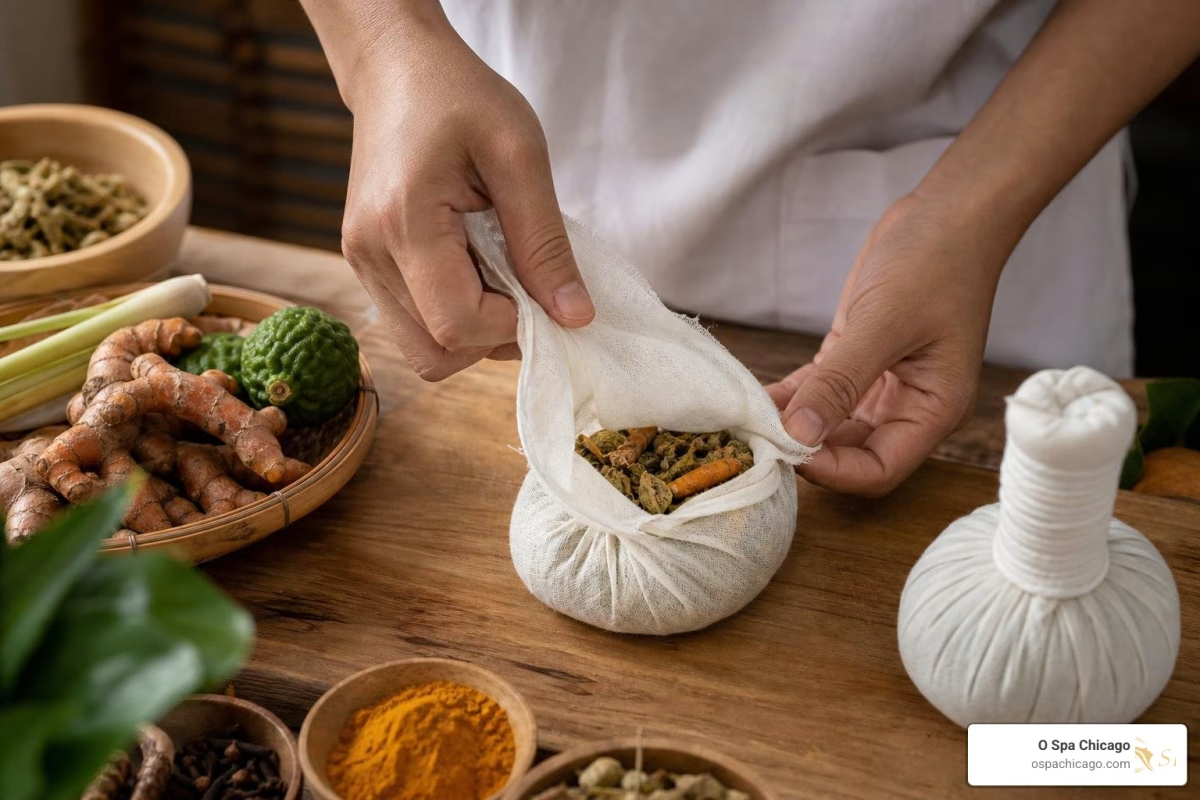
The Ancient Art of Making a Thai Herbal Compress Ball at Home
Learning how to make a Thai herbal compress ball is easier than you might think — and the results are genuinely therapeutic. Here’s the short version:
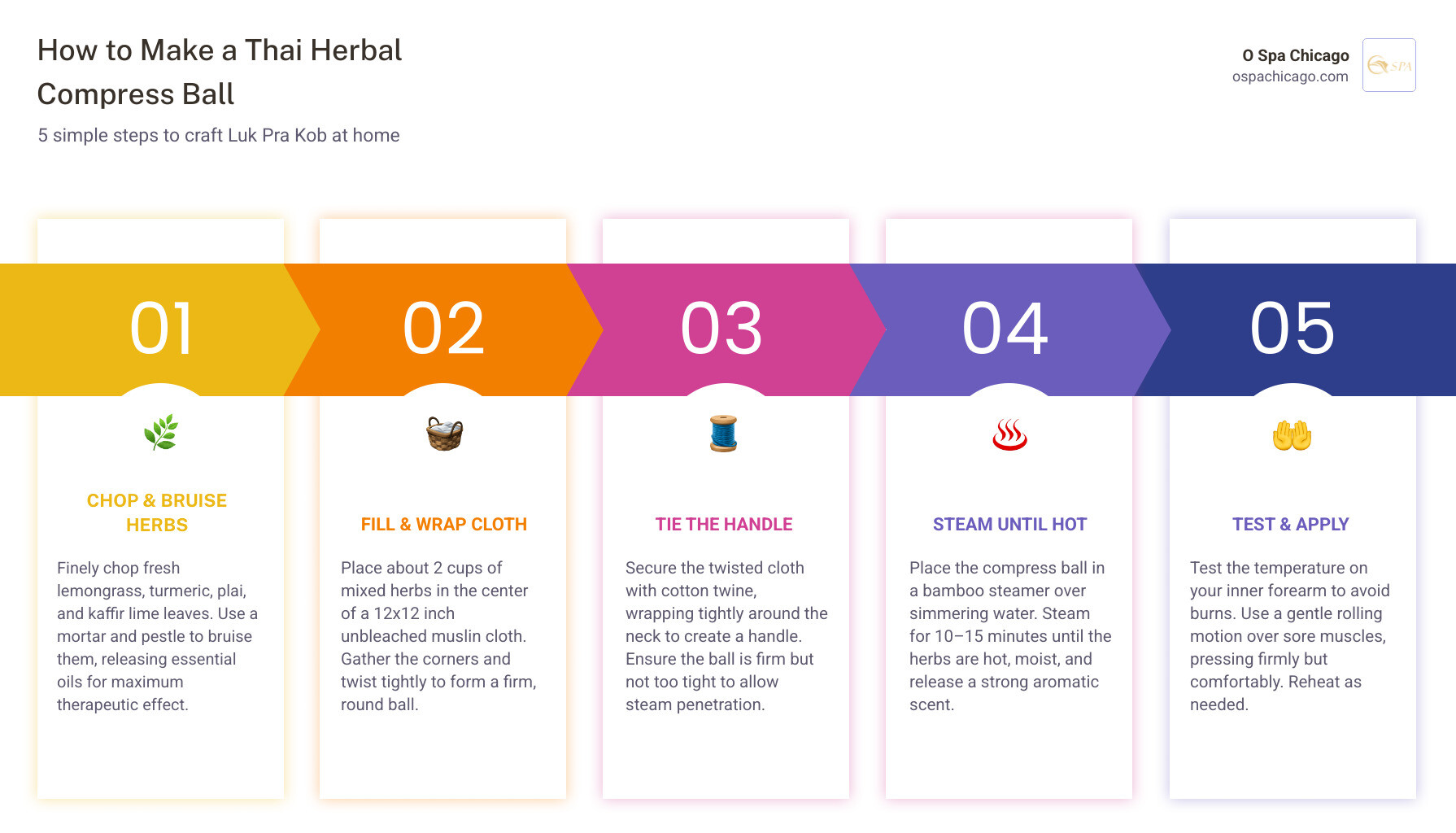
- Chop and bruise fresh herbs like lemongrass, turmeric, plai, and kaffir lime to release their oils.
- Place the herbs in the center of a 12×12 inch unbleached muslin or cotton cloth (about 2 cups of mixed herbs per ball).
- Gather the corners, twist tightly into a firm ball, and secure the handle with cotton twine.
- Steam for 10–15 minutes over simmering water until hot and aromatic.
- Test the temperature on your inner forearm before applying to sore muscles.
That’s the core process. But the details — which herbs to use, how to wrap it correctly, how to apply it safely — make all the difference between a compress that works and one that falls apart.
Thai herbal compress balls, known in Thailand as Luk Pra Kob (literally “pressing herbal sphere”), have been used for over 2,500 years to relieve muscle pain, reduce inflammation, and calm the nervous system. The therapy combines three powerful forces at once: heat, herbal medicine, and massage pressure. Think of it as a warm, medicated hug for your sore spots.
Walking through a Bangkok market and being stopped cold by the sharp scent of lemongrass and kaffir lime — that’s the moment many people first discover what this tradition is really about. That complex, spicy-citrus aroma isn’t just pleasant. It signals that the herbs inside are potent and ready to work.
I’m June Liu, a wellness specialist at O Spa Chicago, and in this guide I’ll walk you through everything you need to make an authentic compress at home — from ingredient sourcing to safe application.
What is a Thai Herbal Compress Ball (Luk Pra Kob)?
To truly appreciate this therapy, we have to look past the simple fabric bundle and understand the ancient science behind it. In traditional Thai medicine, a herbal compress is far more than a warm massage prop. It is a highly sophisticated delivery system for plant medicine.
History and Origins of Luk Pra Kob
The history of Luk Pra Kob stretches back more than 2,500 years. According to historical records, the practice was heavily influenced by Ayurvedic traditions brought to Thailand by Buddhist monks traveling from India. Over centuries, these techniques merged with indigenous Thai folk medicine to create a unique healing art.
In ancient Thailand, a closely related treatment known as Ya-Pao was used to detoxify the body, restore equilibrium among the body’s natural elements, and boost the immune system. Historically, these herbal compresses were a true “cure-all” accessible to everyone — from rural peasants working the rice fields to royal emperors in the ancient palaces. The herbs were gathered directly from local gardens and forest pathways, making it a highly sustainable, community-based form of healthcare.
At the core of this practice is the concept of Sen lines. Similar to the meridians used in traditional Chinese medicine and acupuncture, Sen lines are invisible energy pathways that run throughout the body. When our life force, or chi, becomes blocked along these pathways, we experience physical pain, stiffness, and emotional stress. The physical action of pressing a hot herbal compress along these lines is designed to clear those blockages, restoring a healthy flow of energy. For a deeper look into the philosophy of these healing bundles, check out What Are Herbal Compress Balls? A Complete Guide.
Proven Benefits of Thai Herbal Compress Therapy
While the spiritual history of Luk Pra Kob is fascinating, modern science has validated many of its physical benefits. When we apply a heated compress to the skin, we initiate a powerful “trifecta” of healing mechanisms:
- Thermotherapy: The moist heat from the steamed compress penetrates deep into muscle tissue, dilating blood vessels and dramatically increasing local blood circulation. This brings fresh oxygen and nutrients to damaged tissues while accelerating the removal of metabolic waste like lactic acid.
- Transdermal Absorption: As the steam heats the herbs, it releases their volatile essential oils. These microscopic medicinal compounds are absorbed directly through the skin’s pores, bypassing the digestive system to deliver targeted anti-inflammatory and analgesic (pain-relieving) benefits exactly where you need them.
- Aromatherapy: The rising steam carries the fragrant compounds of lemongrass, kaffir lime, and camphor straight to your olfactory system. This immediately triggers the brain to downregulate stress hormones, shifting the nervous system from a “fight-or-flight” state to a deeply relaxed “rest-and-digest” state.
Clinical studies have shown that this therapy is highly effective for managing chronic musculoskeletal pain, reducing joint stiffness from osteoarthritis, and even supporting postpartum lactation in new mothers by stimulating blood flow. At O Spa Chicago, we believe in the profound power of these natural mechanisms. To understand why we prioritize these botanical therapies over chemical alternatives, read about The Benefits of Choosing Natural Spa Services Over Synthetic Options.
Ingredients and Materials Needed for an Authentic Compress
The effectiveness of your homemade compress relies entirely on the quality and balance of your ingredients. While you can find simple DIY recipes that use common kitchen spices, an authentic Thai compress relies on a specific family of tropical roots, leaves, and aromatic crystals.
Sourcing Ingredients: How to Make a Thai Herbal Compress Ball Authentic
If you want to achieve the deep, muscle-melting benefits of a traditional compress, you should try to source the authentic botanicals used by Thai practitioners for generations. Here is a list of the essential traditional herbs and their specific therapeutic roles:
- Plai (Cassumunar Ginger): This is the absolute king of the Thai herbal compress. Plai is a golden-hued rhizome in the ginger family that contains highly potent anti-inflammatory compounds. Thai healers have used it for centuries to treat acute muscle spasms, joint swelling, ligament sprains, and chronic back pain. It is the single most important ingredient for pain relief.
- Turmeric: A natural anti-inflammatory and antioxidant powerhouse. Turmeric helps soothe skin irritation, reduces muscle soreness, and gives the compress its signature vibrant yellow color. (Just be careful — fresh turmeric will stain your hands, cutting boards, and towels a bright golden hue!)
- Lemongrass: Known for its refreshing, citrusy aroma, lemongrass acts as a natural antiseptic and skin toner. It helps clear mental fatigue while soothing muscular aches.
- Kaffir Lime (Peel or Leaves): Rich in essential oils, kaffir lime acts as a powerful decongestant and antioxidant. Its bright scent cuts through stress and helps purify the skin.
- Tamarind Leaves: Traditionally added to help soften the skin, draw out impurities, and act as a mild, natural astringent.
- Camphor and Borneol: These aromatic crystals are essential for the therapeutic process. They act as local mild anesthetics, creating a cooling sensation on the skin that counteracts the deep heat. Furthermore, they stimulate the heart and respiratory systems, opening up your sinuses and clearing your mind.
- Coarse Sea Salt: Salt acts as a natural heat retainer, helping the compress stay warm for much longer during your massage. It also aids in the transdermal absorption of the herbal oils.
Sourcing Challenges and Substitutes
Sourcing fresh Plai or fresh kaffir lime leaves can be quite challenging if you are shopping at a standard grocery store in Chicago. If you cannot find them at local international markets in the River North area, you can easily substitute them with high-quality dried versions, or use fresh ginger and eucalyptus leaves as highly effective, accessible alternatives.
For a fantastic, detailed dive into the traditional recipes and botanical ratios, we highly recommend reading the Entry To Herbal Medicine: Thai Herbal Compresses.
Fresh vs. Dried Herbs: Which is Best?
You can make a highly effective compress using either fresh or dried herbs. However, they behave very differently during preparation, heating, and storage.
| Feature | Fresh Herbs | Dried Herbs |
|---|---|---|
| Moisture Content | High (creates its own rich, wet steam) | Extremely low (requires pre-spritzing with water) |
| Aroma & Scent | Sharp, bright, highly vibrant and citrusy | Deep, earthy, spicy, and highly concentrated |
| Preparation Labor | High (requires washing, peeling, chopping, and bruising) | Low (usually comes pre-cut or crushed) |
| Shelf Life (Unused) | Very short (must be frozen immediately to prevent mold) | Very long (can store in an airtight jar for up to a year) |
| Reusability | 3–4 times (must be kept frozen between uses) | 5–6 times (easier to dry out completely) |
If you are looking for a deeply sensory, traditional experience, fresh herbs are unmatched. However, if you want convenience, a longer shelf life, and a simpler preparation process, high-quality dried herbs are a fantastic choice.
How to Make a Thai Herbal Compress Ball: A Step-by-Step DIY Guide
Now that we have gathered our ingredients, it is time to assemble our compress. Making these bundles by hand is a beautifully tactile, meditative process that connects you directly to the healing power of the plants.
Step-by-Step Instructions on How to Make a Thai Herbal Compress Ball
For this recipe, we will make a standard-sized body compress (approximately 150 to 200 grams), which is ideal for treating the neck, shoulders, and back.
Materials Needed:
- 2 cups of your chosen herbal mix (fresh or dried)
- Two squares of unbleached muslin or 100% natural cotton cloth (12×12 inches or 30×30 cm per ball)
- 1 yard of thick cotton twine or jute cord
- A pair of sharp scissors
- A mortar and pestle (or a rolling pin)
- A cutting board and knife
- Gloves (highly recommended to prevent yellow turmeric stains!)
Step 1: Prep the Botanicals
If you are using fresh ingredients, wash them thoroughly and pat them dry. Chop your fresh roots (ginger, turmeric, galangal) and stalks (lemongrass) into rough, 1-inch pieces. This increases the surface area, allowing the steam to extract the oils more efficiently.
Place the chopped herbs into your mortar and pestle. Gently pound and bruise the mixture. You are not trying to create a smooth, wet paste; rather, you want to crack the fibrous stalks and crush the roots just enough to release their aromatic juices and essential oils. You will know you have hit the sweet spot when the room suddenly fills with a complex, spicy, and citrusy aroma.
Step 2: Mix the Dry Elements
In a large mixing bowl, combine your bruised fresh herbs (or your dry herb blend) with your coarse sea salt, camphor, and borneol crystals. Mix the ingredients thoroughly with your hands (wear gloves!) to ensure the salt and aromatic crystals are evenly distributed throughout the herbal blend.
Step 3: Lay Out the Fabric
Lay your two squares of unbleached muslin flat on your clean workspace, stacking one directly on top of the other. Using a double layer of fabric is a crucial professional secret — it adds essential durability, preventing the herbs from tearing through the cloth while you are pressing and rolling the hot compress firmly over the skin.
Step 4: Form the Compress Sphere
Pour your herbal mixture directly into the exact center of the stacked fabric squares.
Gather the four corners of the fabric and pull them straight up together. Squeeze the fabric tightly just above the herbal pile, packing the herbs down into a very firm, solid, round ball. The tightness of your wrap is incredibly important: if it is too loose, the ball will go flat and fall apart during your massage; if it is wrapped too tightly, the steam won’t be able to penetrate the core to heat the herbs evenly. Aim for the firmness of a tightly packed baseball.
Step 5: Wrap and Tie the Handle
While holding the neck of the bundle tightly with one hand, take your cotton twine and tie a very secure double knot at the base of the handle, right against the herbal sphere.
Wrap the twine tightly up the neck of the gathered fabric, wrapping it multiple times to create a solid, sturdy, stem-like handle that is about 3 to 4 inches long. Once you reach the top of the handle, fold any excess fabric flap back down over the handle, wrap the twine back down to the base, and tie it off with another extremely secure knot. Cut away any loose string. You now have a professional-grade Luk Pra Kob ready for the steamer!
For a beautifully illustrated visual guide on perfecting this wrapping technique, you can explore How to Make a Thai Herbal Compress Ball: A DIY Guide.
How to Heat, Apply, and Store Your Compress Ball
To activate the healing power of the herbs, the compress must be heated using moist, even heat. How you heat, apply, and care for your compress will determine both the safety of your treatment and the lifespan of your handmade bundle.
Steaming vs. Microwaving: The Best Way to Heat Your Compress
There are two primary ways people heat compresses at home, but they are definitely not created equal.
The Gold Standard: Traditional Steaming
Traditional steaming is hands-down the best and safest way to heat your compress.
- The Process: Fill a bamboo steamer, an electric food steamer, or a standard kitchen pot with a steamer basket with a few inches of water. Bring the water to a rolling boil. Place your compress balls in the steamer tray, cover with a tight lid (or drape clean hand towels over the top to trap the steam), and steam for 10 to 15 minutes (or up to 20 minutes if using a large, dense compress).
- Why it works: The moist steam gently hydrates the herbs, melting the camphor and borneol crystals and carrying the volatile essential oils outward to the surface of the cotton fabric. This ensures a perfectly even, incredibly soothing, moist heat.
The Risky Shortcut: Microwaving
While it may be tempting to throw your compress into the microwave for a quick 90 seconds, we strongly advise against it.
- The Dangers: Microwaves heat from the inside out using dry wave energy. This can easily scorch and burn the delicate herbs at the center of your compress, creating dangerous, hidden “hot spots” that can severely burn your skin. Furthermore, dry heat degrades the therapeutic properties of the essential oils, and if you leave it in too long, the dry rice or herbs can actually catch fire. If you absolutely must use a microwave, you have to thoroughly soak the compress in water first and microwave it in short, 30-second bursts, but the traditional steaming method remains vastly superior.
For professional insights on the science of steaming compresses, take a look at Making Herbal Compresses for Authentic Thai Massage.
Safe Application and Storage Techniques
Once your compress is hot and steaming, it is time to apply it. But before you press it onto the body, you must prioritize skin safety.
Step 1: Temperature Testing
The fabric of a freshly steamed compress will be incredibly hot — often hot enough to cause minor burns if applied directly to bare skin. Always test the temperature of the compress on your inner forearm first. If it feels too hot for comfort, let it cool for a minute, or wrap it in a clean, dry face towel before applying.
Step 2: The Art of Application
When you first apply the hot compress, keep it in constant, gentle motion. Use a rapid, light patting or tapping motion. As the compress begins to cool slightly, transition into firm, steady pressing. Press the compress down onto sore muscle groups, holding it in place for 10 to 30 seconds while taking deep, slow breaths to inhale the therapeutic aromas. Finish by using long, slow rolling and rocking motions along the muscle fibers and Sen energy pathways.
Step 3: Proper Storage and Reusability
To get the most out of your hard work, you must care for your compress properly between sessions. A well-constructed, properly stored compress can be reused 4 to 6 times before the herbs lose their therapeutic potency.
- Cool Down: After your massage, let the compress air-dry completely in a clean, well-ventilated space. Never store a damp compress, as the trapped moisture will rapidly lead to mold and bacterial growth.
- Seal and Chill: Once it is completely dry, place the compress in a clean, airtight zip-top bag. Store it in the refrigerator if you plan to use it again within 2 weeks. If you want to keep it fresh for up to several months, store it in your freezer.
- The Discard Cue: Always inspect your compress before heating it. If you notice any signs of mold, a sour smell, or a distinct burning aroma when heating, it is time to discard the bundle and make a fresh one.
Frequently Asked Questions about Thai Herbal Compresses
Is it safe to use a Thai herbal compress ball during pregnancy?
Generally, yes, but you must exercise extreme caution. The deep heat of a traditional compress can raise core body temperature, which should be avoided during pregnancy. Furthermore, certain powerful essential oils and herbs used in traditional compresses (such as high concentrations of camphor or certain warming roots) may not be recommended for pregnant women. If you are pregnant, we highly recommend consulting with your obstetrician before using any herbal therapies, keeping the temperature warm rather than hot, and avoiding application near the abdomen or lower back.
What should I look for when buying pre-made Thai herbal compresses?
If you don’t have the time to make your own, buying pre-made compresses is a wonderful alternative. However, many cheap, mass-produced compresses on the market are filled with low-quality, powdery, or stale herbs.
To ensure you are buying a high-quality product:
- Check the Texture: Gently squeeze the dry compress. It should feel firm but slightly springy. If it feels like it is filled with fine, uniform sand, it likely contains cheap, powdered herbs that will seep through the cloth and won’t retain heat well. High-quality compresses use coarsely crushed or broken herbs.
- Inspect the Color and Scent: If possible, look for compresses wrapped in unbleached, natural cotton. The scent of the dry compress should be strong, sharp, and aromatic. If it smells dusty, like old hay, the herbs are stale and have lost their therapeutic value.
- Read the Ingredients: Ensure that traditional therapeutic herbs like Plai (often listed as Cassumunar Ginger), lemongrass, and turmeric are listed near the top of the ingredient list.
How many times can I reuse a homemade Thai herbal compress ball?
A homemade compress can typically be reused 4 to 6 times. To maintain strict hygiene — especially if you are sharing the compress with family members — we recommend wrapping the heated compress in a clean, thin face towel before applying it to the skin, or applying it over clean, light clothing. This prevents skin oils and sweat from transferring onto the muslin cloth, keeping your compress clean, fresh, and sanitary for multiple uses. Always discard the compress immediately if you smell any hint of burning rice or sour, moldy herbs.
Conclusion
Learning how to make a Thai herbal compress ball is a beautiful gateway into traditional botanical medicine. By taking the time to select authentic herbs, gently bruise them to release their vital oils, and wrap them with care, you are creating a deeply therapeutic tool that can melt away chronic tension, soothe aching joints, and quiet a busy mind.
While crafting these bundles at home is a rewarding DIY project, we understand that sometimes you just want to lay back, close your eyes, and let a professional handle your path to relaxation.
If you are in the Chicago area and ready to experience the ultimate in personalized, organic wellness, we invite you to join us at O Spa Chicago. Located in the heart of River North, our luxury day spa offers a peaceful sanctuary where you can experience the deep, restorative power of traditional bodywork.
Explore our premium Spa Services or book a deeply therapeutic session from our specialized Massage Services today. Let us pamper you with the finest organic products and customized treatments designed to restore your body to its perfect, natural equilibrium. For more holistic wellness inspiration and traditional self-care recipes, browse our Blogs. We look forward to welcoming you soon!