Step Inside the World of Lotus Massage Spa Treatments
September 3, 2026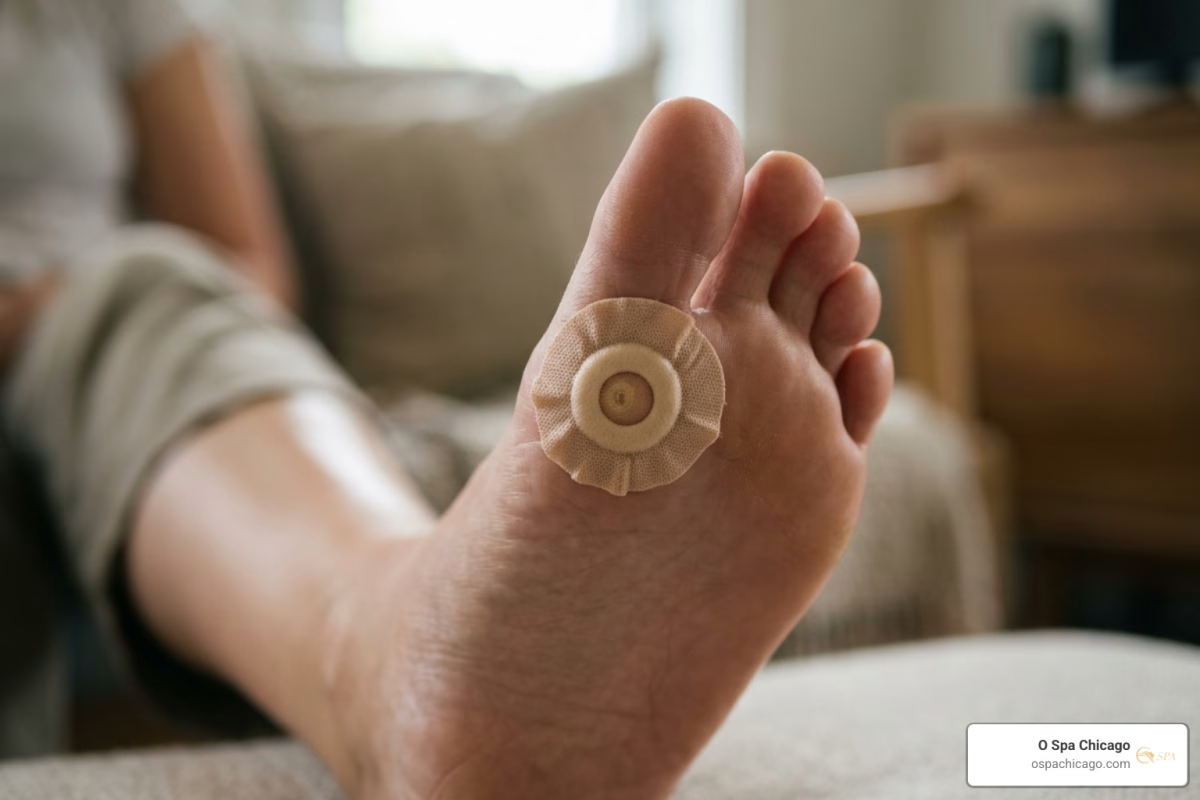
Use Corn Removal Pads Safely for Faster Foot Relief
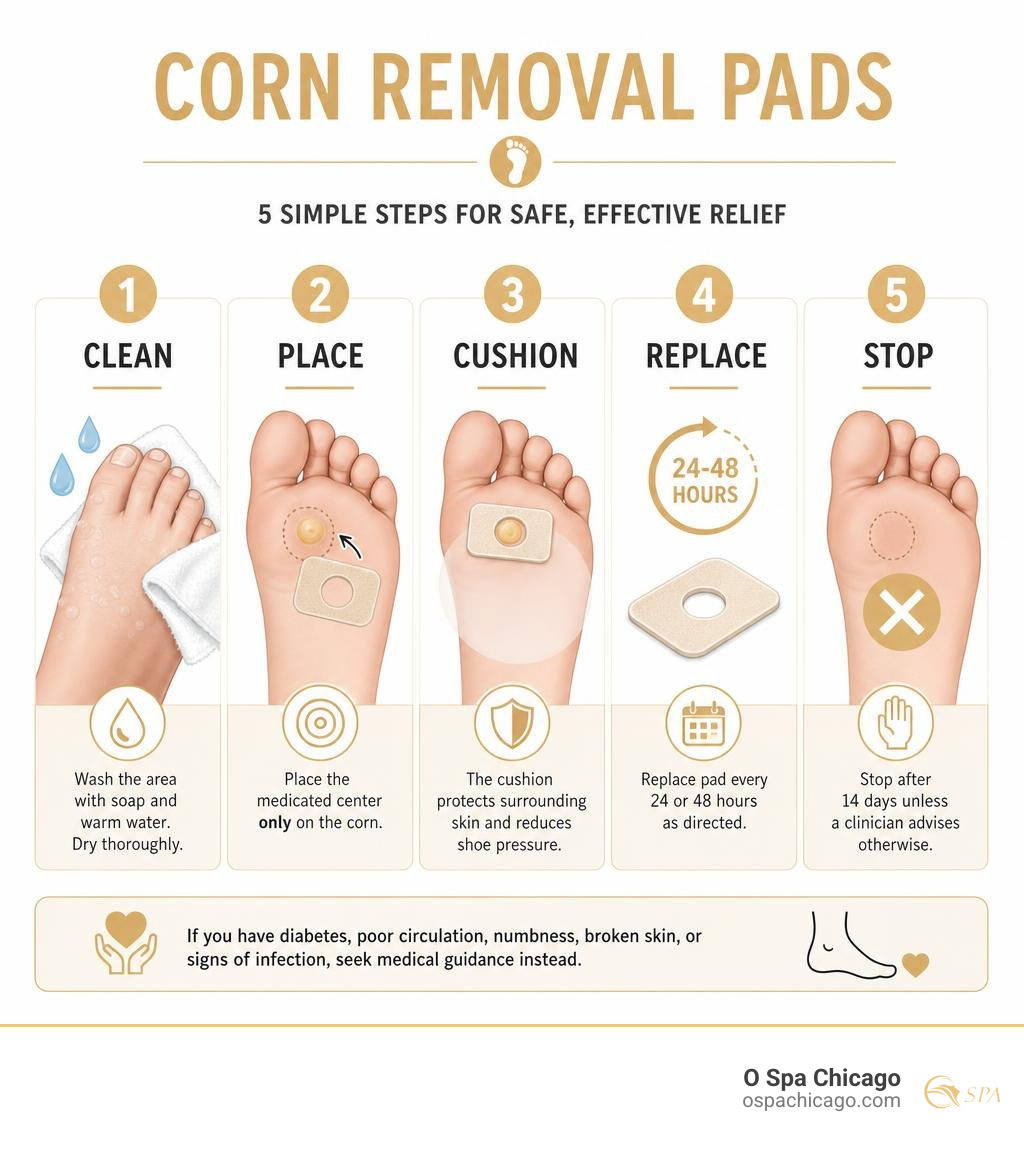
For a small, painful corn, medicated corn removal pads can help soften and shed the hard skin while a surrounding cushion reduces shoe pressure. Clean and dry the area, place the medicated center only on the corn, follow the package’s 24- or 48-hour change schedule, and stop after 14 days unless a clinician advises otherwise.
Most medicated pads contain 40% salicylic acid, which breaks down thick, dead skin. They are not right for everyone: people with diabetes, poor circulation, numbness, broken skin, or signs of infection should seek medical guidance instead. Non-medicated donut pads are a safer pressure-relief option when you need comfort without acid treatment.
I am June Liu, owner of O Spa Chicago, and my work in personalized wellness and body care centers on practical, tailored ways to support comfort and healthy skin. In this guide, I will help you understand how to choose and use corn removal pads with care.
How Corn Removal Pads Work to Relieve Pressure and Dissolve Hard Skin
Corns develop through a process called localized hyperkeratosis. When your toes or the soles of your feet experience repetitive friction and mechanical pressure from tight footwear or walking patterns, your body produces excess layers of dead skin cells within the stratum corneum to protect the tissue underneath. Over time, this protective layer compacts into a firm, concentrated core that presses painfully into deeper nerve endings with every step.
Over-the-counter medicated corn removal pads address this issue through a dual-action mechanism: chemical keratolytic action and physical mechanical offloading.
The active ingredient in most medicated pads is a concentrated 40% salicylic acid formulation. As detailed in the DailyMed drug specifications for topical corn removers, salicylic acid acts as a potent keratolytic agent. It works by dissolving intercellular lipids and desmosomes—the biological “glue” that binds hardened dead skin cells together. As the acid hydrates and breaks down the thickened protein matrix, the dead tissue softens, turns whitish, and gradually sheds.
Simultaneously, the surrounding felt or foam cushion redistributes pressure away from the sensitive center. By creating a physical buffer between the irritated core and the interior lining of your shoe, the pad prevents further friction while the acid does its job.
Comparing Medicated and Non-Medicated Corn Removal Pads
Choosing between medicated patches and non-medicated protective cushions depends on your skin type, your health history, and the underlying cause of your discomfort.
| Feature | Medicated Corn Pads | Non-Medicated Cushion Pads / Moleskin |
|---|---|---|
| Active Ingredient | 40% Salicylic Acid | None (chemical-free) |
| Primary Mechanism | Chemical keratolytic peeling + physical cushioning | Mechanical offloading and friction diversion |
| Best For | Breaking down and removing established hard corn cores | Preventing friction, relieving pressure, and protecting sensitive skin |
| Wear Duration | 24 to 48 hours per patch (up to 14 days maximum) | Replace daily or as needed for shoe comfort |
| Safety Restrictions | Contraindicated for diabetes, poor circulation, or fragile skin | Safe for general use, sensitive skin, and daily protection |
| Format Variations | Medicated discs with felt covers, all-in-one adhesive strips | Donut-shaped foam cushions, moleskin sheets, gel toe sleeves |
Non-medicated donut-shaped pads work by elevating the footwear fabric above the corn. The open center ensures no direct force contacts the inflamed core, allowing the skin to recover naturally once the source of friction is removed.
Identifying Hard Corns, Soft Corns, and Calluses
Not all hardened skin on the feet is the same. Correctly identifying your lesion ensures you pick the right treatment and avoid unnecessary irritation.
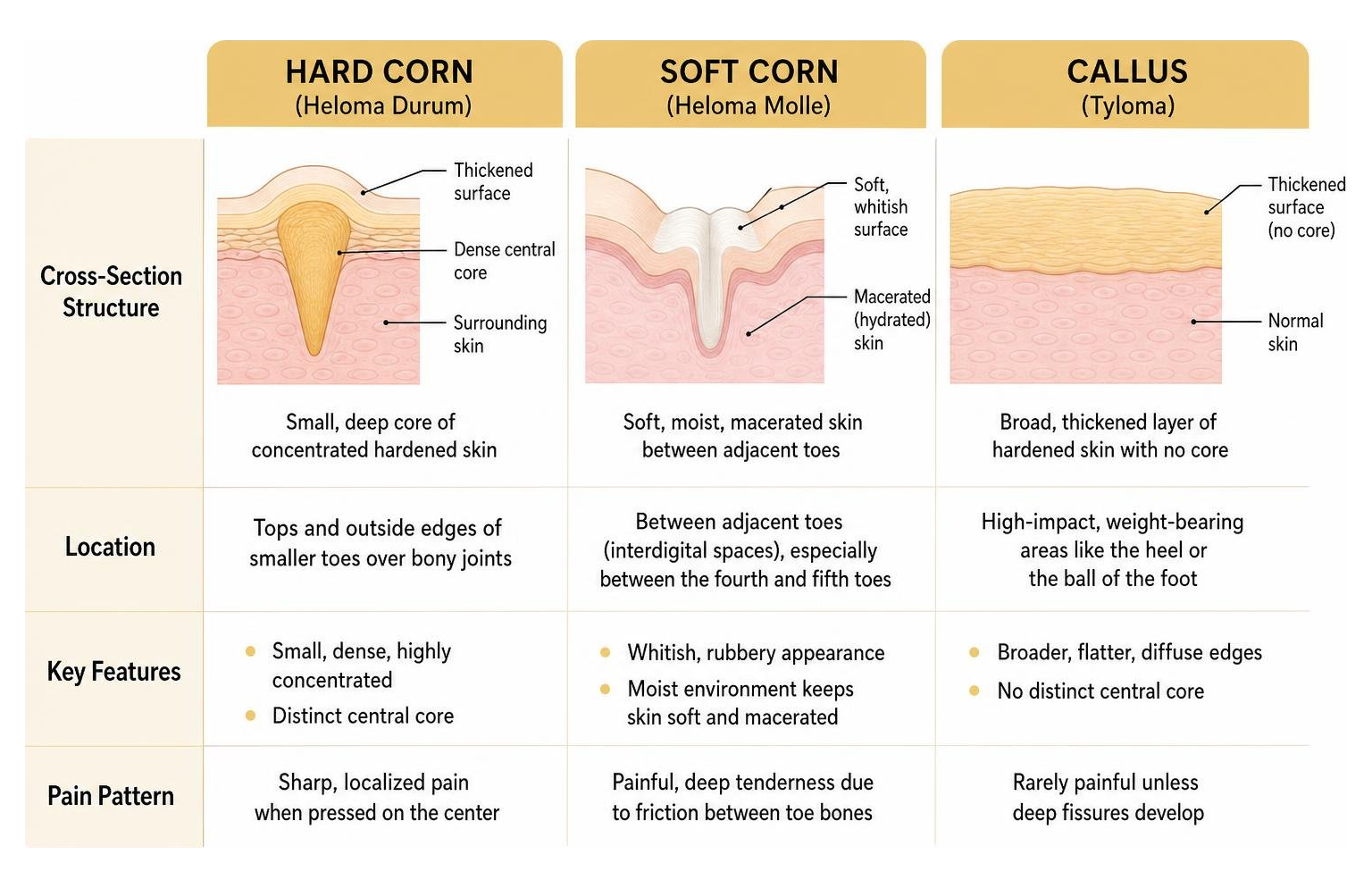
- Hard Corns (Heloma Durum): Small, dense, highly concentrated patches of dead skin featuring a firm central core. They typically form on the tops and outside edges of smaller toes over prominent bony joints due to direct shoe rubbing. Pressing down on the center usually causes a sharp, localized pain.
- Soft Corns (Heloma Molle): Whitish, rubbery lesions that develop between adjacent toes (interdigital spaces), particularly between the fourth and fifth toes. Perspiration and moisture keep the skin soft and macerated, but the friction between toe bones creates painful, deep tenderness.
- Calluses (Tyloma): Broader, flatter areas of thickened skin with diffuse edges and no distinct central core. They generally develop on high-impact weight-bearing areas like the heel or the ball of the foot and are rarely painful unless deep fissures develop.
- Plantar Warts vs. Porokeratosis: Plantar warts are caused by a viral infection (HPV), disrupt normal skin lines, feature tiny pinhole black dots (clotted capillaries), and hurt when squeezed from side to side rather than pressed from the top. Porokeratosis, caused by plugged micro-sweat glands, can mimic a small seed corn on the sole. If an OTC pad fails to resolve a lesion, professional assessment helps rule out these conditions.
How to Select the Best Pad for Your Foot Concerns
Selecting an effective product involves evaluating your daily activity level, where the corn is located, and the adhesive quality of the pad.
- Check the Salicylic Acid Concentration: Standard over-the-counter medicated options contain 40% salicylic acid. Ensure the package includes properly sized medicated discs or allows you to trim the active disc to fit only the corn core.
- Examine Cushion Thickness and Placement Profile: For corns situated between toes, slim gel toe sleeves or thin silicone separators offer pressure relief without crowding the toe box. For corns on top of hammer toes or the outer pinky toe, thicker felt cushions provide better impact protection.
- Prioritize Adhesive Durability: The foot is a high-movement, high-friction environment prone to natural perspiration. Look for products designed with flexible, fabric-backed adhesive wings or waterproof outer barriers that prevent premature peeling.
Evaluating Adhesion and Wear Duration
A common issue with standard over-the-counter corn pads is premature detachment. Walking causes shear forces inside your shoes, and foot sweat can dissolve basic adhesives within hours.
Medicated pads follow either a 24-hour or a 48-hour replacement cycle depending on the manufacturer’s formulation. To keep them securely anchored throughout the full treatment window:
- Clean the skin thoroughly with soap and water to remove oils and lotions before application.
- Ensure the skin is completely dry before applying the adhesive.
- If a pad struggles to stay in place during athletic exercise or long work shifts, reinforce it with breathable microporous paper tape (such as 3M Micropore) or flexible kinesiology tape.
- Round off the sharp corners of any reinforcing tape strips with scissors before application to prevent edges from rolling against socks.
Price, Quantity, and Long-Term Value
Over-the-counter corn pads are widely available in various pack counts and configurations. Standard medicated options range from 18-count packs up to high-value 30- or 42-count multipacks. A standard 30-pack of extra-strength 40% salicylic acid pads typically retails around $14.00 to $16.00 ($0.45 to $0.55 per unit), while smaller retailer packs cost around $3.99 to $8.99 ($0.22 to $0.40 per unit).
When storing extra pads for future use, keep them sealed at controlled room temperatures between 59°F and 86°F (15°C to 30°C) and away from direct moisture or heat to prevent degradation of the active acid and adhesive resins.
Safe Application Protocols for Fast Relief
Applying a medicated pad correctly ensures optimal keratolytic action while protecting the healthy skin surrounding the corn from chemical irritation.
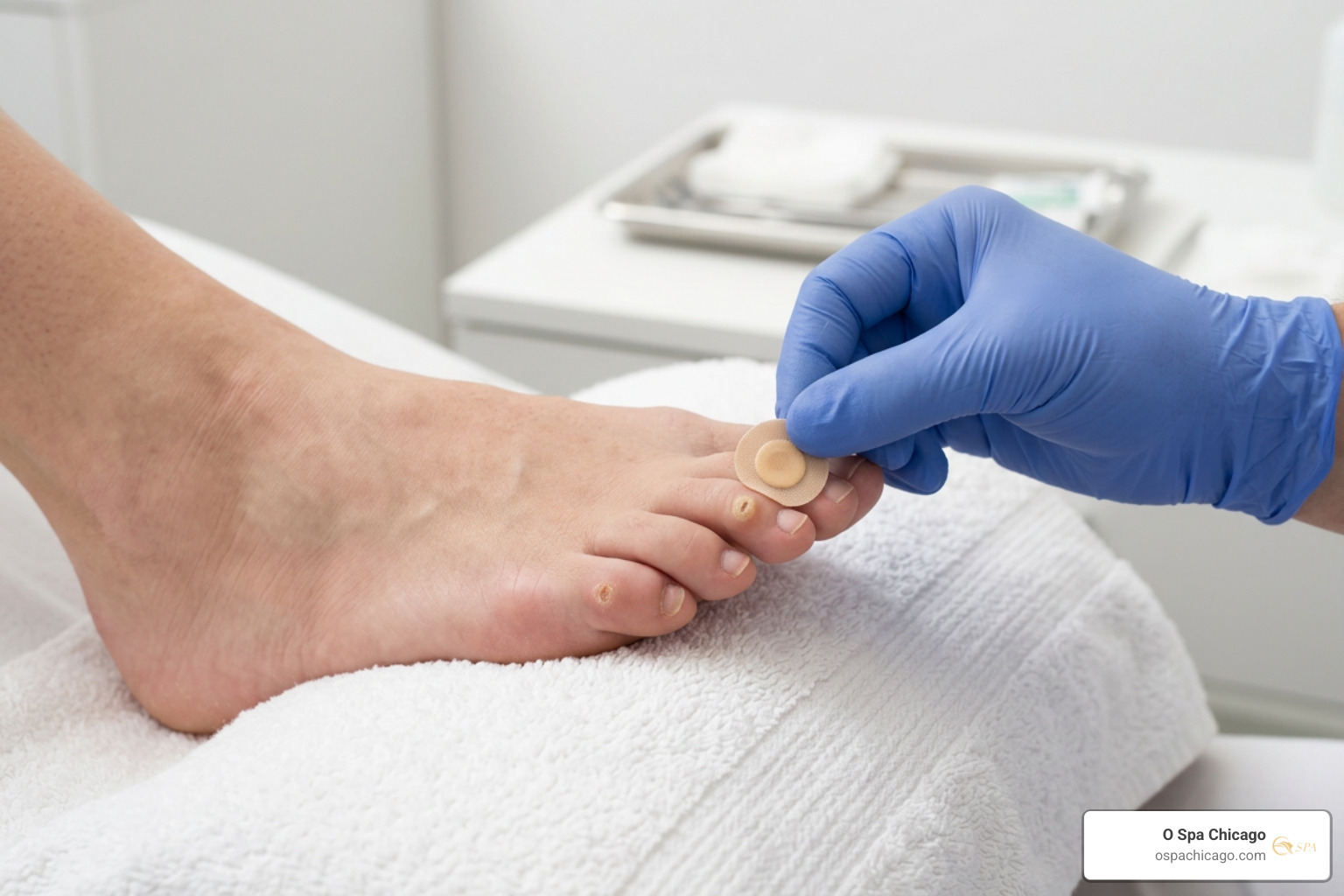
Follow this step-by-step application protocol for safe use, keeping within the FDA drug labeling guidelines for salicylic acid patches:
- Soak and Soften: Soak the affected foot in warm water (optionally with dissolved Epsom salts) for 5 minutes. This hydrates the compacted keratin layers, making them more receptive to treatment.
- Dry Thoroughly: Pat the entire area dry with a clean towel. Ensure zero residual moisture remains, particularly in the interdigital web spaces between toes.
- Trim the Active Disc (If Needed): If you are using a two-piece system (medicated disc plus felt cover), trim the medicated disc using clean scissors so it matches the exact diameter of the hard corn core. This prevents the 40% salicylic acid from touching healthy, uncallused tissue.
- Position and Secure: Peel the protective backing and center the medicated disc firmly on the corn. Cover it with the accompanying felt cushion or protective adhesive strip.
- Adhere to the Replacement Cycle: Leave the pad on for 24 to 48 hours as directed by the product instructions.
- Gently Remove Softened Skin: After removing the pad, soak the foot in warm water for 5 minutes. Use a washcloth or fine pumice stone with light strokes to gently wipe away loose, white dead skin. Never pick, cut, or dig at the tissue.
- Repeat Up to 14 Days: Reapply a fresh pad according to schedule until the core softens and detaches. Do not exceed 14 consecutive days of chemical treatment.
How to Apply Corn Removal Pads for Maximum Effectiveness
Between pad applications, supporting your skin barrier helps promote natural recovery. When filing softened skin after a soak, use 10 to 15 gentle, light circular strokes in one direction with a sanitized pumice stone. Stop immediately if you feel pain or see pink skin.
Applying a moisturizing cream containing 20% to 40% urea to dry surrounding areas after chemical treatments are completed helps dissolve rough protein bonds and restores natural flexibility to the skin.
Keeping Pads Secure During Daily Activity
- Prep the Base: Wipe the surrounding skin with rubbing alcohol on a cotton pad to eliminate surface oils before placing the adhesive.
- Layer with Medical Paper Tape: Wrap a strip of breathable micropore paper tape around the toe over the bandage to hold the edges down without constricting blood flow.
- Opt for Friction-Free Socks: Wear seamless, moisture-wicking synthetic or merino wool socks to reduce mechanical drag against the pad.
- Switch to a Roomier Toe Box: Wear footwear with a broad, anatomical toe box that prevents your toes from being squeezed together during daily activities.
Safety Precautions and High-Risk Contraindications
Because 40% salicylic acid is a potent chemical agent, it must be handled with care. If applied incorrectly or left on healthy dermis, it can cause chemical burns, localized inflammation, blistering, and open ulcerations.
Medicated corn pads should never be applied to:
- Broken, cut, or cracked skin
- Reddened, inflamed, or actively infected areas
- Moles, birthmarks, or areas with unusual hair growth
- Mucous membranes or anywhere near the eyes
Children under 14 years old, as well as pregnant or breastfeeding individuals, should consult a healthcare provider before using high-concentration salicylic acid topical treatments.
Recognizing Diabetic and Circulatory Risks
Individuals living with diabetes, peripheral neuropathy, or peripheral arterial disease (poor blood circulation) must never use over-the-counter medicated corn pads.
Reduced sensation from neuropathy can prevent you from feeling a chemical burn developing beneath the pad. Furthermore, impaired arterial circulation slows healing, meaning a minor chemical burn can quickly turn into a serious diabetic foot ulcer, secondary bacterial infection, or tissue necrosis. If you have diabetes or compromised circulation, manage corns only under the care of a licensed podiatrist.
When to Seek Clinical or Holistic Foot Care
While over-the-counter pads provide short-term relief, they do not resolve underlying biomechanical issues like bunions, hammertoes, or abnormal gait mechanics that cause corns to form in the first place.
If a corn recurs repeatedly, becomes painful, exhibits redness, warmth, or drainage, visit a podiatrist for clinical debridement or custom orthotics.
For broader foot fatigue, dryness, and muscle tension, pampering your skin with comprehensive body treatments helps nourish the skin barrier, restore circulation, and relieve everyday stress.
Frequently Asked Questions About Corn Removal
How long does it take for corn removal pads to work?
Most users notice dead skin softening within the first 2 to 4 days (after 1 to 2 patch cycles). Complete shedding of a small to medium corn core typically takes 7 to 14 days of consistent use alongside warm-water soaks. If the corn persists beyond 14 days, stop using the pads and consult a healthcare professional.
Can corn pads be safely used to treat calluses?
Yes, 40% salicylic acid effectively breaks down the thickened hyperkeratotic skin of calluses. However, standard corn pads are small and designed for concentrated cores. For broad plantar calluses on the heel or ball of the foot, larger medicated callus strips or extra-thick callus cushions are easier to position and provide better coverage across diffuse areas.
What should you do if surrounding healthy skin becomes irritated?
If you experience redness, burning, itching, or peeling on healthy skin around the corn, remove the medicated pad immediately. Wash the area thoroughly with mild soap and water. Apply a soothing emollient, pure petroleum jelly, or a zinc oxide barrier cream to protect the irritated tissue, and avoid using chemical products on that area until the skin has completely healed.
Conclusion
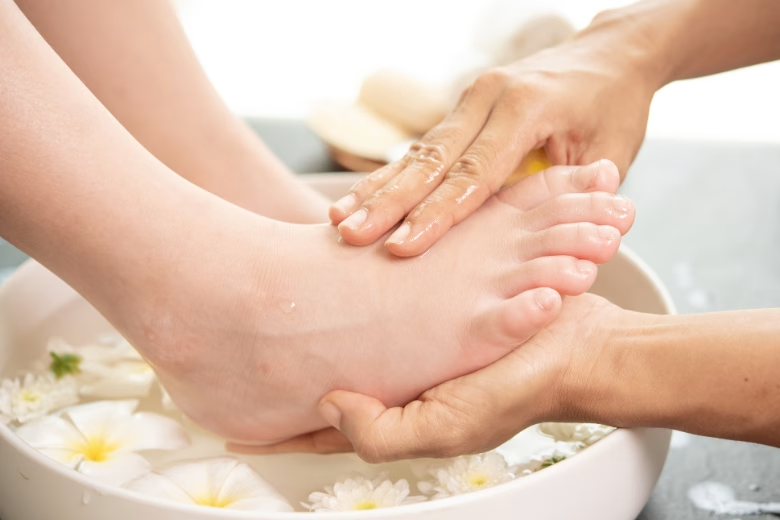
Managing uncomfortable foot corns comes down to combining chemical exfoliation with pressure relief. By using medicated salicylic acid pads correctly, sizing the active disc to the corn core, and protecting your skin from friction, you can safely eliminate corns and walk comfortably again.
Long-term foot health requires ongoing friction management, supportive footwear with roomy toe boxes, and regular moisturizing. When you are ready to treat your body to head-to-toe relaxation, visit our team at O Spa in Chicago by booking our rejuvenating spa services to restore your natural glow and elevate your everyday wellness.