Chicago’s Best Kept Secrets: Where to Get the Ultimate Anti-Aging Facial
July 11, 2026
How to Tighten Loose Arm Skin Without Surgery
July 16, 2026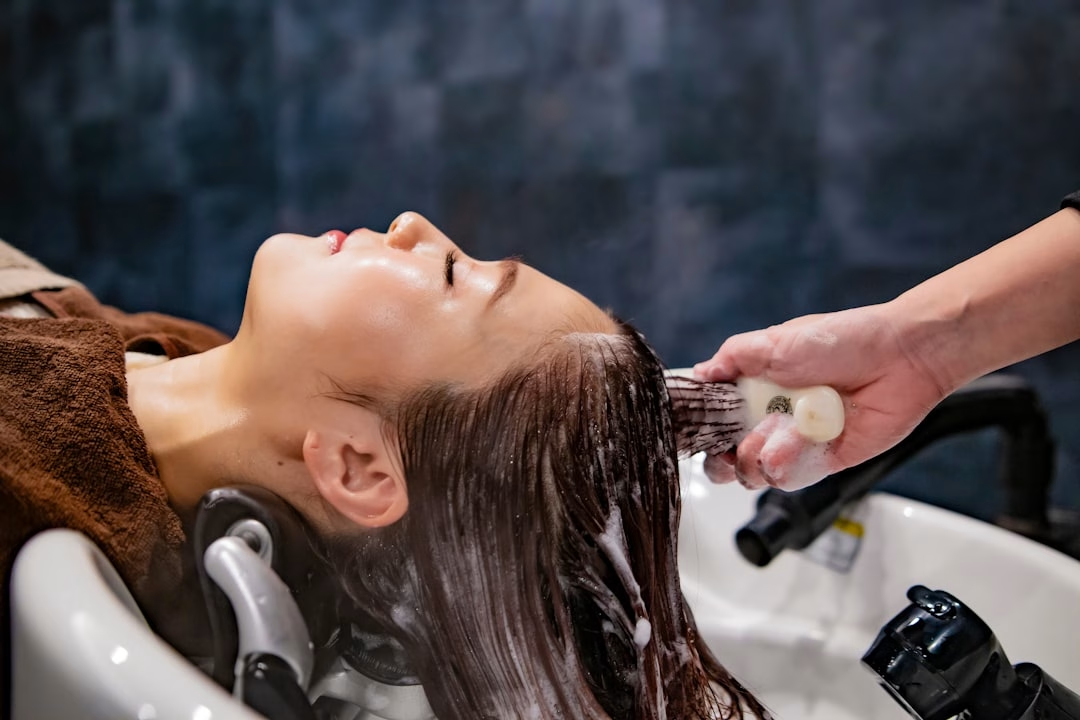
Your Scalp Deserves as Much Attention as Your Skin
A great scalp and hair treatment does more than make your hair look good — it supports the health of every strand from the root up.
Quick answer: What is a scalp and hair treatment?
- A scalp and hair treatment is any product or professional service designed to cleanse, hydrate, exfoliate, or stimulate the scalp to improve hair health and growth
- Common types include leave-in serums, pre-wash oils, exfoliating scrubs, medicated shampoos, and professional spa treatments
- Key benefits: reduced shedding, improved hair density, less dryness and flaking, stronger strands
- Most at-home treatments require consistent daily or weekly use for 8–12 weeks before visible results appear
- For faster or more targeted results, professional treatments — like an Ayurvedic scalp massage — deliver deeper benefits in a single session
Most people don’t think about their scalp until something goes wrong. Itchiness. Flakes. Thinning. Dullness. But by then, the scalp has often been neglected for months.
Over 80% of people experience at least one scalp issue in their lifetime — dryness, irritation, buildup, or excess oil. And hair loss alone affects around 50 million men and 30 million women in the United States.
Think of your scalp the way you think of your face. It has pores. It produces oil. It reacts to stress, diet, and the environment. Without the right care, those hair follicles can’t do their job.
The good news? Whether you have five minutes a day or can carve out an hour for a professional treatment, there are proven ways to restore your scalp’s balance — and see real results.
This guide covers everything: common scalp concerns, the ingredients that actually work, how to build a routine, and when it’s worth seeing a professional.
Common Scalp Concerns and Their Root Causes
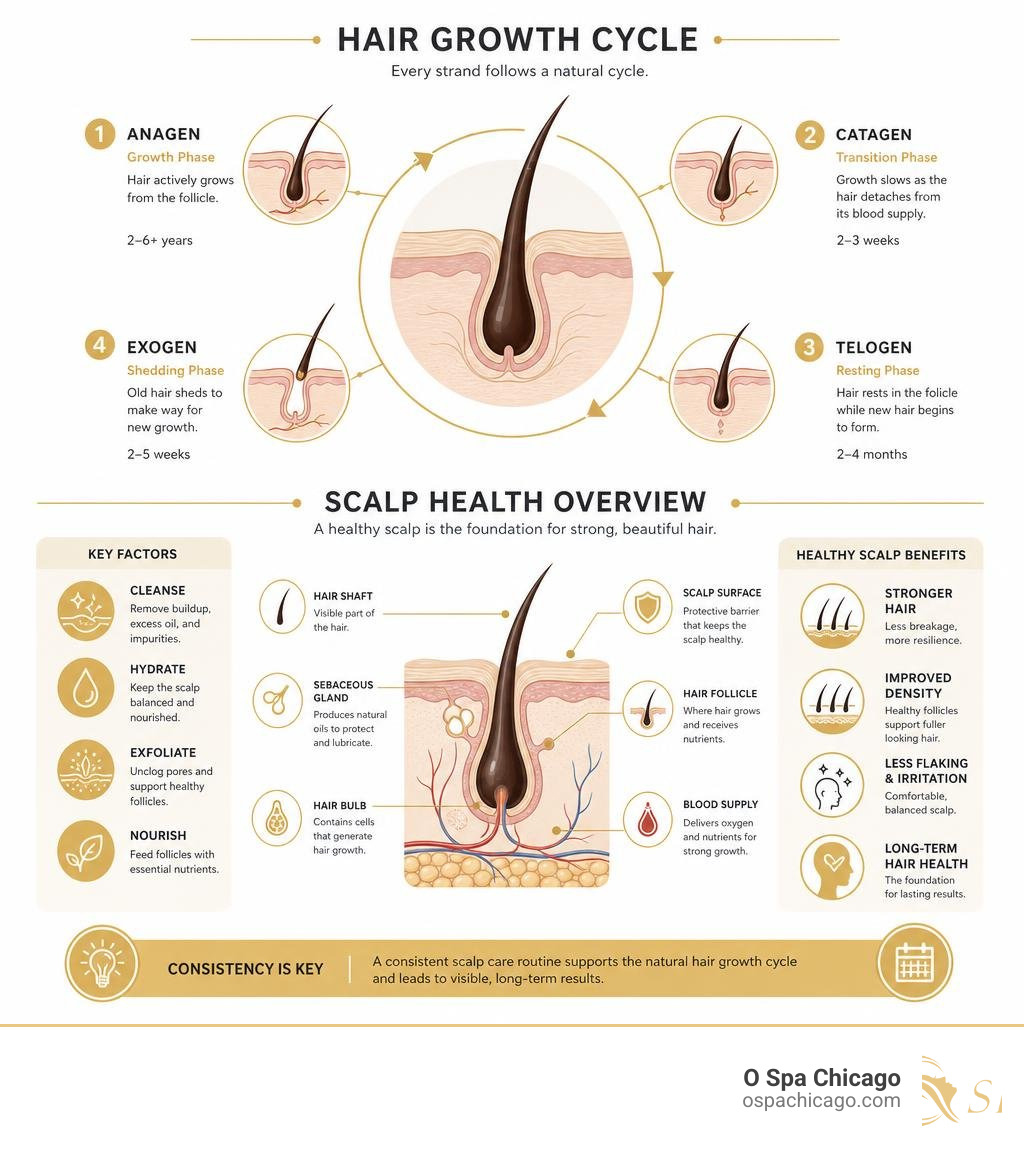
To understand why a scalp and hair treatment is so essential, we first have to look at what is happening beneath the surface. Your scalp is a complex ecosystem. When this ecosystem is thrown out of balance, it manifests as visible, often uncomfortable hair and scalp concerns.
The Scalp Microbiome
Just like your gut and your face, your scalp is home to a diverse community of microscopic organisms known as the scalp microbiome. This microbiome consists of bacteria and yeasts—specifically Malassezia—that live in harmony when your scalp is healthy. This community acts as a physical and chemical barrier against pathogens.
However, when external or internal factors disrupt this delicate balance, certain yeasts can overproliferate. An overgrowth of Malassezia, for example, feeds on the lipids in your sebum, breaking them down into irritating byproducts that trigger rapid skin cell turnover, inflammation, and flaking.
Sebum Production
Your hair follicles are paired with sebaceous glands that produce sebum, a natural oil designed to lubricate and protect both your scalp skin and your hair shaft.
- Underproduction of sebum leads to a compromised moisture barrier, leaving the scalp vulnerable to environmental irritants, tightness, and dry flakes.
- Overproduction of sebum creates an oily environment where yeast thrives. This excess oil can combine with dead skin cells and styling products to clog hair follicles, leading to inflammation, follicle congestion, and eventually hair shedding.
Environmental Stressors
Living in a bustling city like Chicago means your hair and scalp are constantly exposed to environmental stressors.
- Hard Water: The mineral-heavy water found in many metropolitan areas leaves a stubborn film on the hair and scalp, preventing moisture from penetrating and leading to chronic dryness.
- Pollution: Particulate matter from city air settles onto the scalp, generating free radicals that cause oxidative stress to the hair follicles.
- Extreme Weather: Chicago winters bring freezing outdoor temperatures and dry indoor heating, which strip the scalp of moisture. Conversely, hot, humid summers increase sweat and sebum production, creating a breeding ground for buildup and irritation.
Dryness, Dandruff, and Irritation
Many people use the terms “dry scalp” and “dandruff” interchangeably, but they are entirely different issues requiring distinct treatment approaches.
When your scalp lacks moisture, the skin barrier becomes compromised, leading to persistent itchiness and tiny flakes that easily fall onto your shoulders. To soothe this dry, tight feeling, incorporating targeted moisture is key. For those struggling with parched strands alongside a dry scalp, exploring deep-conditioning options like nourishing hair masks can help restore hydration from root to tip.
Conversely, dandruff (or seborrheic dermatitis) is an inflammatory condition. It is marked by larger, greasy flakes that tend to stick to the hair shaft and scalp. If you try to treat dandruff by simply slathering it in heavy hair oils, you may actually feed the yeast and worsen the flaking. Dandruff requires clarifying, anti-inflammatory, and antimicrobial ingredients to curb yeast growth and gently clear away sticky buildup.
Thinning, Shedding, and Hair Loss
Hair thinning and loss can be deeply distressing, but understanding the underlying biological mechanisms is the first step toward finding an effective scalp and hair treatment.
Androgenetic Alopecia (Pattern Hair Loss)
This is the most common cause of hair loss, affecting both men and women. It is primarily driven by genetics and hormones—specifically a hormone called dihydrotestosterone (DHT). DHT binds to receptors in the hair follicles, causing them to shrink over time in a process called follicle miniaturization. As the follicles shrink, they produce progressively thinner, shorter, and weaker hair strands until they stop producing hair altogether.
Telogen Effluvium (Temporary Shedding)
Unlike the gradual thinning of pattern hair loss, telogen effluvium is characterized by sudden, widespread shedding. It occurs when a significant physical or emotional stressor—such as illness, hormonal shifts, rapid weight loss, or high stress—shocks the hair follicles, forcing a large percentage of them out of their active growing phase (anagen) and prematurely into their resting phase (telogen). Roughly three months after the triggering event, these hairs shed all at once.
Maintaining Hair Density
To preserve hair density and combat thinning, treatments must focus on two fronts:
- Prolonging the Anagen (Growth) Phase: Keeping hair follicles actively growing for as long as possible.
- Improving Microcirculation: Ensuring the tiny blood vessels at the base of the hair follicle deliver a continuous supply of oxygen, amino acids, and essential nutrients to support strong hair construction.
Choosing the Right Scalp and Hair Treatment for Your Needs
No two scalps are identical. To achieve the best results, you must tailor your treatment plan to your specific hair texture, scalp type, and daily lifestyle.
- Hair Texture:
- Fine or thin hair is easily weighed down by heavy oils and butters. It benefits most from lightweight, water-based serums and clarifying scrubs that boost volume and keep the roots lifted.
- Coily, curly, or thick hair naturally struggles to distribute sebum from the scalp down the hair shaft, making both the scalp and hair more prone to dryness. Richer, oil-based pre-wash treatments and deeply hydrating formulas are ideal here.
- Scalp Type:
- Oily scalps need regular, gentle exfoliation to control sebum and prevent clogged follicles.
- Sensitive scalps require fragrance-free, soothing formulas rich in anti-inflammatory botanical extracts to rebuild the skin barrier without causing redness or burning.
- Lifestyle Factors:
- If you use heavy styling products, dry shampoo, or work out daily, you will accumulate sweat, salt, and silicones on your scalp. You will need a detoxifying routine to prevent product buildup.
- If you wear protective styles (like braids, weaves, or locks), you need targeted, leave-in liquid treatments with needle-nose applicators to nourish the scalp without disrupting your style.
At-Home vs. Professional Scalp and Hair Treatment
While a consistent at-home routine is the foundation of long-term hair health, professional spa treatments offer a level of restoration, precision, and relaxation that simply cannot be replicated in your bathroom.

At-home care is perfect for daily maintenance—applying your serums, washing with targeted shampoos, and performing quick manual massages. However, professional treatments provide a customized wellness experience tailored to your exact scalp condition.
At O Spa Chicago, located in the heart of the River North neighborhood, we specialize in premium, personalized wellness experiences. We combine the restorative power of natural spa services with expert physical therapy for your scalp.
Our professional scalp treatments utilize traditional pressure point therapy and slow, rhythmic scalp massages. This physical stimulation does more than melt away stress; it dramatically increases local blood circulation, dilating the blood vessels surrounding your hair follicles to maximize nutrient delivery.
By choosing professional massage services designed specifically for the scalp, you experience deep exfoliation, professional-grade organic oil absorption, and a state of deep mental relaxation that lowers cortisol levels—a known trigger for hair shedding.
Leave-Ins, Pre-Wash Oils, Scrubs, and Shampoos
Understanding the different product formats helps you build a balanced, effective routine.
| Treatment Type | Primary Purpose | Key Ingredients to Look For | When & How to Use |
|---|---|---|---|
| Leave-In Serums | Target hair growth, density, and long-term scalp barrier hydration. | Peptides, caffeine, hyaluronic acid, niacinamide. | Apply daily to clean, damp or dry scalp; do not rinse. |
| Pre-Wash Oils | Deeply nourish dry scalps, soften buildup, and protect hair during washing. | Argan oil, rosemary oil, jojoba oil. | Apply to dry scalp 15–20 minutes before showering; rinse and shampoo thoroughly. |
| Exfoliating Scrubs | Remove dead skin cells, excess sebum, and stubborn product buildup. | Salicylic acid, glycolic acid, physical exfoliants (sea salt/sugar). | Use 1–2 times weekly in place of regular shampoo; massage gently and rinse. |
| Medicated Shampoos | Treat active scalp conditions like dandruff, seborrheic dermatitis, or psoriasis. | Ketoconazole, zinc pyrithione, salicylic acid, coal tar. | Use 2–3 times weekly; leave on the scalp for 3–5 minutes before rinsing. |
Choosing the right format depends on your main concern. If you suffer from a dry, damaged hair shaft as well as a dry scalp, utilizing multitasking, oil-infused formulas like Moroccanoil Treatment Original can help condition, smooth frizz, and seal the hair cuticle with antioxidant-rich argan oil. Meanwhile, if your scalp feels congested from styling products, a weekly scalp detox using a salicylic acid-based scrub or clarifying shampoo will keep your follicles clean and clear.
Key Ingredients and Formulation Types
The efficacy of any scalp and hair treatment comes down to its ingredient profile and how those ingredients are delivered into the skin.
- Active Ingredients: These are the biological powerhouses that target specific concerns. They range from chemical exfoliants (like salicylic acid) that dissolve the bonds between dead skin cells, to vasodilators (like caffeine) that stimulate blood flow, to advanced peptide complexes that signal hair follicles to remain in the growth phase.
- Formulation Delivery (Liposomes): The scalp has a thick, protective outer layer. To make sure active ingredients don’t just sit on top of your hair, advanced formulations use liposomal delivery systems. Liposomes are microscopic, lipid-based spheres that encapsulate active ingredients, helping them penetrate deeper into the scalp skin and hair follicles without causing surface irritation.
- Scalp Absorption: Water-based, lightweight serums absorb rapidly without leaving a greasy residue, making them ideal for daily leave-in use. Oil-based formulations are excellent for sealing in moisture and softening dry skin flakes, but they require thorough cleansing afterward to avoid clogging pores.
Clinically Proven Actives for Growth and Density
When shopping for treatments to combat hair thinning and boost density, look for ingredients backed by rigorous clinical testing.

Minoxidil
The gold standard for hair regrowth, minoxidil is an FDA-approved topical treatment. As seen in clinical studies on minoxidil, a 5% topical solution (such as ROGAINE) works by widening blood vessels, reviving shrunken hair follicles, and extending the hair’s natural growth cycle. It has been shown to improve hair density in up to 60% of users with consistent, twice-daily use.
Advanced Peptides & Patented Complexes
For those seeking non-prescription alternatives, modern trichology has introduced highly effective peptide-based formulations:
- Redensyl: A synergistic blend of polyphenols and amino acids that targets outer root sheath stem cells to reactivate hair growth. Clinical trials of formulas like the Redensify Treatment Serum (which combines 3% Redensyl and 1% Kopexil) show visible improvements in hair density and volume within 90 days.
- Capixyl: A biomimetic peptide combined with red clover extract that helps reduce DHT levels, limit follicle miniaturization, and improve hair anchoring. It is a key component in advanced daily formulas like the Let There Be Hair Scalp Serum.
- Procapil: Targets the primary causes of alopecia (poor scalp microcirculation, follicle aging, and follicle atrophy). You can find it alongside other clinical actives in premium daily solutions like The Treatment Scalp Serum by KilgourMD.
Natural Stimulants
- Rosemary Oil: Studies have shown that rosemary oil can be as effective as a 2% minoxidil treatment for increasing hair count over a six-month period, without the itching and scalp irritation sometimes associated with minoxidil.
- Caffeine: Highly effective at penetrating the hair follicles, caffeine helps counteract DHT-induced follicle suppression, extending the active growth phase of the hair.
- Copper Tripeptide-1: Facilitates a healthy, hydrated scalp barrier, reduces inflammation, and supports follicle health to prevent premature shedding.
How to Integrate a Scalp and Hair Treatment Into Your Routine
Building a scalp care routine doesn’t have to be complicated. Here is a simple, step-by-step way to structure your weekly routine:
Step 1: Prep & Exfoliate (1–2 Times Weekly)
Before washing, apply an exfoliating scrub or a pre-wash oil to your scalp. If using a pre-wash oil (like rosemary or argan oil), massage it directly into your dry scalp and let it sit for 15 to 20 minutes. If using a scrub, apply it to damp hair at the start of your shower, gently working it into your scalp with your fingertips.
Step 2: Cleanse (2–3 Times Weekly)
Wash your hair with a gentle, sulfate-free shampoo to remove sweat, dirt, and oil. If you are treating dandruff or psoriasis, use your medicated shampoo during this step. Be sure to leave the medicated lather on your scalp for 3 to 5 minutes so the active ingredients have time to work before you rinse.
Step 3: Condition (Every Wash)
Apply conditioner or a nourishing hair mask to the mid-lengths and ends of your hair. Keep heavy conditioners away from your scalp to avoid clogging your pores and weighing down your roots.
Step 4: Treat (Daily)
Once your hair is towel-dried (or on dry hair between washes), apply your targeted daily leave-in serum. Use a dropper or spray nozzle to apply the product directly to your scalp, focusing on areas of thinning, dryness, or irritation.
Step 5: Massage (Daily)
Spend 3 to 5 minutes massaging the serum into your scalp. Use the pads of your fingers (never your nails) to move the scalp skin in small, circular motions. This technique stimulates blood circulation, relieves muscle tension, and ensures the product is evenly distributed and absorbed.
Frequently Asked Questions About Scalp Care
How long does it take to see results from scalp treatments?
Patience is key when it comes to scalp care. Because of the natural hair growth cycle, you will not see dramatic changes overnight.
- Weeks 1–6 (The Rebalancing Phase): Your scalp begins to normalize. You will notice a decrease in itchiness, dryness, and flaking. Some users may experience a brief, temporary increase in shedding; this is normal, as healthier hair follicles push out old, resting hairs to make room for new, stronger strands.
- Month 3 (The Growth Phase): Around the 90-day mark of consistent daily use, you should begin to see fine baby hairs sprouting, particularly along the hairline, temples, and crown. Your hair will start to look and feel denser.
- Month 6 and Beyond (The Reinforcement Phase): With continued use, hair breakage decreases significantly, and overall volume, thickness, and density continue to improve.
To track your progress, we recommend taking clear photos of your hairline and crown under consistent lighting once a month.
Can I use scalp treatments on color-treated or styled hair?
Yes, but you need to choose your products carefully.
- Color-Treated Hair: Look for sulfate-free, color-safe formulas. Avoid harsh, clarifying shampoos or high-strength chemical scrubs immediately after a color service, as they can lift the hair cuticle and cause your color to fade. Skip your active scalp treatments on the actual day of your color appointment to prevent scalp sensitivity.
- Protective Styles (Braids, Locs, Weaves): Scalp care is incredibly important during protective styling, as tension and lack of airflow can cause dryness and itching. Use lightweight, water-based liquid serums with a needle-nose applicator to target the exposed scalp between parts. Avoid heavy oils or thick creams, which can build up in the braids and cause matting.
- Heat Styling: Always apply your leave-in scalp serums first and allow them to dry completely before using blow dryers, straighteners, or curling irons. This ensures the heat doesn’t degrade the active ingredients or cause scalp irritation.
What ingredients should I avoid in scalp care products?
When selecting an at-home scalp and hair treatment, carefully read the ingredient label and try to avoid the following:
- Sulfates (e.g., Sodium Lauryl Sulfate/SLS): Harsh surfactants that strip away the scalp’s natural moisture barrier, leading to dryness, irritation, and color fading.
- Parabens (e.g., Methylparaben, Propylparaben): Synthetic preservatives that can irritate sensitive skin and disrupt natural hormonal balance.
- Heavy Silicones (e.g., Dimethicone): While silicones make hair look shiny, non-soluble silicones can build up on the scalp, clogging hair follicles, trapping bacteria, and leading to shedding.
- Harsh Alcohols (e.g., Isopropyl Alcohol, Denatured Alcohol): Often used to make products dry faster, these alcohols strip moisture from the scalp, causing dryness, itching, and flaking.
Conclusion
Taking care of your scalp is the secret to achieving strong, healthy, and vibrant hair. Whether you are dealing with chronic dryness, stubborn dandruff, or noticeable thinning, choosing the right ingredients and staying consistent with your routine will make a world of difference.
If you are ready to elevate your hair care routine, let us pamper you. At O Spa Chicago, we offer premium, personalized wellness experiences designed to restore balance to your body, mind, scalp, and hair. Located in the River North neighborhood of Chicago, IL, we use only the finest organic products to nourish your skin and scalp.
Whether you want to book a dedicated Ayurvedic scalp massage or add a relaxing scalp treatment to your next facial, we welcome you to visit us. Walk-ins and same-day appointments are always welcome. Explore our full range of services and book your next escape by visiting O Spa Chicago’s premium spa services today. Your scalp will thank you!