Scalp Care Sunday: Our Favorite Products for a Healthy Head
September 10, 2026
Common Causes of Pain and the Best At-Home Foot Treatment Options
Effective foot treatment for relieving everyday pain starts with targeted conservative care: daily calf and plantar fascia stretching, cryotherapy with ice rolling, supportive over-the-counter orthotics, and ergonomic footwear with wide toe boxes. Non-traumatic foot pain often stems from improper gait mechanics, muscle tightness, or unsupportive shoes that place repetitive stress on soft tissues. Incorporating routine adjustments such as warm soaks, safe exfoliation, and proper pressure offloading provides fast, lasting relief before invasive clinical procedures are needed.
Our feet absorb hundreds of tons of cumulative force with every mile walked, containing a quarter of all the bones in the human body alongside an intricate web of tendons and ligaments. When minor biomechanical imbalances—like overpronation or supination—occur, they lead to morning heel stiffness, arch fatigue, and chronic aches.
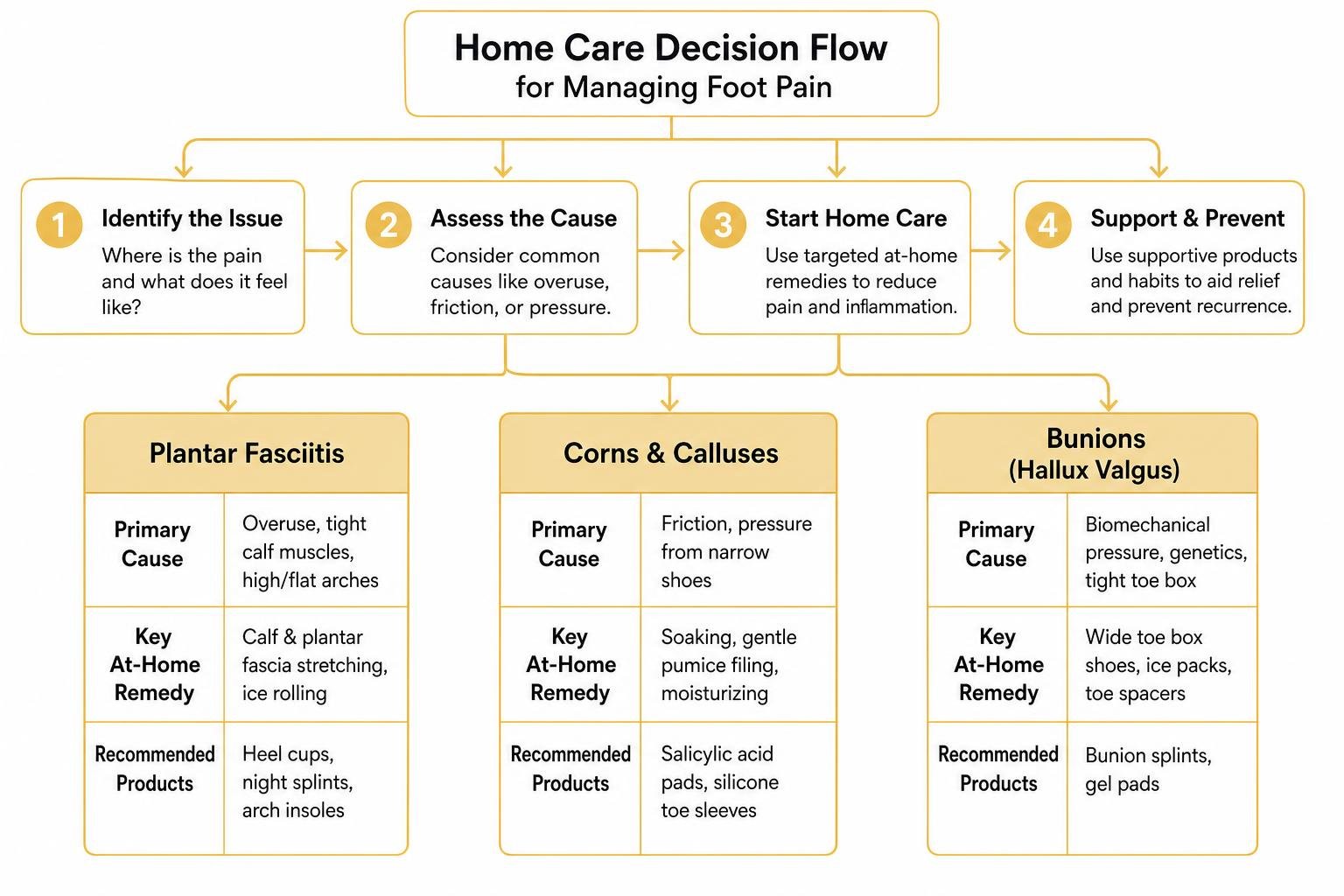
| Condition | Primary Cause | Key At-Home Remedy | Recommended Products |
|---|---|---|---|
| Plantar Fasciitis | Overuse, tight calf muscles, high/flat arches | Calf & plantar fascia stretching, ice rolling | Heel cups, night splints, arch insoles |
| Corns & Calluses | Friction, pressure from narrow shoes | Soaking, gentle pumice filing, moisturizing | Salicylic acid pads, silicone toe sleeves |
| Bunions (Hallux Valgus) | Biomechanical pressure, genetics, tight toe box | Wide toe box shoes, ice packs, toe spacers | Bunion splints, gel pads |
| Athlete’s Foot (Tinea Pedis) | Fungal overgrowth (Trichophyton rubrum) in moist environments | Thorough drying, antifungal creams | Terbinafine, clotrimazole, drying powders |
| Ingrown Toenails | Improper trimming, tight footwear | Warm Epsom salt soaks, straight nail trimming | Antiseptic wash, toe protectors |
Conservative Foot Treatment for Plantar Fasciitis and Heel Spurs
Plantar fasciitis accounts for roughly 10% of running injuries, and each year more than 800,000 Americans under age 65 seek clinical treatment for this sharp, stabbing heel pain. It typically presents as severe pain during your first morning steps, caused by micro-tears and inflammation in the thick band of tissue running along the bottom of your foot.
Clinical evidence highlights that conservative care is exceptionally powerful for this disorder. In fact, approximately 80% of plantar fasciitis cases resolve entirely with conservative and home therapies within six months. According to the ACOEM clinical guidelines on ankle and foot disorders, first-line conservative approaches like calf stretching, cryotherapy, and balance rehabilitation are fundamental for restoring function.
To relieve heel strain at home:
- Perform Plantar & Calf Stretches: Before getting out of bed, loop a towel around the ball of your foot and gently pull your toes toward your shin, holding for 30 seconds.
- Practice Eccentric Heel Drops: Stand on the edge of a stair and slowly lower your heels below the step level, building strength in the Achilles tendon and calf complex.
- Roll with Ice: Roll the arch of your foot over a frozen water bottle for 10 to 15 minutes in the evening to calm localized irritation.
- Use Over-the-Counter Heel Cups or Orthotics: Prefabricated arch supports and silicone heel cups cushion impact, redistribute plantar pressure, and match the long-term effectiveness of invasive interventions.
Managing Corns, Calluses, and Bunions at Home
Corns and calluses are your skin’s defensive response to friction and pressure. While calluses form broad patches of thickened skin on the heels or balls of your feet, corns develop a hard, conical central core that presses inward against sensitive nerve endings, often across toe joints.
Bunions (hallux valgus) are structural misalignments where the base of the big toe shifts outward, causing a prominent bony bump. Hallux valgus affects 26% of women aged 18 to 65 and up to 36% of women over 65. Similarly, stiffness in the big toe joint (hallux rigidus) impacts more than 40% of men and 50% of women by their early 70s.
Managing these pressure-induced conditions requires friction reduction and targeted skin softening:
- Exfoliate Safely: Soak your feet in warm water for 10 to 15 minutes, then gently buff thickened skin with a natural pumice stone. Never use razor blades or sharp tools at home.
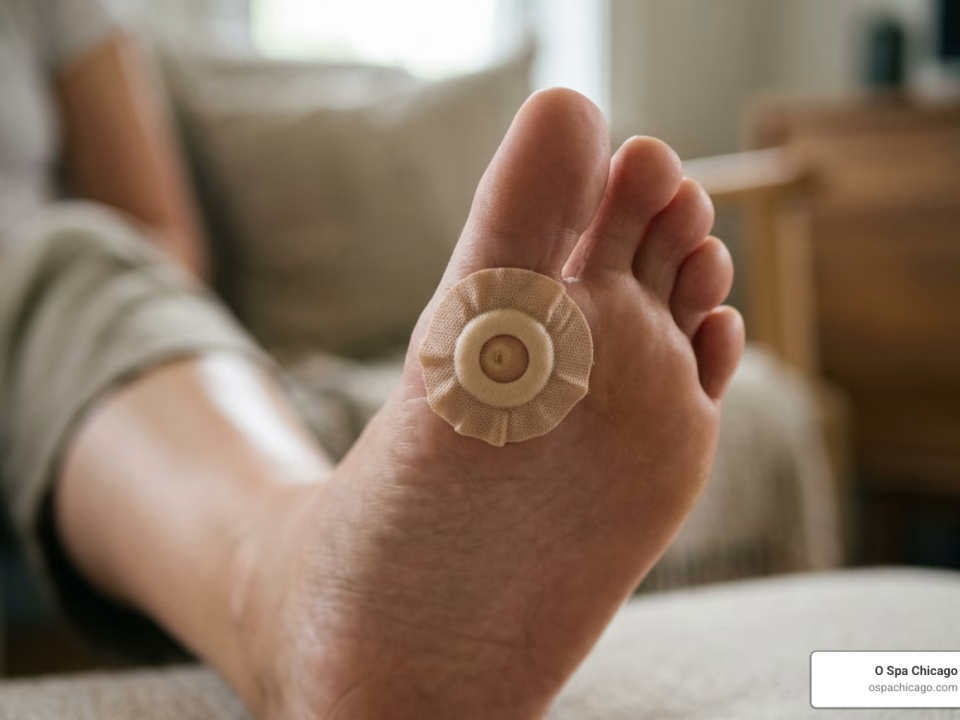
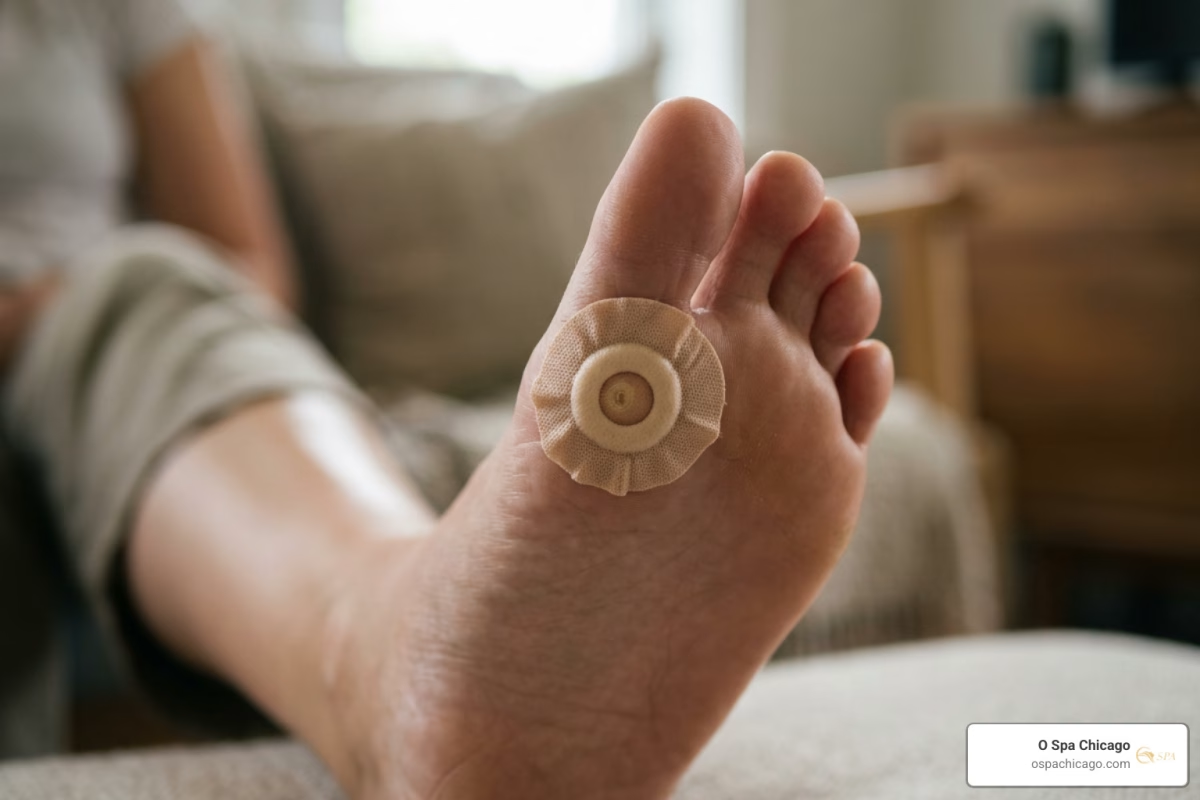
- Target Corns Accurately: You can accelerate relief and heal your feet fast by choosing the right corn removal pads designed to cushion the area while softening hardened tissue.
- Hydrate Deeply: Foot skin possesses fewer sebaceous (oil) glands than other body areas, making heels especially prone to cracking. Applying a deeply hydrating, nourishing cracked heel repair balm rich in lactic acid and botanical oils helps restore natural skin elasticity.
- Switch to Wide Toe Boxes: Opt for footwear that allows your toes to splay naturally without lateral compression, easing pain across the first metatarsophalangeal joint.
Over-the-Counter Solutions for Fungal Infections and Athlete’s Foot
Athlete’s foot (tinea pedis) is a common fungal infection with a prevalence between 50% and 80% in select populations. Thriving in warm, dark, moist environments like gym locker rooms and non-breathable shoes, the fungus causes peeling, redness, scaling, and intense itching between the toes or on the soles.
According to the Merck Manual clinical guide on tinea pedis, maintaining environmental moisture control alongside topical therapy is the gold standard for lasting recovery.
- Select the Right Antifungal Agent: Topical allylamines (such as over-the-counter terbinafine) generally achieve higher cure rates and faster symptom relief than older azole formulations, though clotrimazole and miconazole remain effective options.
- Apply Consistently: Apply the topical cream twice daily across the affected area, continuing application for at least one full week after visible symptoms disappear to prevent immediate relapse.
- Prioritize Interdigital Drying: After showering, dry thoroughly between each toe with a clean towel before putting on socks.
- Dust Footwear: Use antifungal drying powders inside your shoes and socks to absorb excess sweat throughout the day.
Clinical and Professional Foot Care Solutions
While conservative self-care relieves a broad spectrum of everyday ailments, persistent or severe issues demand clinical intervention. Podiatrists and medical specialists use targeted diagnostics—such as weight-bearing digital X-rays, dynamic gait analysis, diagnostic ultrasound, and magnetic resonance imaging (MRI)—to pinpoint underlying mechanical and structural problems.
Professional clinical modalities bridge the gap between simple home routines and invasive surgeries:
- Custom Prescription Orthotics: Tailored specifically to your unique foot architecture via 3D scans, custom orthotics correct abnormal pronation, support collapsed arches, and offload excessive metatarsal stress.
- Corticosteroid Injections: For severe, debilitating inflammation that limits daily movement, targeted ultrasound-guided cortisone injections provide acute, localized relief.
- Extracorporeal Shockwave Therapy (ESWT): High-energy acoustic waves stimulate blood flow, accelerate metabolic activity, and break down scar tissue in chronic tendon and fascial conditions.
- Targeted Physical Therapy: Specialized rehabilitation focuses on eccentric tendon loading, ankle joint mobilization, and intrinsic foot muscle strengthening.
When to Seek Medical Attention from a Podiatrist
Knowing when to transition from home care to a doctor’s office is vital for preventing long-term joint damage or systemic complications. As outlined in the AAFP recommendations on adult foot conditions, timely clinical evaluation is essential whenever symptoms fail to respond to standard measures.
Schedule a consultation with a podiatrist or primary care provider if you experience:
- Foot or heel pain that persists for more than two weeks without improvement despite rest and home care.
- Inability to bear weight or walk comfortably.
- Sudden, severe pain, swelling, or visible bruising following an acute injury.
- Visible structural changes, such as severe toe deviation or joint enlargement.
- Signs of infection, including increasing redness, warmth, throbbing pain, pus, or fever.
- Any open sore, blister, or puncture wound if you have diabetes, neuropathy, or vascular disease.
Advanced Foot Treatment for Diabetic Ulcers and Severe Nerve Pain
Underlying systemic health conditions dramatically alter how foot issues must be treated. Diabetes mellitus, which affects over 37 million people in the United States, poses significant risks to lower extremity health due to peripheral neuropathy (nerve damage) and peripheral artery disease (diminished blood flow).
Neuropathy dulls sensation, meaning blisters, foreign objects, or pressure sores go unnoticed until a serious open wound develops. Approximately 15% of individuals with diabetes will develop a foot or toe ulcer in their lifetime, and tragically, between 14% and 24% of diabetic patients with an ulcer require an amputation.
The Cleveland Clinic clinical overview on foot and toe ulcers highlights that comprehensive wound management relies on early detection, sharp surgical debridement of non-viable tissue, strict infection control, and aggressive pressure offloading using specialized casts, boots, or custom footwear.
For severe nerve discomfort and diabetic foot maintenance:
- Conduct Daily Visual Foot Inspections: Check the tops, bottoms, and interdigital spaces of both feet daily for minor redness, cracks, or blisters using a handheld mirror.
- Maintain Tight Glycemic and Vascular Control: Keeping blood glucose, cholesterol, and blood pressure within target ranges protects microvascular perfusion to the extremities.
- Never Perform “Bathroom Surgery”: Never cut corns, calluses, or ingrown nails yourself if you have diabetes; always rely on a licensed medical podiatrist.
- Incorporate Gentle, Non-Invasive Wellness: Mild neuropathic aches often benefit from gentle lifestyle therapies, warm Epsom foot baths (ensuring water temperature is checked by hand first to prevent burns), compression garments, and supervised physical therapy.
Preventive Foot Care: Footwear, Hygiene, and Therapeutic Bodywork
Preventing foot pain is far easier than rehabilitating an injured joint or inflamed tendon. Adopting proactive daily habits preserves mobility, supports healthy posture, and keeps your feet feeling energized.
Effective daily foot prevention starts with basic hygiene:
- Wash feet daily using mild soap and warm water.
- Dry thoroughly, paying extra attention to the spaces between your toes to deny fungi the moist environment they need.
- Clip toenails straight across rather than rounding the edges down into the skin folds, which is the leading trigger for painful ingrown toenails.
- Wear moisture-wicking socks made from merino wool or breathable synthetic blends, changing them immediately if they become damp.
Ergonomic Footwear and Biomechanical Support
Your shoes serve as the foundation for your entire skeletal system. Wearing unsupportive, overly flexible, or ill-fitting footwear accelerates joint degeneration and muscle fatigue.
When selecting everyday and athletic shoes:
- Measure While Weight-Bearing: Always ensure there is roughly a thumb’s width (about half an inch) of space between your longest toe and the end of the shoe while standing.
- Prioritize Torsional Stability: A supportive shoe should bend easily at the ball of the foot where your toes flex, but it should not twist like a dishtowel in the middle of the arch.
- Accommodate Specific Conditions: If dealing with hallux rigidus (stiff big toe), choose a shoe with a stiff, rocker-bottom sole to minimize joint extension during push-off. For bunions, ensure the toe box is wide enough that your forefoot is not compressed.
- Replace Footwear Regularly: Athletic shoes lose their internal cushioning and structural support after 300 to 500 miles of use, even if the outer tread appears intact.
Restorative Bodywork and Spa Therapies for Tired Feet
Beyond medical interventions and ergonomic footwear, incorporating intentional bodywork into your routine provides vital physical and mental renewal. The feet house thousands of sensory nerve endings and intricate reflex zones that connect to broader myofascial lines running all the way up the calves, hamstrings, and lower back.
Exploring holistic wellness through body treatments helps stimulate lower-body circulation, soothe systemic inflammation, and melt away daily tension stored in weight-bearing joints.
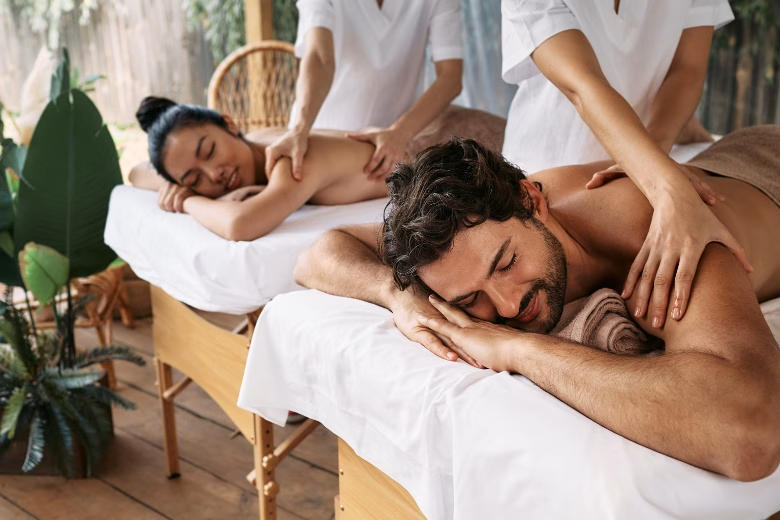
At O Spa Chicago, we believe restorative care should be an accessible, deeply personalized component of your wellness routine. Our luxurious spa in River North Chicago offers an inviting sanctuary where you can unwind. Through our therapeutic massage services, experienced therapists use specialized myofascial techniques, acupressure, and organic botanical lotions to loosen tight arches, release tense calves, and invigorate tired feet. Whether booking in advance or taking advantage of our welcoming walk-in policy, restorative hands-on therapy leaves you walking lighter.
Frequently Asked Questions About Foot Pain and Care
How long does it typically take to recover from plantar fasciitis?
Most individuals recover from plantar fasciitis within three to six months of starting consistent conservative care. Over 80% of cases resolve completely without surgery or invasive procedures when daily calf stretching, ice rolling, supportive footwear, and over-the-counter orthotics are applied consistently.
What is the difference between corns and calluses?
While both develop from friction and pressure, calluses are broad, flat, painless areas of thickened skin that typically form on weight-bearing areas like the heel or ball of the foot. Corns are smaller, deeper, and feature a hard central core that presses inward against nerves, usually forming on the tops or sides of toes where footwear rubs against bone.
Can poor circulation cause chronic foot discomfort?
Yes. Poor arterial circulation, often caused by peripheral artery disease (PAD) or smoking, starves lower extremity tissues of oxygen and nutrients. This can cause cramping pain in the calves and feet during walking (intermittent claudication), cold skin, slow-healing sores, and persistent night aches in the toes.
Conclusion
Healthy, pain-free feet are the foundation of an active, fulfilling life. Whether you are addressing acute heel stiffness from plantar fasciitis, managing everyday corns and calluses, or safeguarding your feet against the complications of diabetes, proactive care delivers proven results. By combining sensible at-home therapies, ergonomic footwear, and proper hygiene with timely medical consultations, you can overcome discomfort and protect your long-term mobility.
When your body needs restorative relaxation and personalized care, we invite you to experience the calming atmosphere at O Spa in Chicago. Discover our full menu of personalized spa services for rejuvenating foot and body care—from invigorating body treatments to deep tissue massages—and let our expert team help you step forward in comfort.