The Best Natural Shampoo for Seborrheic Dermatitis That Actually Works
September 22, 2026
Chicago’s Best Kept Secrets for Swedish Massage and Scalp Therapy
September 26, 2026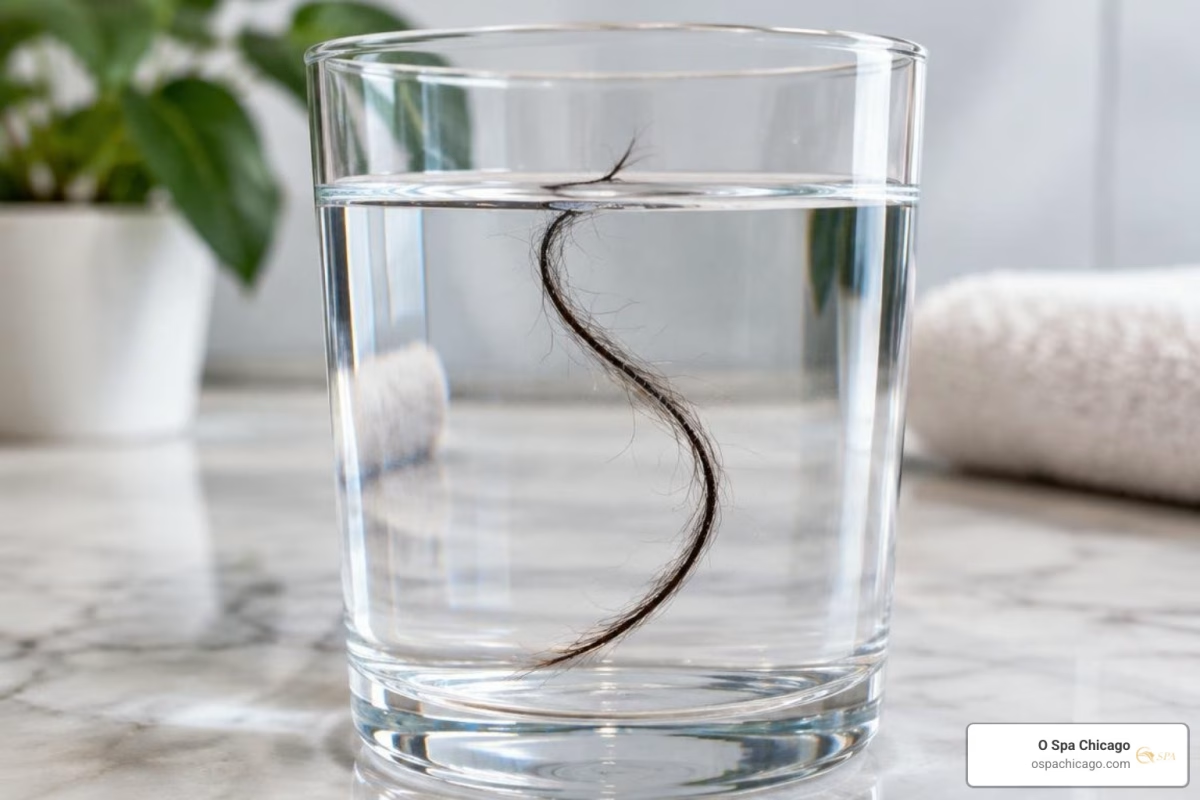
Types of Hair Treatment and How They Work
Effective hair treatments fall into four primary categories: bond repair, protein rebuilding, deep conditioning, and scalp therapy. Bond repair rebuilds broken disulfide bonds in the cortex, protein rebuilding restores internal keratin structure, deep conditioning replenishes lipids and seals the cuticle, and scalp therapy balances the follicle environment. Choose based on your primary concern: bond repair for bleach or heat damage, protein rebuilding for overly stretchy strands, deep conditioning for dryness and dullness, and scalp therapy for thinning or irritation.
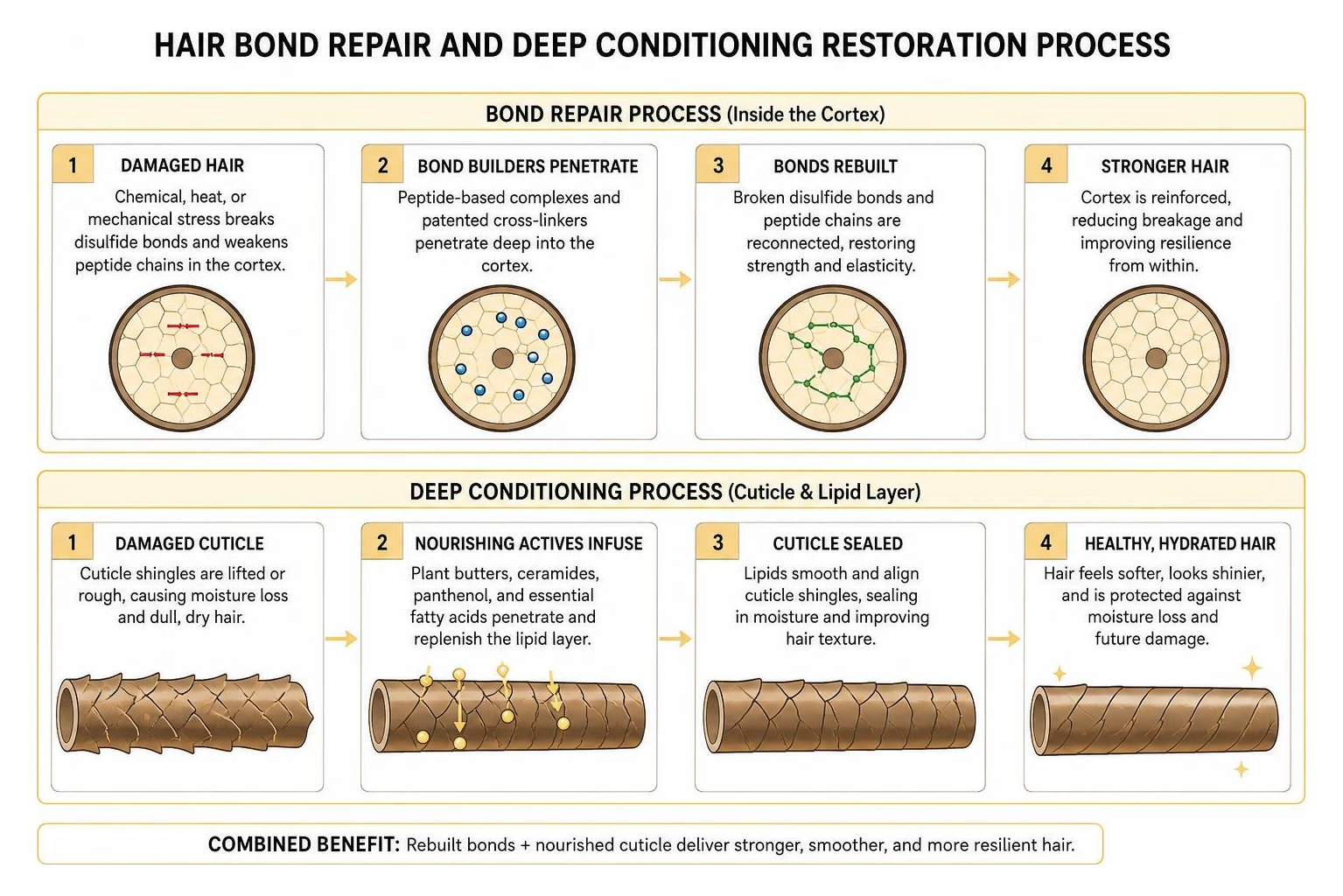
Every strand of hair consists of three primary layers: the protective outer cuticle, the fibrous inner cortex responsible for tensile strength and elasticity, and the central medulla. When chemical processing, mechanical friction, or thermal styling occurs, these structural layers degrade. Modern haircare relies on targeted formulas to rebuild broken disulfide bonds within the cortex, replenish lost essential fatty acids, and seal the cuticle shingles to prevent chronic moisture loss.
| Treatment Category | Primary Target | Key Active Ingredients | Best For | Typical Duration |
|---|---|---|---|---|
| Bond Repair | Cortex disulfide bonds & peptide chains | Patented cross-linkers, chia-derived B-Pro3™, peptides | Bleached, highlighted, heat-damaged hair | Permanent until new damage occurs |
| Protein Rebuilding | Keratin matrix structure | Hydrolyzed vegetable protein, amino acids, vegetal keratin | Mushy, overly stretchy, chemically compromised strands | 4–6 weeks |
| Deep Conditioning | Lipid layer & outer cuticle | Plant butters, ceramides, panthenol, Rose of Jericho | Dry, coarse, high-porosity, dull textures | 1–2 washes |
| Scalp Therapy | Scalp microbiome & hair follicles | Redensyl®, RootBioTec®, zinc PCA, botanical tonics | Thinning strands, irritation, flakiness, sebum buildup | Cumulative with regular use |
Keratin, Nanoplastia, and Protein Treatments
Protein treatments serve as structural reinforcement for hair that has lost its internal scaffolding. When hair is chemically processed—through bleaching, relaxers, or permanent color—the natural keratin structure breaks down. Incorporating vegetal keratin, hydrolyzed collagen, and formulas rich in 18 amino acids helps patch gaps in the damaged cuticle and cortex.
Professional in-salon options like nanoplastia provide deep nourishment and frizz control that can last up to six months by utilizing organic acids and amino acids rather than harsh chemicals. For maintaining strength between appointments, incorporating pre-wash hair repair treatments rebuilds internal resilience prior to cleansing. However, moderation is vital: over-depositing protein without sufficient moisture can make strands rigid and brittle.
Bond Repair and Deep Conditioning Formulations
While traditional conditioners coat the outer cuticle to provide slip, advanced bond builders work deeper within the strand. Technologies such as peptide-based hair bonding treatments target broken polypeptide chains to restore structural integrity.
Clinical lab testing reveals that bond-building complexes—such as chia seed-derived B-Pro3™—can deliver a 68% reduction in breakage after a single use, leaving strands up to 10x softer and more manageable compared to untreated controls. When paired with nourishing Chicago spa hair masks, these formulas restore moisture balance, smooth cuticle alignment, and shield against humidity.
Scalp Longevity and Growth Treatments
Healthy hair growth requires a balanced, well-nourished scalp environment. Because the scalp ages faster than other areas of skin on the body, oxidative stress and follicle miniaturization can lead to premature thinning and shedding.
Modern scalp therapies focus on cellular rejuvenation and follicle stimulation. Clinical studies demonstrate that active complexes like Redensyl® can increase hair growth by 200% compared to non-treated follicles, outperforming conventional options like minoxidil in cellular tests. Furthermore, botanical actives like RootBioTec® are clinically proven to visibly decrease hair fall by 30% within two months.
To support the foundation of hair growth, our scalp and hair treatment guide details how targeted follicle stimulation optimizes density. Exploring proven hair growth solutions provides a clear path forward for those experiencing postpartum shedding, seasonal hair loss, or age-related thinning.
Assessing Hair Damage, Texture, and Porosity
Selecting the right product begins with understanding hair porosity—the measure of your hair’s ability to absorb and retain moisture. Porosity is largely determined by cuticle condition:
- Low Porosity: Cuticles lie tightly packed and flat. Moisture struggles to penetrate, causing products to sit on the surface. Low-porosity strands benefit from lightweight, humectant-rich formulas applied with mild heat to gently open the cuticle.
- Medium Porosity: Cuticles are balanced, readily absorbing and retaining adequate hydration with minimal intervention.
- High Porosity: Cuticles are raised, chipped, or missing entirely due to bleaching, heat tools, or genetic texture. While moisture enters easily, it escapes just as quickly. High-porosity hair requires rich bond builders, lipid sealants, and botanical oils.
Signs You Need an At-Home Hair Treatment
Recognizing the subtle cues of strand distress prevents minor cuticle wear from turning into severe breakage. Watch for these key indicators:
- The Wet Stretch Test: Take a single wet strand of hair and gently stretch it. If it snaps instantly without stretching, it lacks moisture. If it stretches excessively, feels gummy, and fails to bounce back, it lacks internal protein and bond integrity.
- Persistent Mid-Length Frizz: When cuticles are compromised, strands absorb ambient atmospheric moisture, expanding unevenly into frizz.
- Loss of Color Vibrancy: Highly porous, damaged hair cannot hold onto color molecules, leading to rapid fading within two weeks of coloring.
- Velcro-Like Ends: If your ends catch and knot easily during detangling, the protective cuticle layer has worn away.
Matching Active Ingredients to Specific Hair Concerns
Tailoring your regimen requires matching your primary hair concern with proven active ingredients:
- For Dryness and Dullness: Look for argan oil, which has been shown in independent studies to increase hair shine by up to 118% after a single application. Combine with hyaluronic acid, panthenol (Pro-Vitamin B5), and botanical ceramides to lock in weightless hydration.
- For Chemical and Heat Damage: Seek out bio-peptides, chia seed extracts, and targeted intensive repair treatments designed to cross-link damaged keratin chains.
- For Scalp Flaking and Tightness: Prioritize soothing botanicals like aloe vera, tea tree oil, and nourishing scalp moisturizers that calm inflammation without leaving oily residue.
Professional Salon vs. At-Home Hair Care Routines
Balancing at-home maintenance with professional salon appointments ensures comprehensive hair health. In-salon treatments provide high-potency superactives, micro-mist steam activation, and professional assessments that penetrate deep into the cortex. For long-term structural maintenance, visiting a salon every 4 to 6 weeks helps prevent split ends, correct underlying porosity shifts, and protect color investments.
At home, weekly regimens maintain those results. Pre-shampoo treatments protect fragile strands from mechanical friction during washing, while weekly masks replenish moisture depleted by daily styling and environmental stressors.
How to Apply a Hair Treatment for Maximum Results
Application technique directly influences how well hair absorbs active ingredients. Follow this step-by-step protocol:
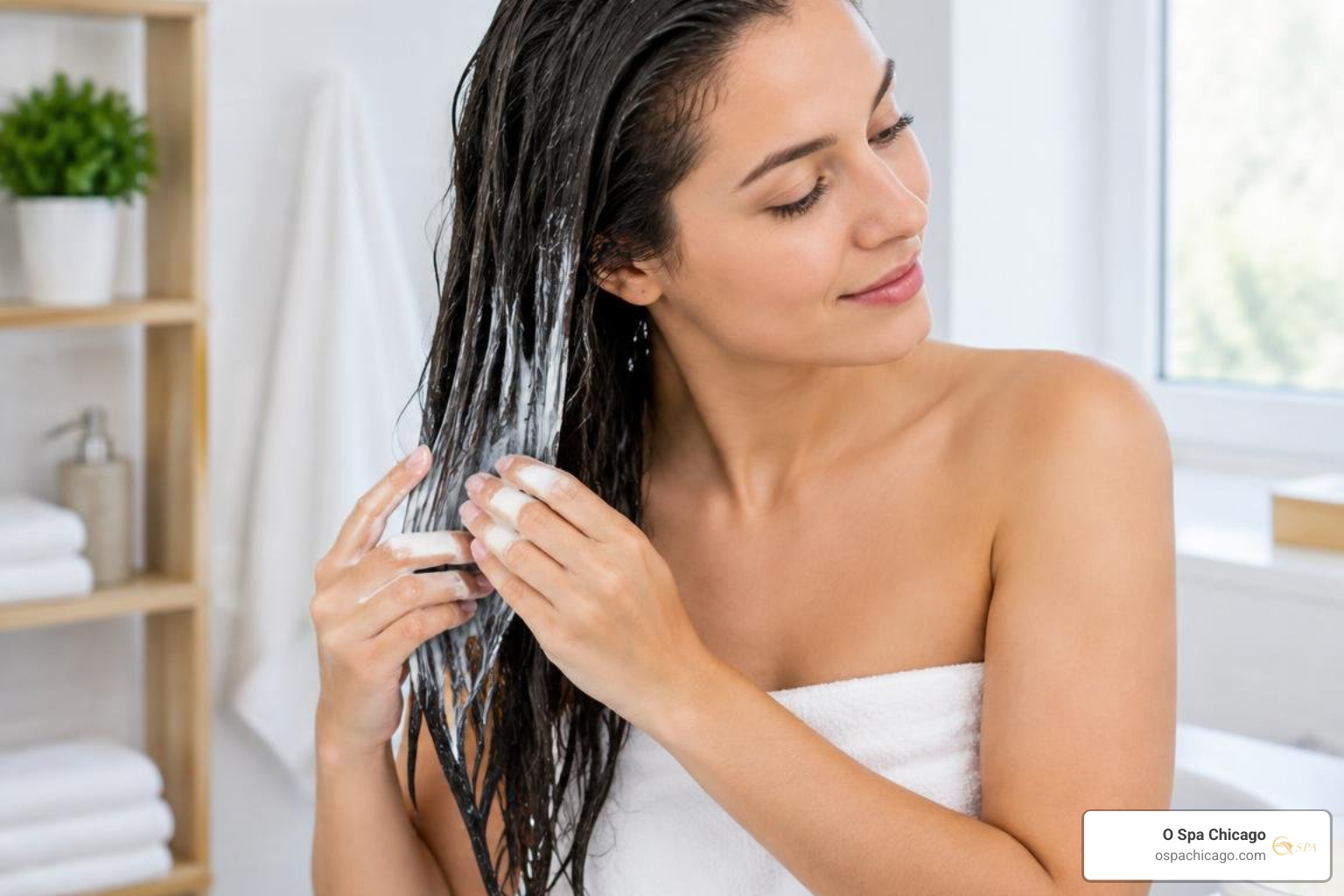
- Cleanse Thoroughly: Wash hair with a gentle, sulfate-free shampoo to remove styling residues, sebum, and environmental pollutants.
- Remove Excess Water: Gently squeeze excess moisture out or towel-blot strands until damp. Applying rich treatments to soaking-wet hair dilutes the active ingredients and prevents optimal absorption.
- Target Mid-Lengths to Ends: Distribute a quarter-sized amount evenly from mid-lengths down to the ends. Avoid applying rich conditioning masks directly to the scalp unless the product is specifically formulated as a scalp treatment.
- Detangle Gently: Use a wide-tooth comb or flexible wet brush to distribute the product evenly across every strand.
- Respect Processing Times: Leave the formula on for the recommended duration (typically 5 to 10 minutes for masks, or 3 minutes for rapid bond builders).
- Rinse with Tepid Water: Thoroughly rinse using lukewarm or cool water to seal the hair cuticle and lock in shine.
Preventing Treatment Overuse and Hygral Fatigue
More is not always better when it comes to reparative haircare. Overusing protein-heavy masks without alternating with pure hydrators leads to protein buildup, leaving strands stiff, unyielding, and prone to snapping.
Similarly, leaving conditioning treatments on for extended periods or sleeping in wet masks can cause hygral fatigue—damage caused by the constant swelling and contracting of the hair cuticle as it absorbs and loses water. To maintain balance, use intensive protein treatments only once every 3 to 4 weeks, prioritize moisture-rich hydration weekly, and incorporate a clarifying detox wash once a month to remove mineral and product buildup.
Frequently Asked Questions About Strand Health
How often should deep conditioning or bond-repair formulas be applied?
For moderately dry or chemically treated hair, a weekly deep conditioning or bond-repair application is ideal. Severely damaged, bleached, or heat-compromised hair may benefit from treatments every 1 to 3 washes until elasticity and softness improve. Once hair health stabilizes, shift to a bi-weekly maintenance schedule.
Can intensive reparative products cause hair damage if overused?
Yes. Overusing protein-rich treatments causes protein overload, making the hair fiber stiff, coarse, and prone to breaking. If your strands begin to feel straw-like or unmanageable after using a reparative mask, pause all protein-based products and use hydrating, moisture-only masks for two to three weeks to restore flexibility.
What is the best way to prolong salon treatment results?
To preserve in-salon glosses, bond services, and deep hydration treatments, wash hair with sulfate-free shampoos, lower water temperatures during rinsing, and always apply a thermal protectant before using blow dryers or hot tools. Sleeping on a silk or satin pillowcase also minimizes nightly mechanical friction and preserves cuticle smoothness.
Restoring Hair Health at O Spa Chicago
Every head of hair requires a customized approach based on its unique texture, porosity, and styling history. At O Spa Chicago, located in River North, our team provides personalized hair, scalp, and body wellness services using premium organic formulations. Whether you need a scalp-calming therapy, intense moisture restoration, or a professional bond-rebuilding service, we welcome walk-ins and offer convenient same-day appointments. Explore our complete selection of luxury spa services to begin your journey toward revitalized, resilient hair.