
A Comprehensive Guide to Effective Scalp Treatment
October 21, 2026
The Best Dandruff Shampoo for Oily Hair and Greasy Scalps
October 27, 2026
What Is Deep Tissue Bodywork and How Does It Work?
Deep tissue bodywork is a specialized modality designed to reach past the superficial layers of muscle. Everyday stress, prolonged sitting, and repetitive motions lead to the formation of adhesions—bands of rigid, painful tissue—within muscles, tendons, and ligaments. These adhesions block healthy blood circulation, limit flexibility, trap metabolic waste, and provoke localized inflammation.
By applying deliberate, slow strokes and sustained friction across the grain of muscle fibers, we physically break down these adhesions. This mechanical stimulation realigns disorganized connective tissue, flushes out stagnant fluids, and signals the central nervous system to turn off chronic protective holding patterns.
| Feature | Swedish Massage | Deep Tissue Bodywork |
|---|---|---|
| Primary Goal | Overall relaxation, gentle circulation, stress relief | Pain management, chronic adhesion release, postural correction |
| Pressure Level | Light to medium | Firm, deep, and focused |
| Tissue Depth | Superficial muscle layers | Deep muscle bellies, sub-layers, and deep fascia |
| Pacing & Stroke Style | Long, fluid, gliding strokes (effleurage, petrissage) | Slow, sustained friction, direct compression, stripping |
| Post-Session Feel | Instantly rested, light, relaxed | Productive lightness, mild muscular soreness for 24–48 hours |
The Science of Fascia and Neuromuscular Holding Patterns
Fascia is an uninterrupted, three-dimensional web of collagenous connective tissue that envelops every muscle fiber, blood vessel, and bone in your body. When tissues experience ongoing strain or emotional stress, interfascicular adhesions form between individual muscle bundles. This causes them to stick together rather than slide smoothly during movement.
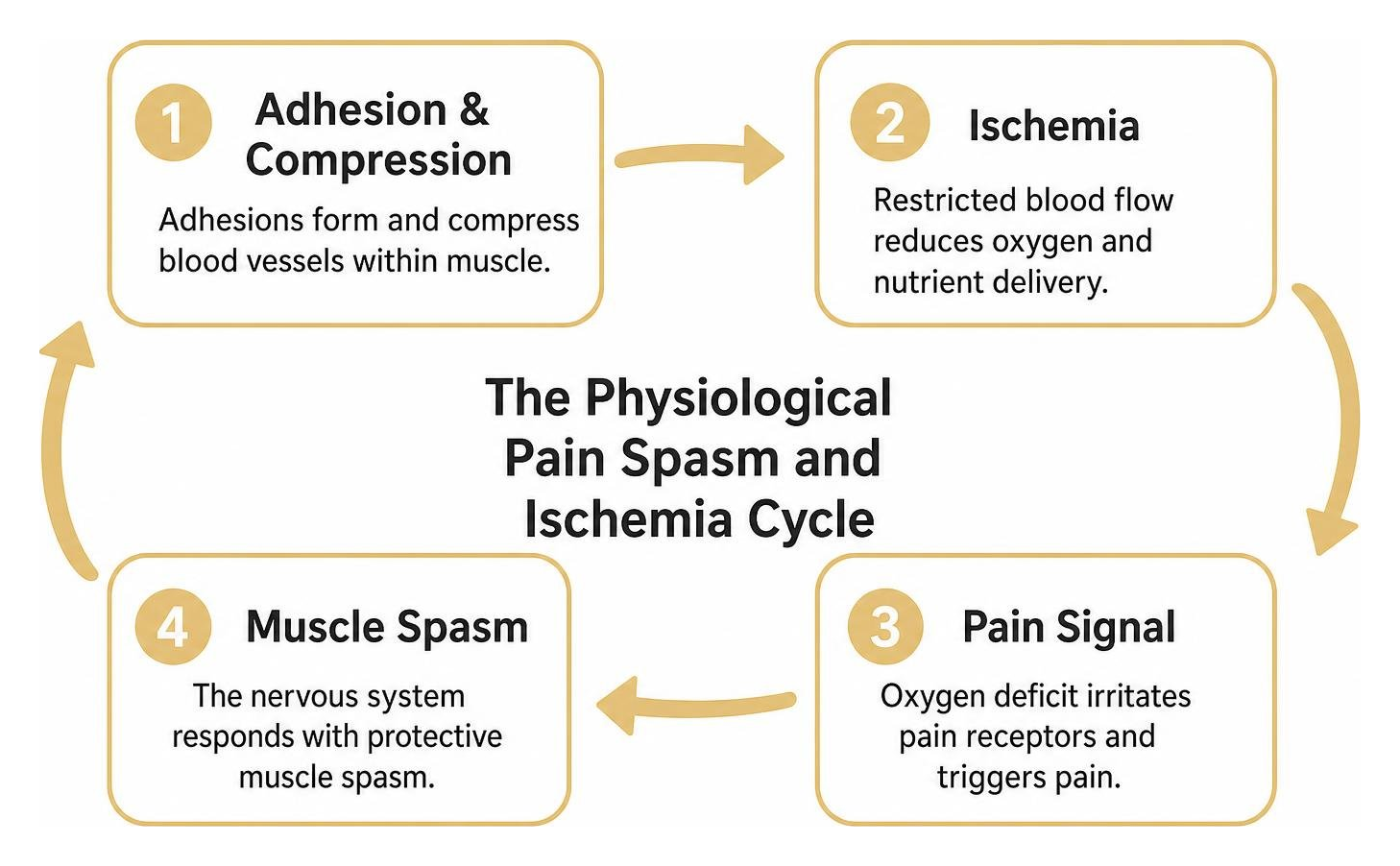
Over time, these restrictions create an ischemic state where compressed capillaries cannot deliver oxygen and nutrients to tissues. This oxygen deficit triggers pain receptors, prompting the central nervous system to spark protective muscular spasms. This vicious cycle reinforces structural holding patterns, particularly at the tenoperiosteal junction where tendons attach directly to bone. Advanced fascia-focused bodywork methods show that mobilizing these bone-level attachments resets nervous system guarding and restores natural functional movement.
Deep Tissue Bodywork vs. Other Modalities
Navigating different massage therapies helps you choose the right approach for your body’s specific needs:
- Swedish Massage: Utilizes light-to-moderate sweeping strokes along venous return pathways to encourage full-body relaxation.
- Myofascial Release: Employs sustained, gentle traction to stretch the collagenous fascial matrix rather than focusing on deeper muscle bellies.
- Sports Massage: Blends deep tissue methods with dynamic stretching and compression to optimize athletic training and speed up recovery times.
- Traditional Thai Bodywork: Blends assisted yoga-like stretching and rhythmic acupressure along energy lines without the use of massage oils. You can discover all about traditional Thai bodywork to see how full-body energetic stretching complements muscular therapies.
- Structural Integration (Rolfing): Focuses systematically on whole-body postural alignment and multi-segment fascial planes across a set series of sessions.
Core Techniques Used in Deep Tissue Sessions
Deep tissue bodywork requires precise biomechanical application to manipulate dense tissue safely and comfortably. Skilled practitioners utilize several core manual techniques:
- Cross-Fiber Friction: Applying transverse pressure across muscle grain to break down stubborn scar tissue and realign collagen fibers.
- Stripping: Executing deep, continuous pressure along the length of muscle fibers using thumbs, knuckles, or forearms.
- Trigger Point Therapy: Applying concentrated static pressure to localized hyperirritable spots (“knots”) to deactivate referred pain pathways.
- Active Release: Pinning a restricted muscle in place while the client actively moves the associated joint through its full range of motion.
- IASTM (Instrument-Assisted Soft Tissue Mobilization): Using beveled stainless steel tools or gua sha instruments to introduce controlled microtrauma that initiates cellular tissue remodeling.
Mechanical Pressures and Bodywork Tools
Effective deep work never starts with abrupt force. We always begin with a gentle warm-up phase using broad Swedish-style strokes and warm organic oils to increase local tissue temperature and soften superficial fascia. Once the superficial layers yield, our therapists lean their body weight into broad tools—such as forearms, flat elbows, and knuckles—to distribute force evenly without creating sharp, pin-pointed discomfort. Integrating focused manual pressure specifically addresses chronic sports injuries and postural imbalances to deliver targeted structural relief.
Proven Physical and Psychological Benefits
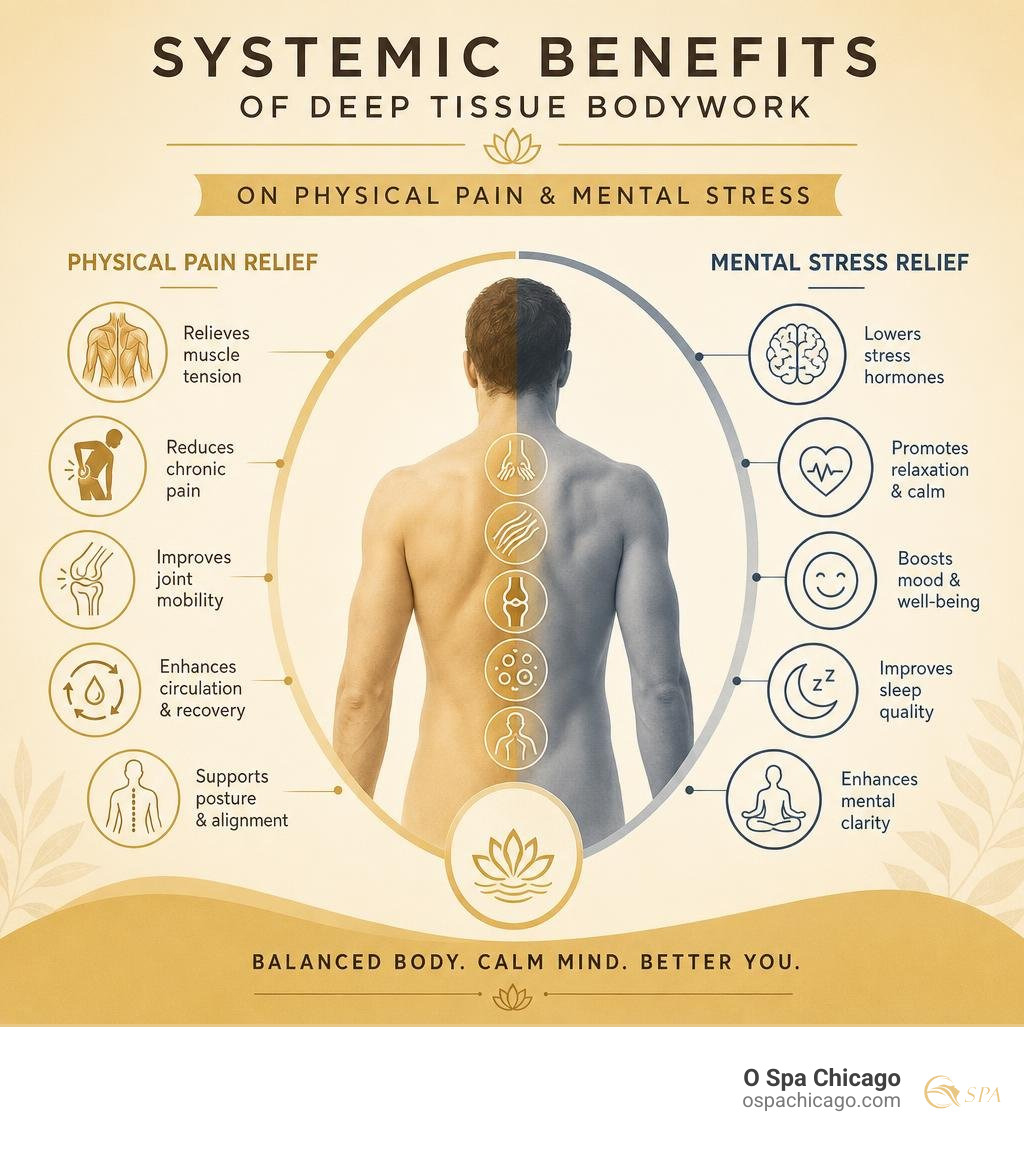
Clinical research consistently supports the health benefits of targeted bodywork. A landmark 2014 study revealed that deep tissue massage effectively reduced chronic low back pain, producing therapeutic benefits comparable to nonsteroidal anti-inflammatory drugs (NSAIDs) like ibuprofen. Another 2014 study of 59 participants confirmed significant pain reduction and functional mobility improvements in individuals suffering from chronic back issues.
Beyond physical relief, bodywork produces profound neurological benefits. A 2010 meta-analysis published in the Journal of Clinical Psychiatry demonstrated that modalities like deep tissue reduce circulating stress hormones (cortisol) and lower resting heart rate, while stimulating the release of oxytocin and serotonin to boost mood and induce mental calm.
Conditions Treated by Deep Tissue Bodywork
- Chronic Lower Back and Neck Pain: Releases compressed lumbar and cervical extensors caused by prolonged desk work.
- Sciatica & Piriformis Syndrome: Decompresses the deep piriformis muscle to relieve impingement on the sciatic nerve.
- Plantar Fasciitis: Softens dense connective tissue bands across the arch of the foot and releases tight calf muscles.
- Tension Headaches & TMJ: Releases trigger points in the upper trapezius, levator scapulae, and suboccipital muscles that refer pain into the temples and jaw.
- Athletic Overuse Injuries: Relieves symptoms of tennis elbow, runner’s knee, and rotator cuff strains.
For individuals seeking comprehensive wellness and structural tone, combining deep soft tissue manipulation with sculpt and relax with high-end body contouring massages offers a wonderful blend of muscle recovery and aesthetic revitalisation.
What to Expect: Session Flow, Sensations, and Safety

Your session begins with a comprehensive consultation to review your health history, daily posture, and specific pain areas. You will undress to your comfort level in total privacy and rest comfortably on a heated, cushioned table beneath professional draping sheets; only the specific muscle group being treated is ever uncovered.
Throughout the session, you should experience what therapists describe as “productive discomfort”—a deep, releasing sensation where tight tissue lets go without causing you to tense up or hold your breath. Clinical practitioners emphasize that forcing intense pain causes defensive muscle guarding, which works against therapeutic goals. Proper communication ensures your nervous system remains calm and relaxed.
After your session, it is normal to experience mild muscular soreness similar to a post-workout feeling for 24 to 48 hours. Staying well-hydrated, taking a warm bath, or applying cold packs to tender spots helps soothe tissue as it repairs and rebuilds.
Contraindications and When to Avoid Deep Pressure
While deep tissue work is highly effective, certain health conditions require caution, pressure adjustments, or alternative therapies:
- Blood Clotting Disorders or Anticoagulant Use: Direct deep pressure can dislodge clots or lead to severe bruising.
- Osteoporosis or Bone Fractures: Fragile bones cannot withstand forceful pressure.
- First-Trimester Pregnancy: Deep work is contraindicated during the first 14 weeks of gestation; specialized prenatal positioning should always be used in later trimesters.
- Recent Surgical Sites and Open Wounds: Deep manipulation can disrupt healing incisions or spread localized infections.
- Active Cancer Treatments: Requires written clearance from an oncologist to avoid placing undue stress on compromised lymphatic or vascular systems.
Session Frequency, Duration, and Costs
Session length depends on your personal wellness goals. A focused 60-minute session works well for targeted problem areas (such as the neck, shoulders, or lower back), while a 90-minute appointment allows for a thorough full-body reset alongside concentrated deep work.
Consistent, fascia-first treatment plans support athletic recovery and prevent injuries over time, helping you establish sustainable wellness habits.
- Acute Pain or Injury Recovery: 1 to 3 sessions spaced 1 to 2 weeks apart to eliminate acute muscle spasms.
- Chronic Tension and Postural Correction: Ongoing weekly or bi-weekly sessions over a 6 to 12-week rehabilitation phase.
- Preventative Maintenance: A monthly session to maintain tissue flexibility and manage everyday stress.
Standard professional sessions range from $120 to $230 depending on duration and clinic location. While many spas do not bill health insurance providers directly, licensed therapists can often supply detailed medical superbills for out-of-network reimbursement, and payments are typically eligible under Health Savings Accounts (HSA) and Flexible Spending Accounts (FSA).
Frequently Asked Questions about Deep Tissue Bodywork
Should deep tissue bodywork be painful?
No. While deep tissue work involves firm, concentrated pressure, it should never cross into sharp or unbearable pain. The old saying “no pain, no gain” does not apply to healthy massage therapy. If the pressure causes you to flinch, clench your jaw, or hold your breath, your body will instinctively tighten up to protect itself. Always let your therapist know if you need lighter pressure so your nervous system can relax and let go.
How many sessions are needed to feel lasting relief?
Most clients feel noticeable relief from acute stiffness after their very first appointment. However, resolving long-standing postural issues and remodeling dense scar tissue typically requires 3 to 6 consistent sessions paired with simple daily stretches and ergonomic adjustments at your desk.
How does one prepare for and recover from a session?
Drink plenty of water before your appointment, avoid heavy meals right before arriving, and wear comfortable, loose-fitting clothing. After your session, drink plenty of water to help your body process metabolic waste, get a good night’s rest, and apply gentle heat or a cold pack if you experience any mild post-treatment soreness.
Conclusion
Deep tissue bodywork goes far beyond surface relaxation—it is a clinically supported, transformative therapy that releases chronic pain, restores range of motion, and calms a stressed nervous system. By systematically clearing fascial restrictions and stubborn muscle adhesions, you give your body the space and support it needs to heal.
At O Spa in Chicago, we create peaceful, customized wellness experiences tailored to your body’s unique needs. Whether you are recovering from intense training or looking to relieve desk-posture stiffness in River North, our experienced therapists use pure organic products to help you feel your best. We welcome walk-ins and same-day appointments, so take the first step toward lasting comfort and explore our massage services today.