How to Tighten Loose Arm Skin Without Surgery
July 16, 2026
The Ultimate Guide to Styling Hair with Psoriasis Without the Itch
July 20, 2026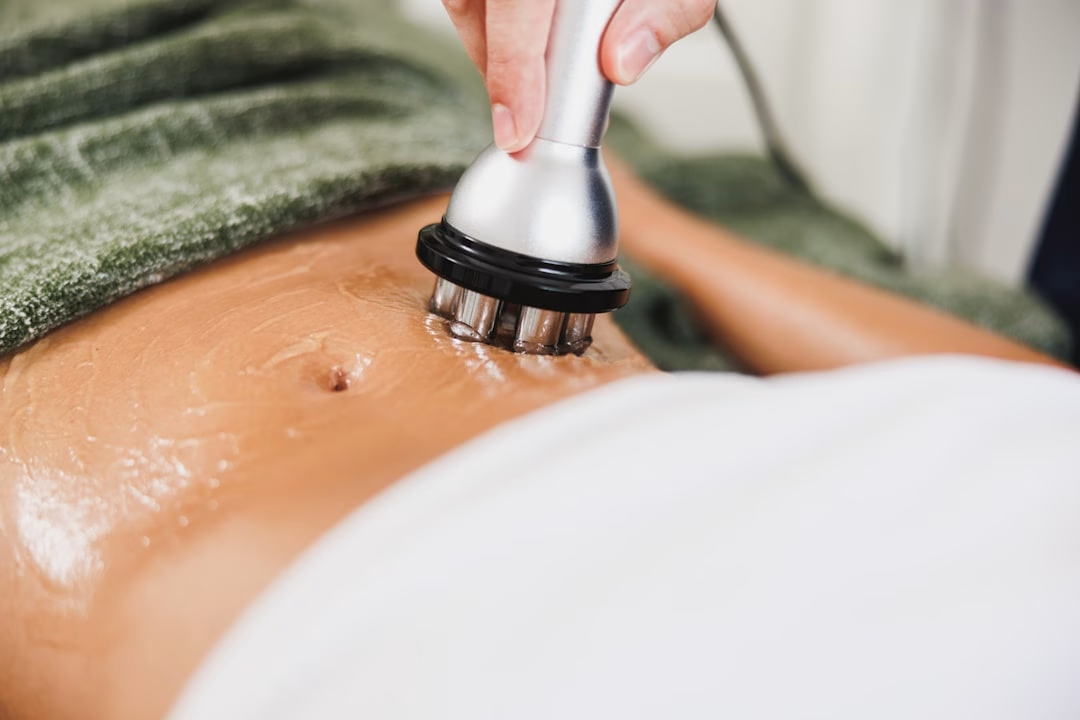
What is Non-Surgical Body Skin Tightening?
Body skin tightening is one of the most searched topics in aesthetics right now — and for good reason. Millions of people are dealing with skin that feels looser, crepier, or less firm than it used to, and they want real answers without committing to surgery.
Here’s a quick overview of what you need to know:
| Question | Quick Answer |
|---|---|
| What is it? | Treatments that stimulate collagen to firm and lift loose skin |
| Best candidates | Adults with mild to moderate skin laxity |
| Top technologies | Ultrasound, radiofrequency (RF), laser/infrared |
| Sessions needed | 1–6 sessions depending on the method |
| Results last | 1–3 years with maintenance |
| Downtime | Little to none for non-surgical options |
| Average cost | $755–$4,000+ depending on technology and area |
So what’s actually going on under the surface? Starting in your mid-20s, your body produces about 1% less collagen every year. By your late 30s and 40s, that slowdown becomes visible — skin on the arms, abdomen, thighs, and neck starts to sag, feel thinner, or develop a crepey texture. Pregnancy, weight loss, and sun exposure accelerate this process.
The good news: you don’t have to accept it, and you don’t have to go under the knife to address it.
Modern non-invasive treatments can heat the deeper layers of your skin, triggering your body to rebuild collagen and elastin from within. The results are gradual and natural-looking — and the best part is most people walk out of a session and go straight back to their day.
This guide walks you through every option available in 2026 — from clinical technologies to at-home strategies — so you can make a smart, informed choice for your skin and your schedule.
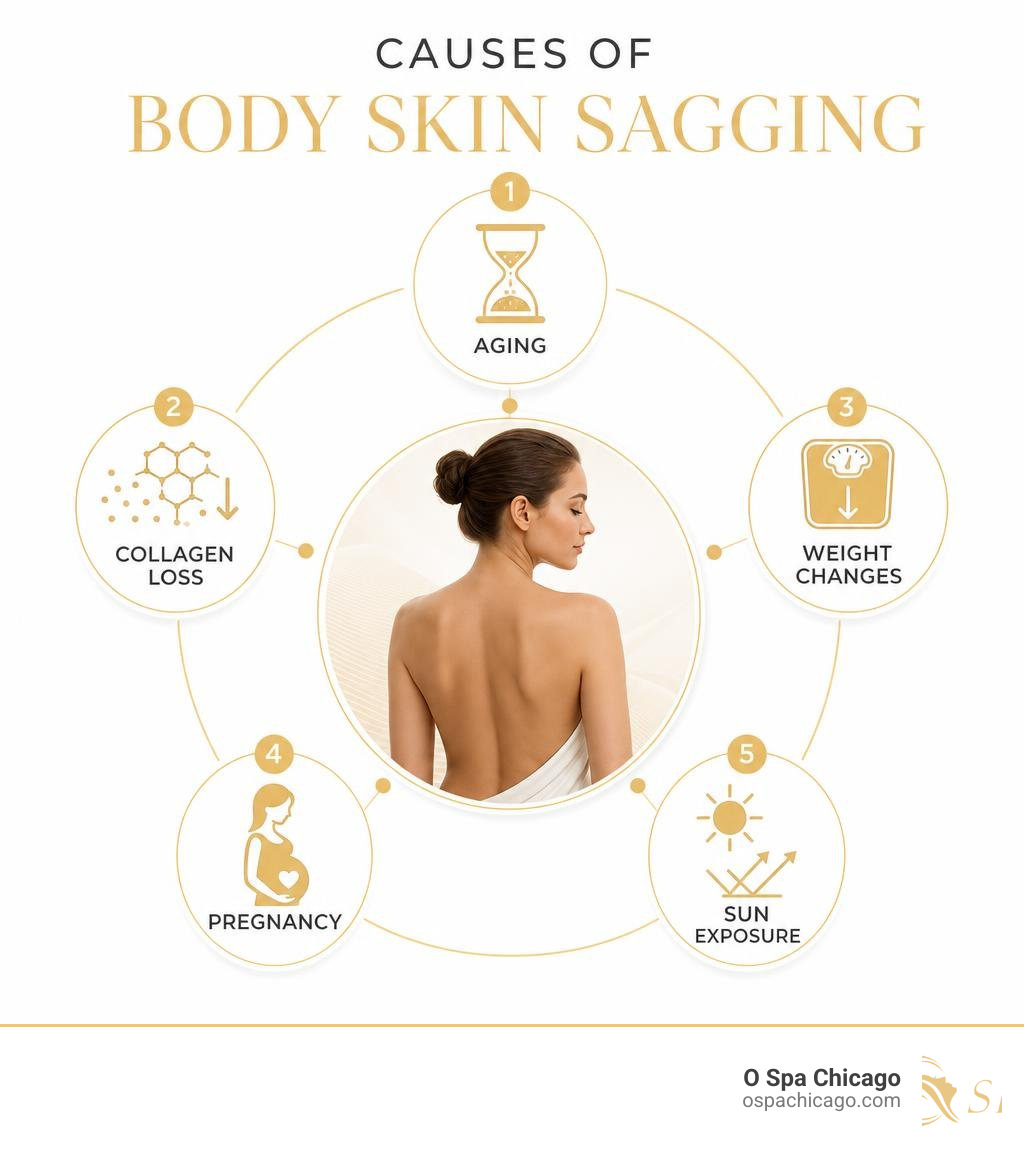
Body skin tightening terminology:
Non-surgical body skin tightening refers to a class of non-invasive, in-office cosmetic procedures designed to improve skin elasticity, texture, and firmness without incisions, sutures, or anesthesia. Unlike surgical options that physically cut away excess skin, non-surgical methods work from the inside out by targeting the structural foundations of your skin.
To understand how it works, we have to look at the anatomy of our skin. The dermis (the middle layer of the skin) is supported by a structural scaffolding composed primarily of two proteins:
- Collagen: Provides structural strength, thickness, and support.
- Elastin: Allows the skin to stretch and snap back into place.
These proteins are produced by specialized cells called fibroblasts. As we age, or when our skin is stretched during pregnancy or significant weight fluctuations, these fibers become damaged, stretched, and less abundant.
Non-surgical technologies use controlled energy (such as ultrasound, radiofrequency, or infrared light) to safely penetrate the outer layer of the skin (the epidermis) and heat the underlying dermis. When this tissue is heated to a precise target temperature—typically between 40°C and 42°C at the surface, and higher in the deeper layers—it triggers two distinct reactions:
- Immediate Tissue Contraction: The existing collagen fibers under the skin experience a thermal reaction, causing them to immediately contract and shorten. This can provide a subtle, instant firming effect.
- Fibroblast Activation: The controlled heat stress signals the body that a “micro-injury” has occurred. This jumpstarts the body’s natural healing cascade, prompting fibroblasts to synthesize fresh, healthy collagen and elastin over the following weeks and months.
Because this process relies on your body’s natural regenerative abilities, it does more than just tighten; it restores the biological health of your skin. Taking care of your skin’s structural health also has profound psychological benefits. We often talk about The Connection Between Skincare and Mental Wellness because when you feel comfortable, confident, and radiant in your own skin, it reduces stress and elevates your overall quality of life.
Top Technologies for Non-Invasive Firming
Selecting the right technology is key to achieving the best possible results. Different devices target different depths of tissue, making some better suited for specific body parts or skin concerns.

Here is a quick comparison of the three primary modalities used for non-surgical firming:
| Feature | Ultrasound (HIFU) | Radiofrequency (RF) | Laser & Infrared |
|---|---|---|---|
| Primary Target Depth | Deep (up to 5mm) | Medium to Deep (epidermal/dermal layers) | Superficial to Medium (dermal layers) |
| Best For | Structural lifting, brow, neck, arms, abdomen | Bulk heating, smoothing crepiness, cellulite, body contouring | Surface texture, mild laxity, chest, arms |
| Session Experience | Warm, focused pulses; some deep tingling | Feels like a hot stone massage | Warm, snapping sensation with cooling |
| Typical Sessions | 1 session | 3 to 8 sessions | 3 to 6 sessions |
| Downtime | Zero downtime | Zero to minimal (2-3 days for RF microneedling) | Zero downtime |
The Role of Ultrasound in Body Skin Tightening
Ultrasound-based skin tightening utilizes High-Intensity Focused Ultrasound (HIFU) or microfocused ultrasound to deliver acoustic energy deep beneath the skin’s surface. What makes ultrasound unique is its ability to reach depths of up to 5mm—the exact same foundational layer (the SMAS) that plastic surgeons target during surgical lifts.
Modern systems, such as Ultherapy PRIME for Arms and Abdomen – Ultherapy , feature real-time visualization. This allows your provider to see the exact layers of tissue they are treating on a screen, ensuring the energy is delivered precisely where it will have the greatest impact while avoiding bone or blood vessels.
Ultrasound energy bypasses the surface of the skin entirely, focusing its energy at tight, microscopic points deep in the dermis to stimulate intense collagen and elastin production. It is highly effective for lifting and tightening difficult areas like the upper arms, above the knees, and the abdomen. Because it goes so deep, it is often a preferred choice for individuals looking for significant lifting without surgery.
Radiofrequency Technology for Body Skin Tightening
Radiofrequency (RF) technology is the gold standard for bulk heating and smoothing out crepey skin texture. Unlike light-based treatments, RF energy is “color-blind,” meaning it is completely safe for all skin tones without the risk of hyperpigmentation.
During an RF session, energy is applied to the skin using specialized handpieces. The electrical resistance of our tissue converts this energy into heat, causing immediate collagen contraction. There are several ways RF is delivered:
- Multisource Phase-Controlled RF: This advanced approach uses multiple independent generators to control the electrical fields. It forces the energy deep into the tissue while keeping the surface comfortable. Clinical studies show that 92% of patients were pleased with their results after completing multisource RF treatments, with 44% showing more than a 75% improvement in body shape.
- RF Microneedling: Devices like Morpheus8 combine physical microneedles with RF energy. The needles penetrate the skin and release RF energy directly into the deeper dermal layers, maximizing collagen remodeling.
- Temperature-Controlled RF: Devices like TempSure Firm and Forma™ RF continuously monitor skin temperature to ensure the tissue stays in the therapeutic zone (40-42°C) safely and comfortably.
These advanced RF systems allow providers to customize treatments based on the patient’s unique skin thickness and laxity, ensuring optimal results across different areas of the body.
Laser and Light-Based Therapies
Laser and light-based technologies target water as a chromophore in the skin, heating the tissue to trigger neocollagenesis (the creation of new collagen) and neoelastogenesis (the creation of new elastin).
Infrared devices, operating in the 1000 to 1800 nm wavelength range, are highly effective for body skin tightening. Because of their longer wavelengths, they can bypass melanin in the skin and penetrate deep into the dermis. Devices like Titan or SkinTyte use infrared light to heat dermal water, causing the collagen to undergo irreversible denaturation at 65-70°C, which leads to immediate recoil and long-term remodeling.
These therapies are fantastic for treating mild laxity on the abdomen, chest, and arms. Because they also target surface-level imperfections, they can improve overall skin tone and texture simultaneously. For a deeper scientific dive into these light-based modalities, consult the medical literature at Lasers and Lights: Skin Tightening – Clinical Tree .
Non-Surgical vs. Surgical Skin Tightening: How to Choose
When deciding between non-surgical and surgical options, managing expectations is key. Non-surgical treatments are highly effective, but they are not magic.
The choice ultimately comes down to three main factors:
- Severity of Skin Laxity: If you have mild to moderate loose skin—such as postpartum belly skin, mild sagging on the arms, or “crepiness” around the knees—non-surgical treatments are usually the ideal path. However, if you have severe sagging, such as an “apron” of skin after massive weight loss, non-surgical options will not deliver the dramatic flat result you want. In those cases, surgical procedures like a tummy tuck (abdominoplasty) or arm lift (brachioplasty) are required to physically excise the excess tissue.
- Downtime and Risks: Surgical options require general anesthesia, surgical incisions, scarring, and weeks of recovery. Non-surgical options offer a walk-in, walk-out experience with virtually zero downtime.
- Subdermal Technologies: There are also “in-between” minimally invasive options like Renuvion, which uses helium plasma and RF energy inserted just under the skin via tiny entry points to shrink-wrap the tissue. This technology bridges the gap between non-invasive treatments and full surgical procedures.
If you are located in the Chicago area, consulting with a reputable local wellness clinic or medical spa is the best way to get a personalized assessment of your candidacy and find the right treatment plan for your body goals.
At-Home Care and Lifestyle Strategies for Firmer Skin
While clinical treatments do the heavy lifting, your daily habits and at-home skincare routine play an essential role in maintaining and enhancing your results. Think of it as a partnership: clinical treatments build the foundation, and your lifestyle protects it.
- Medical-Grade Topical Creams: Look for body lotions formulated with active ingredients that support dermal proteins. Peptides, retinoids, caffeine, and glucosamine are fantastic for improving surface crepiness and supporting skin elasticity. Products like BodiContour™ – Clinically Proven Body Firming | Revision Skincare® use specialized technologies to support collagen production, while drugstore classics like Gold Bond Tight & Firm Body & Face Lotion | Gold Bond® offer reliable daily hydration and surface firming.
- Nutritional Supplements: Emerging research suggests that oral supplements can support skin thickness and hydration from the inside out. Clinical trials have shown that daily consumption of high-quality collagen peptides and hyaluronic acid can improve skin tone, thickness, and overall hydration within 8 to 12 weeks.
- Targeted Exercise: While exercise cannot tighten loose skin tissue itself, building the muscle directly underneath can fill out the area, dramatically reducing the appearance of sagging. Incorporating strength training at least two days a week is highly beneficial.
- Professional Spa Therapies: Regular body treatments can boost circulation, support lymphatic drainage, and keep the skin hydrated. Many people ask, Is a Luxury Body Firming Wrap Worth the Splurge? The answer is a resounding yes—especially when you choose professional care. Combining clinical energy treatments with natural, holistic therapies maximizes skin health. Understanding The Benefits of Choosing Natural Spa Services Over Synthetic Options can help you select clean, organic treatments that nourish your skin without exposing your body to harsh synthetic chemicals.
Frequently Asked Questions about Body Skin Tightening
What is the average cost of non-surgical skin tightening?
The cost of non-surgical skin tightening varies depending on the technology used, the size of the treatment area, and your geographic location.
On average, ultrasound skin tightening therapy costs around $993 per session (with typical ranges from $770 to $1,862). Radiofrequency skin-tightening treatments average $755 per session (with ranges from $582 to $1,448).
Because most patients require a series of 3 to 6 sessions for technologies like radiofrequency to achieve optimal results, a full treatment package for a larger body area (such as the abdomen or thighs) can range from $1,500 to $4,000+. Many providers offer flexible financing options to make these treatments more accessible.
How many sessions are needed and how long do results last?
The number of sessions depends on the technology:
- Ultrasound (HIFU): Often requires only a single session, with results developing over 2 to 6 months.
- Radiofrequency & Lasers: Typically require a series of 3 to 8 sessions spaced 1 to 4 weeks apart.
Because collagen takes time to rebuild, your peak results will typically appear 3 to 6 months after your final session. Once the new collagen is established, results can last 1 to 3 years. However, because your body continues to age naturally, we recommend scheduling a single maintenance session every 12 months to preserve your firm, youthful look.
What is the expected downtime and recovery?
For the vast majority of non-surgical treatments, there is zero downtime. You can walk out of your appointment and immediately return to your normal daily activities, including exercise.
Immediately following treatment, you may experience mild redness, slight swelling, or warmth in the treated area—similar to a mild sunburn. This is a completely normal physical response to the thermal energy and typically resolves on its own within a few hours to 2 days. If you undergo RF microneedling, you may have tiny micro-crusts on the skin for 3 to 5 days, during which you should keep the area hydrated and protected from the sun.
Conclusion
Achieving firmer, tighter skin on your body doesn’t have to involve surgery, scars, or long recovery times. Modern non-invasive technologies offer safe, clinically proven pathways to rebuild your skin’s natural scaffolding from the inside out.
At O Spa Chicago, located in the heart of River North, Chicago, we believe in a holistic, personalized approach to beauty and wellness. We pair premium wellness experiences with high-quality, organic products that respect your body’s natural biology. Whether you are looking to complement your clinical treatments with our luxurious Spa Services or relax your body with our therapeutic Massage Services, our expert team is here to design a custom journey just for you.
Walk-ins and same-day appointments are always welcome. Stop by our River North sanctuary today and let us help you feel radiant, tight, and confident from head to toe!