How to Tighten Your Skin from Head to Toe
July 17, 2026
Sculpt and Relax with High-End Body Contouring Massages
July 22, 2026
Why Finding the Best Hair Styling Products for Psoriasis Changes Everything
The best hair styling products for psoriasis are fragrance-free, alcohol-free, and sulfate-free formulas that soothe the scalp rather than irritate it. Here’s a quick look at the top options:
| Product Type | Best For | Key Ingredients to Look For |
|---|---|---|
| Medicated shampoo | Removing plaques, reducing itch | Salicylic acid, coal tar, tea tree oil |
| Leave-in serum | Between-wash relief | Aloe vera, niacinamide, glycerin |
| Conditioner | Moisture and manageability | Witch hazel, biotin, panthenol |
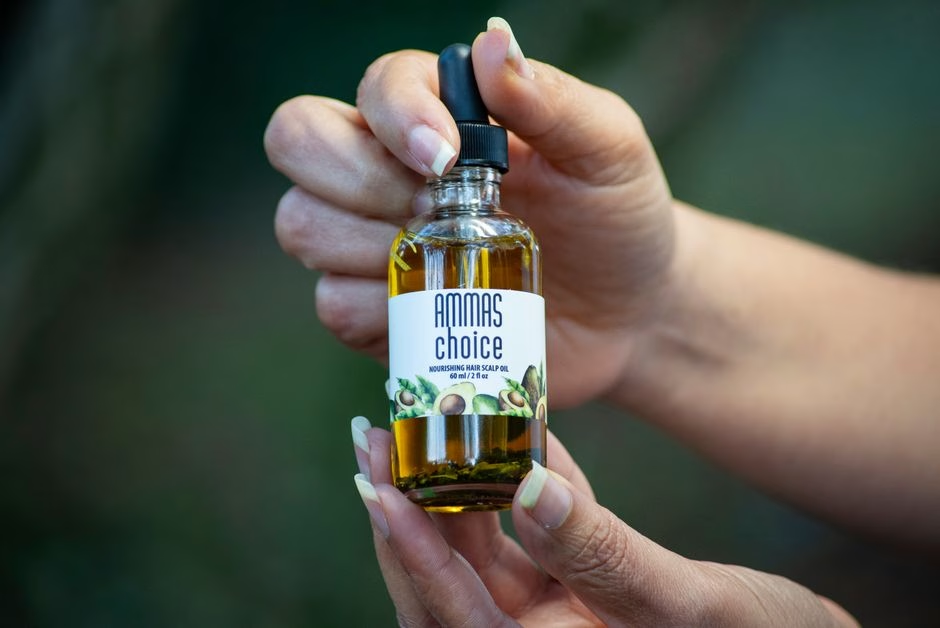
| Scalp oil | Pre-wash plaque softening | Coconut oil, olive oil, rosemary |
| DIY spray | Volume without irritation | Glycerin + alcohol-free witch hazel (50/50 mix) |
Scalp psoriasis affects up to 56% of people with psoriasis. It causes redness, flaking, tightness, and relentless itching — and that’s before you add hairspray, mousse, or dry shampoo into the mix.
For many people, a regular styling routine becomes a daily gamble. Will this gel trigger a flare? Will that hairspray sting? One community member put it simply: they couldn’t wear black clothing during the holidays because of visible flaking — until they found a routine that worked.
The problem is that most styling products aren’t designed with a sensitive, inflamed scalp in mind. Many contain ingredients that actively make psoriasis worse.
This guide cuts through the noise. You’ll learn exactly which products are safe, which ingredients to avoid, and how to style your hair without turning your scalp into a flare-up waiting to happen — all in as little time as possible.
Best hair styling products for psoriasis terms to learn:
Understanding Scalp Psoriasis and Styling Challenges
Managing hair styling when dealing with scalp psoriasis is a delicate balancing act. Because hair naturally traps skin scales, psoriatic plaques on the scalp often become much thicker, more stubborn, and harder to treat than those on the rest of the body. When you try to style your hair around these plaques, a major neurological and skin phenomenon comes into play: the Koebner phenomenon.
The Koebner phenomenon dictates that any trauma, friction, or significant irritation to healthy skin can cause new psoriasis lesions to form in that exact spot. This means that seemingly harmless styling habits can directly trigger a painful flare-up.
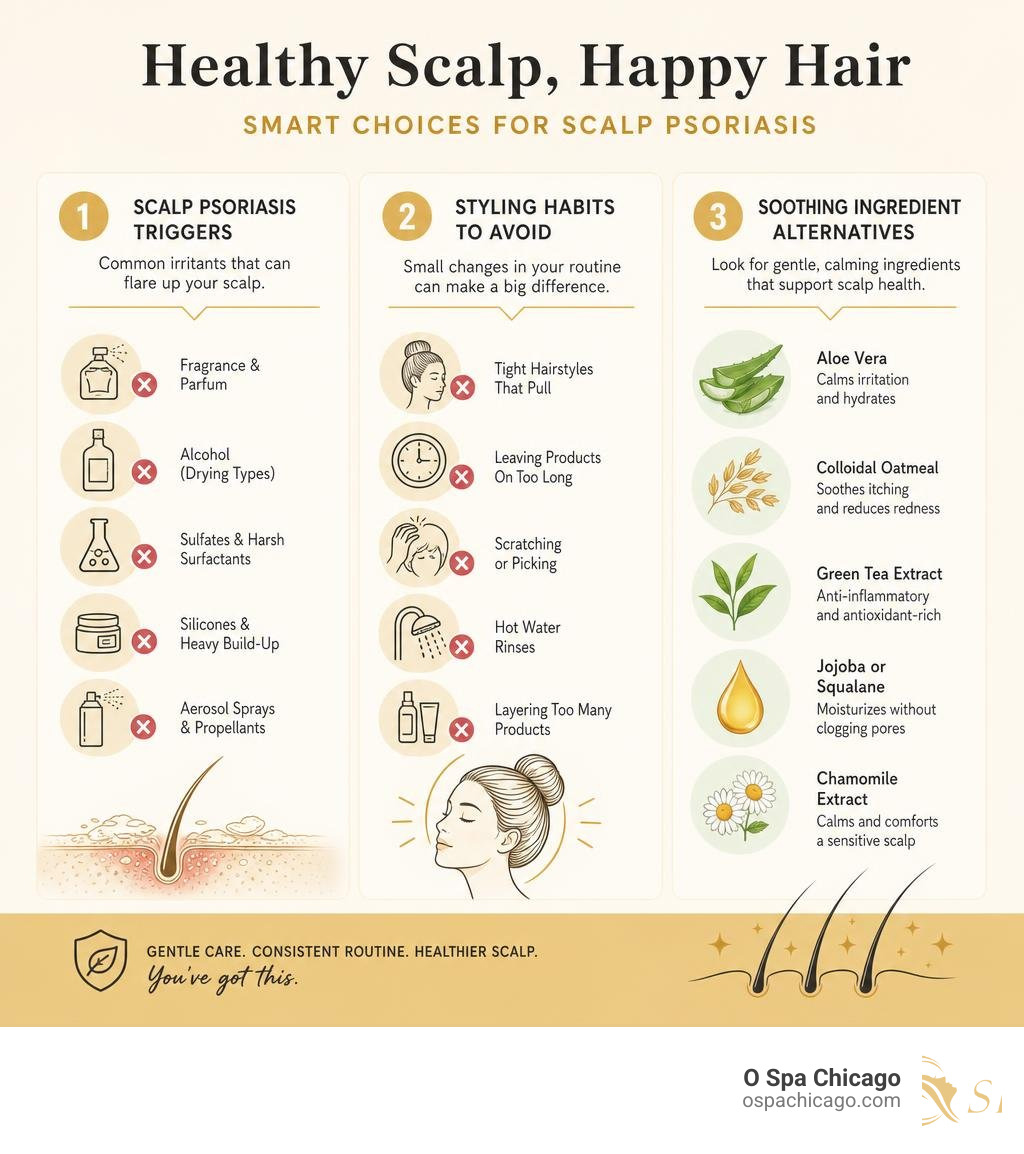
To keep your scalp calm, you must identify and eliminate common styling habits that cause trauma:
- Tight Hairstyles: High ponytails, tight buns, cornrows, and heavy extensions pull aggressively on the hair follicles and the scalp. This constant tension creates micro-trauma, leading to localized inflammation and new plaques along your hairline and crown.
- Aggressive Hair Brushing: Scratching your scalp with firm plastic bristles or metal pins to “scrape away” flakes is highly damaging. It tears the skin barrier, causes bleeding, and invites the Koebner phenomenon to take hold.
- Intense Heat Styling: Direct heat from blow dryers, flat irons, and curling wands rapidly dehydrates the scalp. This lack of moisture causes the skin to crack, itch, and scale even faster.
According to professional Dermatologist hair care tips, keeping your styling routine gentle is paramount. Working with your hair’s natural texture and choosing styles that naturally camouflage plaques without pulling on the roots will keep your scalp happy and healthy.

How to Choose the Best Hair Styling Products for Psoriasis
Selecting the best hair styling products for psoriasis requires reading ingredient labels with the scrutiny of a cosmetic chemist. The goal is to find products that provide hold, texture, and volume while respecting the delicate epidermal barrier of an inflamed scalp.
| Irritating Ingredients to Avoid | Soothing Alternatives to Look For |
|---|---|
| Denatured Alcohol (Ethanol, SD Alcohol) | Purified Water or Aloe Vera Juice |
| Sulfates (SLS, SLES) | Decyl Glucoside or Coco Glucoside |
| Synthetic Fragrances & Perfumes | Natural Herbal Extracts (Chamomile, Lavender) |
| Artificial Dyes (Coal Tar Dyes, Synthetic Colors) | Colorless, Transparent Formulations |
| Parabens & Harsh Preservatives | Niacinamide & Panthenol (Vitamin B5) |
When shopping, look for styling products explicitly labeled for sensitive skin, hypoallergenic, or fragrance-free. The safest styling products act as an extension of your skincare routine, offering scalp protection alongside style.
Ingredients to Avoid in the Best Hair Styling Products for Psoriasis
Many conventional styling products are packed with hidden irritants. Here is what you should actively avoid:
- Denatured Alcohol: Commonly found in hairsprays, styling mousses, and quick-drying gels, alcohol is incredibly drying. It strips the scalp of its natural lipids, leading to a tight, itchy sensation, and it will sting if applied to open or cracked plaques.
- Sulfates: These harsh surfactants strip moisture from both the hair shaft and the skin, leaving the scalp highly vulnerable to environmental irritants.
- Synthetic Dyes and Fragrances: Fragrance is the number one cause of cosmetic contact dermatitis. Artificial colors serve no functional purpose in styling and only add risk of allergic reactions.
- Parabens: These chemical preservatives can easily penetrate compromised skin barriers, causing contact irritation.
For safety standards, you can refer to the official FDA drug safety guidelines to understand how active therapeutic ingredients are regulated to minimize risks for chronic skin conditions.
Safe Alternatives and the Best Hair Styling Products for Psoriasis
Fortunately, you do not have to sacrifice your personal style to keep your scalp comfortable. There are highly effective, skin-friendly alternatives that provide excellent styling results:
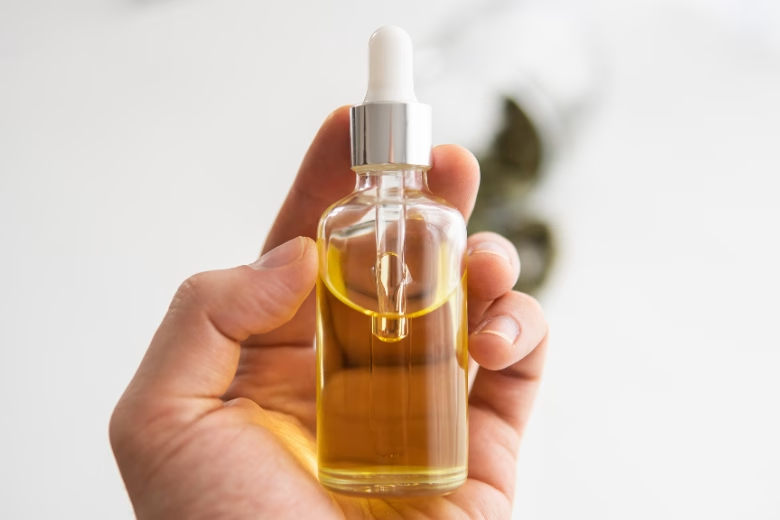
- Aloe Vera: This natural humectant provides a light, flexible hold for styling while delivering deep hydration and cooling relief to itchy skin.
- Glycerin: A powerful moisture-binding ingredient that keeps the scalp supple and prevents styling products from drying into flaky, white residues.
- Witch Hazel (Alcohol-Free): Known for its natural anti-inflammatory and mild astringent properties, alcohol-free witch hazel can calm scalp redness and soothe irritation.
Real-world wisdom from Inspire community recommendations highlights highly creative solutions. Many community members recommend using a 50/50 DIY mixture of vegetable glycerin and alcohol-free witch hazel in a spray bottle to add lightweight volume and shine without any irritation. Others suggest using DevaCurl No-Poo for non-lathering, ultra-gentle cleansing, or applying a tiny dab of Epaderm ointment to style short hair while keeping the scalp deeply moisturized.
Minimizing Irritation: Application Techniques and Styling Habits
How you apply your styling products is just as important as the products you choose. By adjusting your daily habits, you can drastically reduce the frequency of your flare-ups.
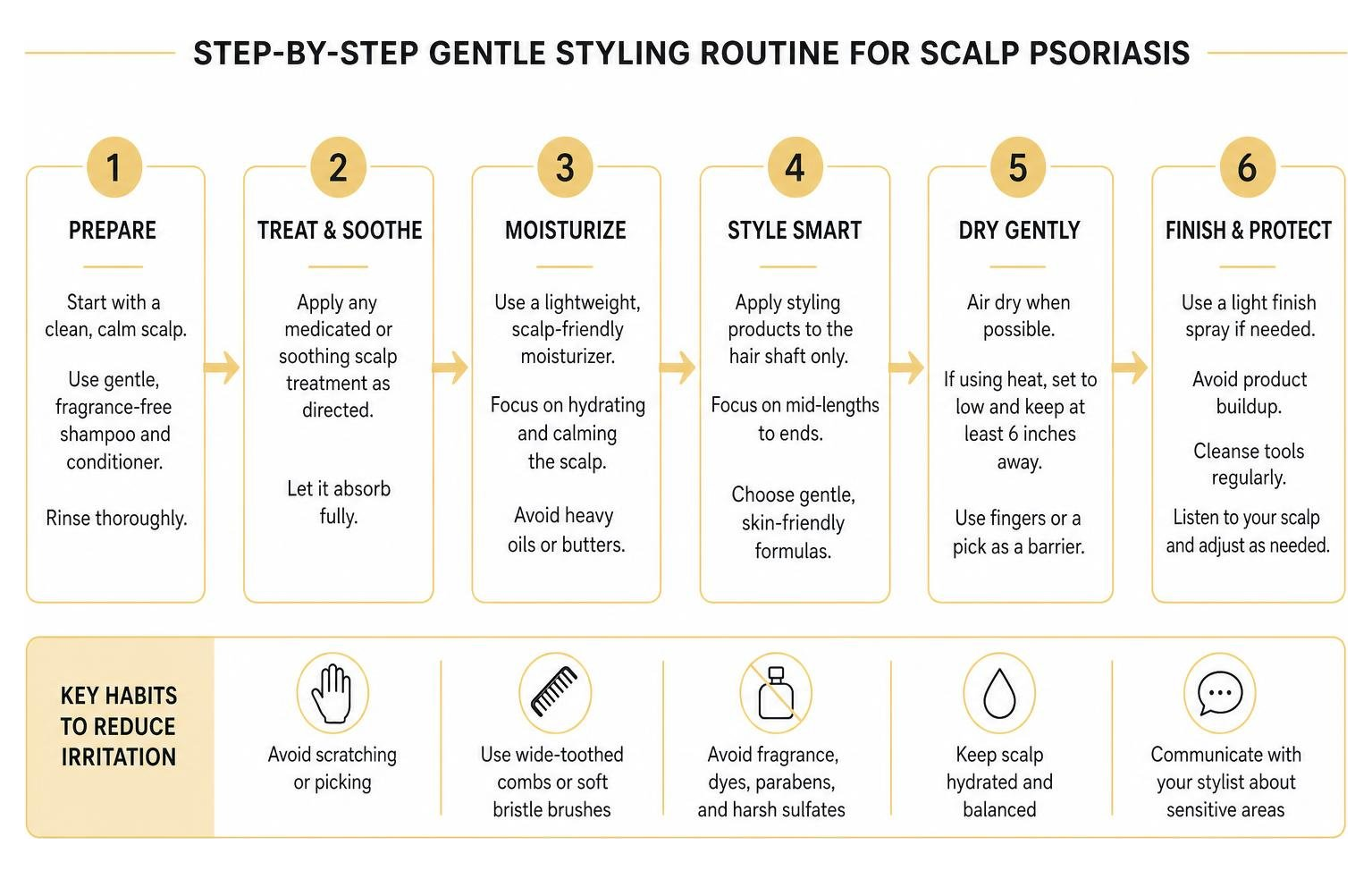
- Apply Products to the Hair Shaft Only: Keep gels, pomades, waxes, and hairsprays away from your scalp. Focus application from the mid-lengths to the ends of your hair. This gives you the desired hold and texture without clogging follicles or irritating plaques.
- Ditch the Fine-Toothed Combs: Use a wide-toothed comb or a brush with soft, natural bristles. When detangling, start from the ends of your hair and work your way up. Never press the bristles directly against your scalp to scratch or lift flakes.
- Keep Heat Tools at a Safe Distance: If you must blow-dry your hair, use the lowest heat setting. Hold the dryer at least six inches away from your head. Consider placing a styling pick or your fingers between the dryer and your scalp to act as a physical heat shield.
- Embrace Air Drying: The American Academy of Dermatology highly recommends air drying your hair whenever possible to preserve the scalp’s natural moisture barrier.
- Communicate with Your Stylist: If you visit a professional salon, have an open conversation before they touch your hair. Let them know you have scalp psoriasis, point out sensitive areas, and ask them to avoid aggressive scrubbing or high-heat blowouts.
According to the comprehensive HealthGrades styling guide, choosing loose, flowing hairstyles like soft braids or gentle waves provides great natural coverage for active plaques while completely eliminating scalp tension.
How Medicated Shampoos and Conditioners Interact with Styling Products
If you are using medicated treatments to manage your psoriasis, you must understand how your styling products interact with them. Heavy styling gels, waxes, and silicone-based sprays can create a stubborn, impermeable barrier over your scalp. This buildup prevents active therapeutic ingredients from penetrating the skin, rendering your expensive medicated treatments ineffective.
To get the most out of your routine, use medicated shampoos and conditioners as your foundation:
- Salicylic Acid Shampoos: Products like the maximum-strength formula detailed in the DailyMed – NIZORAL PSORIASIS- salicylic acid shampoo label contain 3% salicylic acid. This active ingredient works by softening and breaking down thick, scaly plaques so they can be gently washed away.
- Botanical and Anti-Fungal Cleaners: Specialized options like the Psoriasis & Seborrheic Dermatitis Shampoo for Itchy, Flaky Scalp | RoyceDerm use targeted botanical extracts to address underlying inflammation and fungal triggers without stripping the skin. Remember to leave the lather on your scalp for 3 to 5 minutes to allow the ingredients to penetrate the thickened skin barrier.
- Advanced Rebalancing Shampoos: For active flare-ups, the Ducray Kertyol PSO Rebalancing Shampoo 200mL (also available via Kertyol PSO Rebalancing Shampoo – Patches | Ducray) leverages patented Celastrol biotechnology to target plaque formation. Clinical studies show a 77% reduction in itching from the very first applications and a 78% reduction in plaque thickness after just one month of consistent use.
- Targeted Hydration: Follow up your medicated shampoo with a deeply nourishing conditioner like the Psoriasis & Eczema Conditioner. This copper-infused formula utilizes advanced nanotechnology to deliver soothing witch hazel, aloe vera, and biotin deep into the scalp to restore moisture and elasticity.
- Between-Wash Care: To keep itching at bay without washing your hair daily, a leave-in serum like the Psoriasis Control & Healthy Hair Serum – Calms Scalp, Reduces Flaking & Irritation 75 ML – PURADORO.co.uk can be applied directly to dry spots. It hydrates the skin using niacinamide and licorice root without leaving a greasy residue that ruins your hairstyle.
Frequently Asked Questions about Styling with Scalp Psoriasis
Can I dye my hair if I have scalp psoriasis?
Yes, but you must proceed with extreme caution. Chemical hair dyes, perms, and chemical straighteners contain harsh alkaline agents that can cause severe chemical burns on an already compromised scalp. If you are experiencing an active flare-up with open sores or bleeding, postpone all chemical treatments entirely.
If your scalp is calm and you wish to color your hair, ask your stylist for a patch test 48 hours prior to the service. Request a protective barrier, like petroleum jelly, to be applied gently to your scalp and hairline before the dye is applied. Alternatively, consider plant-based dyes, but keep in mind that even natural formulas can contain sensitizing organic compounds.
How often should I wash my hair when using styling products?
While conventional wisdom often advises skipping wash days to prevent dryness, daily or every-other-day washing is actually highly beneficial when you have scalp psoriasis and use styling products. Allowing styling products to sit on the scalp for multiple days leads to product buildup, which traps dead skin cells, feeds fungal organisms, and worsens itching.
Wash your hair regularly using a gentle, pH-balanced shampoo to remove styling residue. Follow up immediately with a hydrating conditioner or a soothing scalp oil to seal in essential moisture.
What is the best natural alternative to hairspray?
The absolute best natural alternative is a homemade glycerin and alcohol-free witch hazel spray. Simply mix equal parts vegetable glycerin and witch hazel in a clean spray bottle. Glycerin acts as a natural humectant that provides a soft, touchable hold and beautiful shine, while witch hazel calms the scalp. Unlike commercial hairsprays, this DIY mixture will not dry out your skin, sting, or create a stiff, itchy crust on your scalp.
Conclusion
Living with scalp psoriasis doesn’t mean you have to settle for boring hair days. By choosing the best hair styling products for psoriasis — formulas rich in soothing botanicals and completely free of drying alcohols and synthetic fragrances — you can enjoy beautiful, confident styles without the dreaded itch.
If you are in the Chicago, IL area and want to give your scalp the ultimate professional pampering, we invite you to visit us at O Spa Chicago. Located in the heart of the River North Chicago neighborhood, our luxury day spa offers premium, personalized wellness experiences. We specialize in deeply restorative, organic scalp and hair treatments designed to calm inflammation, gently remove stubborn plaques, and hydrate your hair from root to tip. Walk-ins and same-day appointments are always welcome.
Ready to treat your scalp to the luxury care it deserves? Book a scalp treatment at O Spa Chicago today and let our expert team restore your hair’s natural, healthy shine.