A Comprehensive Guide to Effective Back Pain Relief
October 8, 2026
Coconut Oil Scalp Massage Benefits and How to Do It Right
October 13, 2026
Introduction
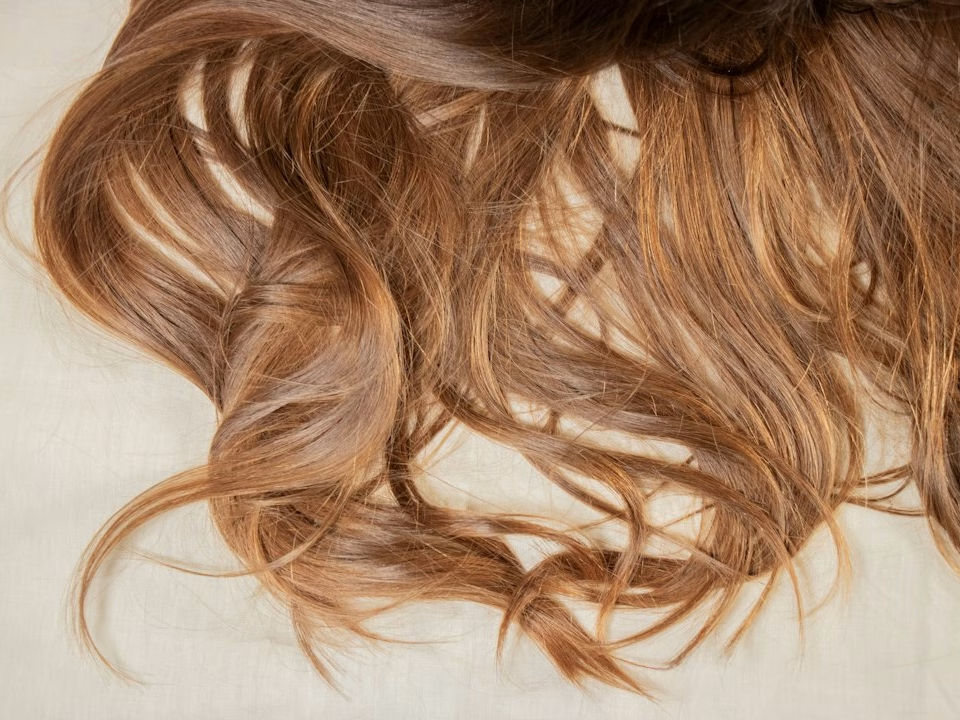
The most effective hair oil for dry and damaged hair restores the strand’s lost lipid barrier, seals moisture inside the cortex, and protects against heat and friction. High-performance bond-building peptide oils, cold-pressed botanical blends (like baobab, rahua, and buriti), and biomimetic plant keratin oils work by penetrating microscopic cuticle fractures to stop breakage, eliminate frizz, and restore elasticity without leaving heavy buildup.
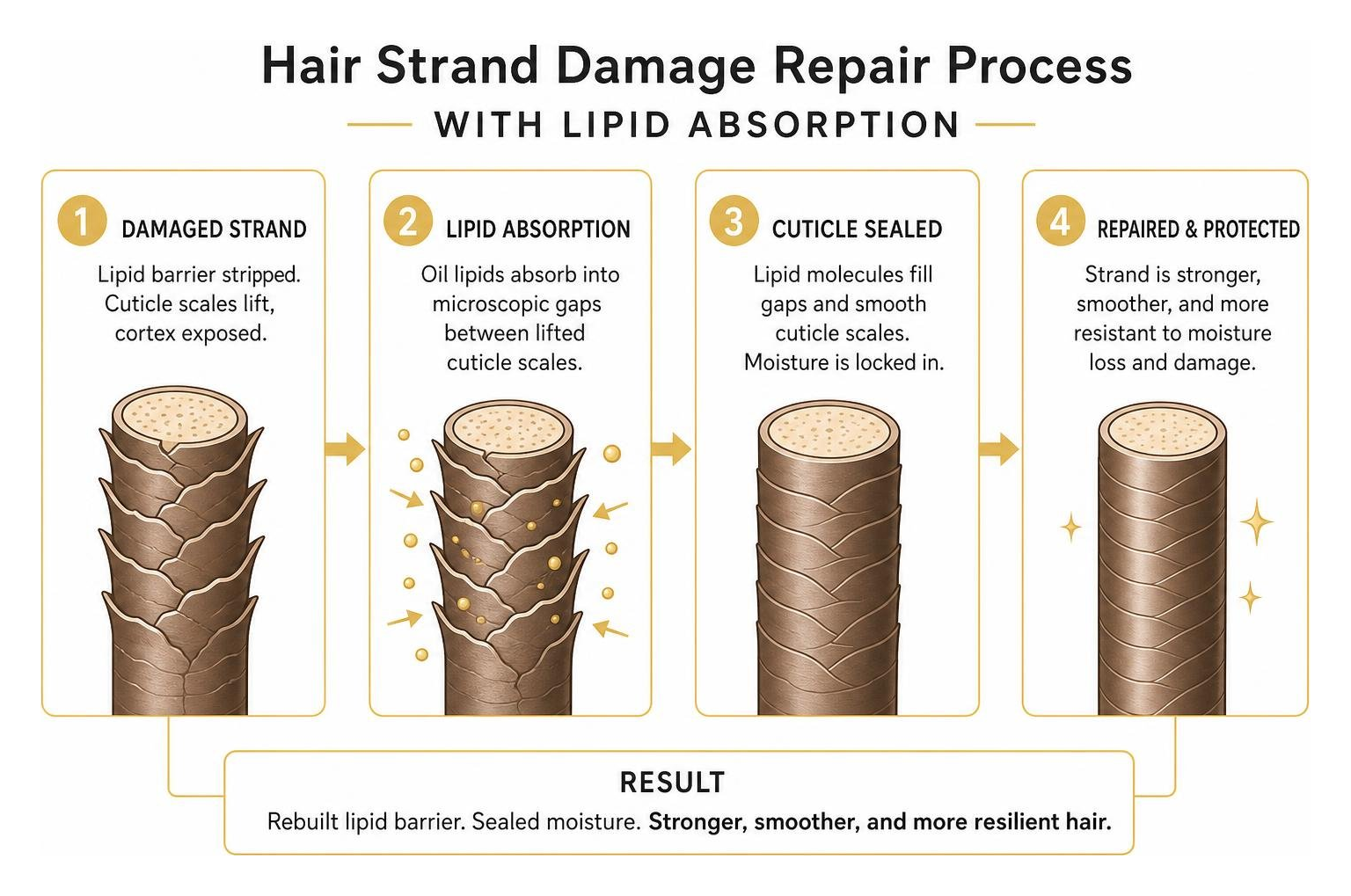
When chemical over-processing, frequent heat styling, and dry weather strip away your hair’s protective outer layer, moisture vanishes fast. Each hair strand relies on an ultra-thin lipid barrier known as the 18-MEA layer to repel excess moisture from humidity while sealing in essential internal hydration. When that lipid shield is stripped away by bleach, color treatments, or high-temperature flat irons, the cuticle scales lift, flare outward, and leave the inner cortex exposed.
The immediate result is rough texture, dullness, constant tangling, and unmanageable frizz. Rebuilding that barrier requires more than just standard leave-in conditioners. You need targeted botanical and scientific lipids that fill the microscopic fractures along each strand.
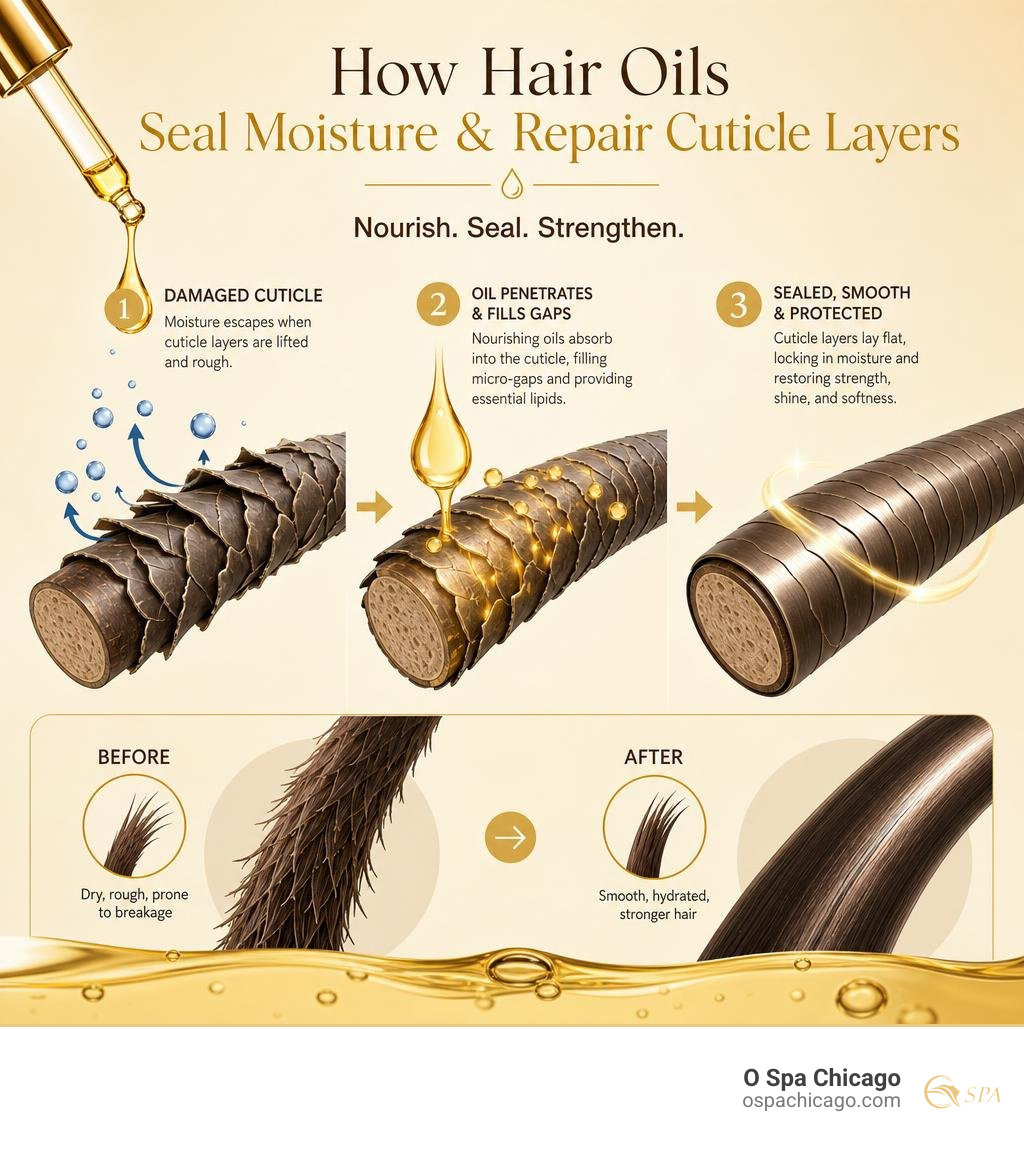
Understanding the science of moisture sealing changes the way you treat compromised locks. Rather than simply coating the outside of your hair, modern formulations mimic your natural lipid structures. This reinforces the cuticle, stops moisture loss, and shields delicate fibers from mechanical friction.
How Restorative Hair Oils Rebuild Moisture and Prevent Breakage
Restorative hair oils work on two distinct levels: surface lubrication and deep cortical retention. When you apply a carefully balanced oil, smaller fatty acid molecules slip between the lifted cuticle scales to restore suppleness, while larger lipid polymers create a breathable protective sheath along the shaft.
This dual action locks water inside the hair cortex, preventing the chronic dehydration that makes strands brittle and prone to snapping. Exploring the 7 different types of botanical oils and their benefits reveals how different fatty acid profiles—from oleic to linoleic acids—target unique damage patterns across varied textures.
Beyond hydration, quality hair oils provide thermal defense up to 450°F (232°C). High heat degrades structural keratin, turning moisture inside the hair into steam that bursts the cuticle wall. Modern protective oils act as a thermal buffer, evenly dispersing heat across the strand surface.
Clinical testing demonstrates significant real-world improvements for compromised hair:
- 77% reduction in breakage after a single application of targeted bond-protecting oil.
- 125% more shine compared to untreated bleached strands, transforming dull surfaces into reflective planes.
- 72-hour humidity resistance and frizz control, preventing outside moisture from swelling damaged fibers.
For comprehensive strand revitalization, combining targeted daily oiling with our guide to scalp and hair treatments ensures both new growth and existing lengths stay balanced and resilient.
The Best Hair Oil for Dry and Damaged Hair: Top Restorative Formulations
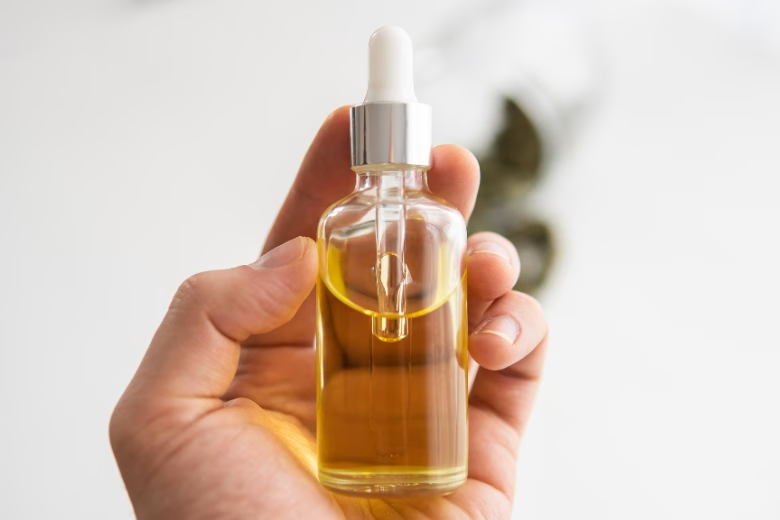
Finding the right formula means matching the underlying chemistry of the product to your specific level of damage. The table below outlines how modern lightweight options compare against rich, lipid-dense treatments:
| Formulation Type | Ideal Hair Concern | Key Active Mechanism | Texture & Weight |
|---|---|---|---|
| Bond-Building & Peptide Oils | Bleached, chemically treated, heat-damaged hair | Disulfide link reinforcement & oligopeptides | Weightless, non-greasy, fast-absorbing |
| Cold-Pressed Botanical Blends | Coarse, thick, severely dehydrated textures | 13-oil lipid complex, buriti, and rahua fatty acids | Rich, deeply nourishing, slip-enhancing |
| Plant Keratin & Honey Formulations | Brittle strands, split ends, loss of elasticity | Honey liposomes & biomimetic amino acids | Silky, cushiony, high-shine finish |
Bond-Building and Peptide-Infused Oils
Chemically lightened and color-treated strands suffer from broken disulfide bonds and degraded internal keratin matrices. Advanced bond-repair technologies utilize patented active ingredients and oligopeptide chains to reconnect these broken structural bridges from within the cortex.
Using dedicated bond repair oil formulas provides multi-level recovery, repairing internal structural links while delivering high-temperature thermal protection. These fast-absorbing formulas impart brilliant, glass-like shine without leaving a greasy film, making them ideal for fine, bleached, or fragile hair.
Cold-Pressed Amazonian and African Botanical Blends
When hair is naturally coarse, curly, or stripped dry from environmental exposure, cold-pressed plant oils deliver bio-compatible lipids that synthetic products cannot replicate. A nutrient-dense 13-oil silicone-free African oil blend harnesses baobab, moringa, black seed, and sea buckthorn to reinforce the hair’s lipid mantle and restore flexibility to dull, brittle ends.
For deep environmental defense, an Amazonian rahua and sacha inchi complex supplies concentrated omega-3 fatty acids and antioxidants, protecting against free-radical damage and UV exposure.
Similarly, incorporating a certified organic buriti moisturizing oil floods parched fibers with potent sterols that soften coarse textures immediately on contact.
Plant-Based Keratin and Honey Formulations
When strands snap easily due to lost elasticity, replenishing the outer protein sheath is essential. Utilizing a plant keratin and honey liposome oil delivers biomimetic amino acids that match the natural keratin structure of human hair, resurfacing jagged cuticles and filling porous gaps.
Honey liposomes act as natural humectants within these lipid bases, drawing moisture into the hair shaft while the plant-based oils seal it tightly inside. Pairing these protein-lipid blends alongside nourishing spa hair mask treatments restores resilience to hair recovering from heavy processing.
Application Techniques and Match Guide for Compromised Strands
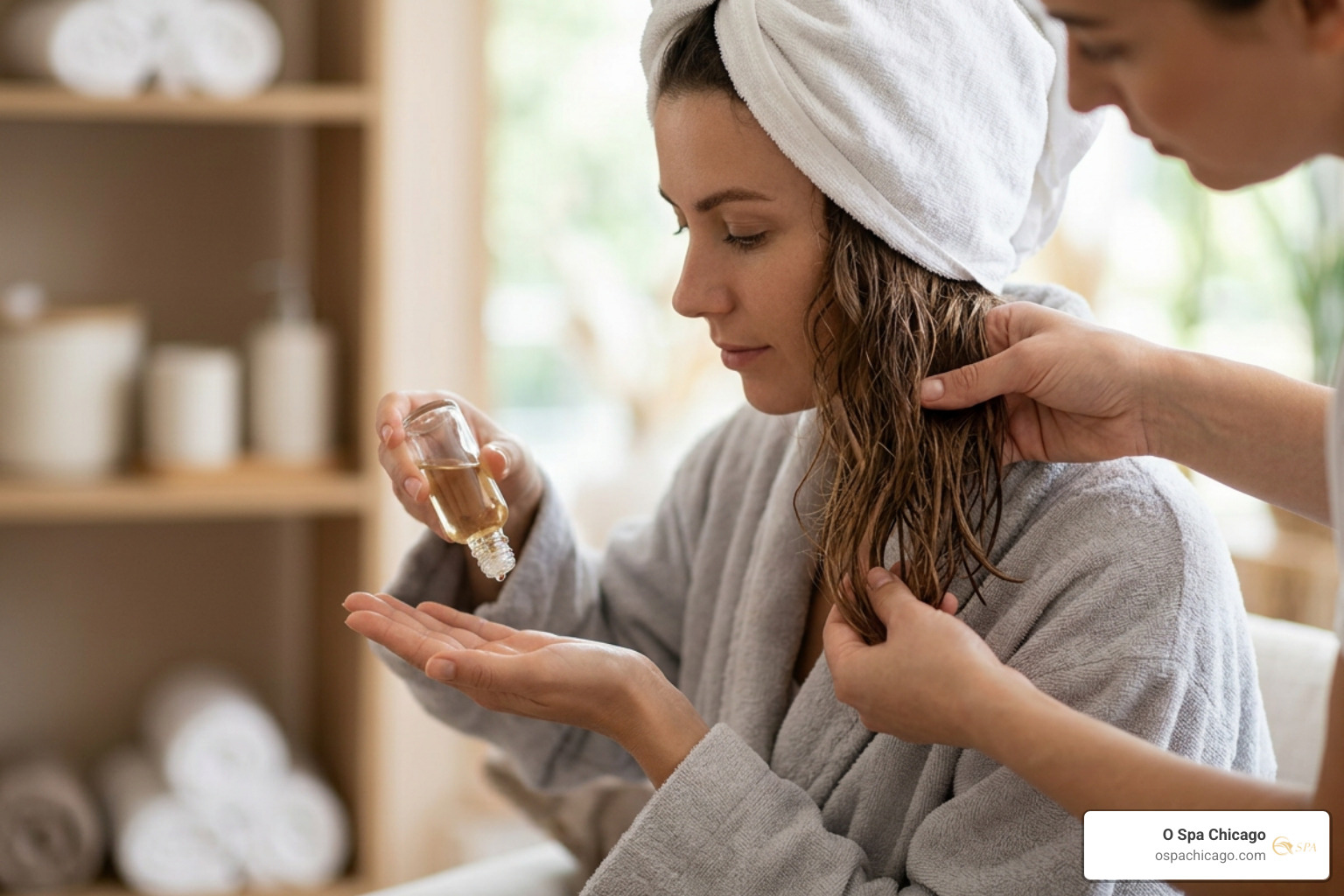
Applying hair oil correctly is just as important as choosing the right formula. Misapplication can lead to greasy roots, limp styling, or product sitting on top of the strand without penetrating the cortex.
How to Choose a Hair Oil for Dry and Damaged Hair by Hair Porosity and Texture
Hair porosity governs how quickly your hair absorbs and retains moisture. High-porosity hair features gaps and tears in the cuticle layer, allowing hydration to enter easily and escape just as fast. This type needs rich botanical blends and lipid-heavy oils to seal those open pathways.
Low-porosity hair, on the other hand, possesses tightly bound cuticle scales that resist product absorption; it requires lightweight, fast-absorbing carrier oils like squalane, hemisqualane, or jojoba to avoid surface buildup.
- Fine, Damaged Strands: Reach for lightweight, dry-finish oils. They deliver heat protection and shine without collapsing your hair’s natural volume.
- Thick, Coarse, or Textured Curls: Use richer formulas containing baobab, shea, or Amazonian oils that provide slip, lubricate adjacent coils, and calm stubborn frizz.
- Color-Treated & Bleached Hair: Prioritize peptide-infused or bond-building oils that reinforce weakened keratin structures while preventing color fading.
If your hair issues stem from a dry, tight foundation, pairing your length maintenance with dedicated deep scalp hydration methods balances sebum production from root to tip.
Step-by-Step: How to Apply Hair Oil for Dry and Damaged Hair for Maximum Absorption
Follow these targeted methods to get the best results from your hair oil routine:
- Damp Hair Application (Moisture Locking & Heat Prep): After cleansing, gently towel-dry your hair so it is damp rather than soaking wet. Dispense 2 to 4 drops of oil into your palms, rub your hands together to warm and emulsify the formula, and work evenly from mid-lengths down to the ends. Comb through with a wide-tooth comb to distribute the oil before blow-drying.
- Dry Hair Finishing (Frizz Control & UV Shielding): Use a single drop smoothed over dry, styled hair to tame flyaways, add a reflective gloss, and create an invisible barrier against ambient humidity throughout the day.
- Overnight Deep Repair Ritual: For severely brittle lengths, apply 4 to 6 drops to dry mid-lengths and ends before bed. Gently braid your hair and protect it with a silk or satin scarf to prevent friction against your pillowcase. Rinse or shampoo your hair in the morning to reveal deeply softened strands.
- Pre-Shampoo Protective Treatment: Smooth a generous layer of oil over dry ends 15 to 20 minutes prior to showering. This prevents hygral fatigue—the weakening of the strand caused by repeated swelling and contracting as hair absorbs water.
Integrating this approach into a weekly scalp care Sunday routine creates the foundation for long-term strand recovery.
Frequently Asked Questions About Hair Oils for Damage
Can hair oils reverse split ends and prevent future breakage?
Hair oils cannot permanently knit a fractured, split end back together; the only permanent fix for a true split end is a trim. However, high-grade oils temporarily seal and bind frayed cuticle edges, making split ends virtually invisible while smoothing the hair surface. More importantly, by lubricating the hair shaft and improving tensile elasticity, oils dramatically reduce mechanical friction from brushing and styling, preventing new splits from forming.
Should hair oil be applied to wet, damp, or dry hair?
It depends entirely on your primary goal:
- Damp hair is best for deep moisture absorption and heat protection, as the oil seals in the water molecules already sitting inside the cortex.
- Dry hair is best for targeted finishing, calming surface frizz, taming flyaways, and creating an instant high-gloss shield.
- Pre-wash dry application protects delicate ends from the stripping effects of surfactants during cleansing.
How often should I use hair oil if my hair is severely damaged?
For highly damaged, bleached, or coarse hair, applying 1 to 2 drops daily to the ends prevents brittleness and daily styling wear. Lighter or finer hair types benefit from using oil 2 to 3 times per week, primarily on wash days after towel-drying. If using oil as an intensive pre-shampoo or overnight treatment, once or twice weekly is ideal to avoid excess buildup.
Conclusion
Restoring dry, damaged hair requires replenishing its natural lipid barriers and reinforcing internal protein structures. By selecting high-performance formulas—whether bond-building peptide oils, pure cold-pressed Amazonian blends, or plant-keratin complexes—you give your hair the essential fatty acids it needs to stay resilient against daily styling and environmental stress.
At O Spa Chicago, located in the heart of River North, we believe true hair transformation combines targeted home care with professional, personalized wellness. Our restorative head spa experiences, organic hair therapies, and customized treatments are designed to revive over-processed strands and deeply hydrate your scalp. Explore our custom luxury restorative hair and scalp treatments to book your appointment and give your hair the personalized care it deserves.