
The Ultimate Guide to the Best Hair Massage Oil for Your Scalp
October 6, 2026
The Hair Oil Fix for Dry and Damaged Hair You Need Right Now
October 10, 2026
Back Treatment: What to Do First
For most new back pain, keep moving gently. Try short walks, use heat or ice for comfort, and avoid prolonged bed rest. If you need pain medicine, ask a pharmacist whether an over-the-counter option is safe for you. Get emergency care if you develop new bladder or bowel problems, numbness around the groin, or worsening leg weakness.
Most back pain improves within a few weeks. If it is not improving or is disrupting your day, a healthcare professional can help identify the cause and guide your back treatment.
I’m June Liu, owner of O Spa Chicago, where my work centers on personalized body care and stress relief. My perspective on back treatment comes from holistic wellness; diagnosis and medical treatment belong with qualified healthcare professionals.
Diagnosing Back Pain and Recognizing Emergency Red Flags
Understanding why your spine feels irritated is the foundation of any recovery plan. Back pain is extraordinarily common; in fact, worldwide, low back pain causes more disability than any other medical condition. Because back discomfort can stem from muscles, spinal ligaments, intervertebral discs, or irritated nerves, a clinical evaluation typically begins with a detailed physical exam and medical history rather than immediate scanning.
During an initial exam, clinicians review symptom onset, daily movement patterns, and pain triggers. They also assess functional risk using validated clinical tools such as the STarT Back questionnaire. This system stratifies individuals into low, medium, or high-risk categories, allowing providers to tailor treatments—recommending simple self-management for lower-risk cases or structured physiotherapy and behavioral support for complex ones. Understanding these foundational back pain causes and evaluation pathways helps prevent unnecessary medical interventions while targeting the true source of strain.
Initial Assessment and Diagnostic Imaging
When back pain follows an uncomplicated muscle strain, immediate imaging is rarely necessary. Most clinical guidelines advise against routine X-rays or MRI scans during the first few weeks unless specific red flags or persistent neurological deficits appear. When symptoms resist conservative therapy or suggest structural nerve compression, clinicians turn to specialized diagnostic tools.
| Diagnostic Tool | Primary Purpose | Best Used For | What It Evaluates |
|---|---|---|---|
| X-Ray | Bone alignment & integrity | Suspected fractures, osteoarthritis, spinal curvature | Vertebral bone architecture, joint spacing |
| MRI Scan | High-resolution soft-tissue imaging | Disc herniations, spinal stenosis, soft-tissue masses | Nerve root impingement, spinal cord, disc hydration |
| CT Scan | Detailed cross-sectional bone views | Complex fractures, post-surgical hardware checks | Bony canal narrowing, fine structural anatomy |
| EMG / Nerve Conduction | Electrical signal mapping | Radiculopathy, peripheral nerve compression | Nerve firing velocity, muscle electrical response |
Surrounding clinical findings determine whether these tests will alter management. If non-invasive care is progressing well, advanced imaging often reveals incidental age-related changes that are completely normal and not the true cause of pain.
When to Seek Immediate Medical Evaluation
While the vast majority of episodes resolve safely, certain “red flag” symptoms signal serious medical conditions requiring urgent or emergency care. These conditions include cauda equina syndrome (severe spinal cord or nerve root compression), spinal infections, fractures, or underlying systemic illness.
According to established NHS emergency guidance for back pain, you should seek immediate emergency medical care if your back pain is accompanied by:
- Loss of bowel or bladder control, or loss of sensation when using the toilet
- Numbness or pins-and-needles around your genitals or buttocks (saddle anesthesia)
- New or rapidly progressive muscle weakness in your legs or feet (such as foot drop)
- High fever, unexplained chills, or localized heat and redness along the spine
- Sudden, severe pain following high-impact trauma or an automobile accident
- Unexplained, unintentional weight loss alongside persistent night pain that does not improve when lying down
First-Line Strategies: At-Home Care and Conservative Therapy
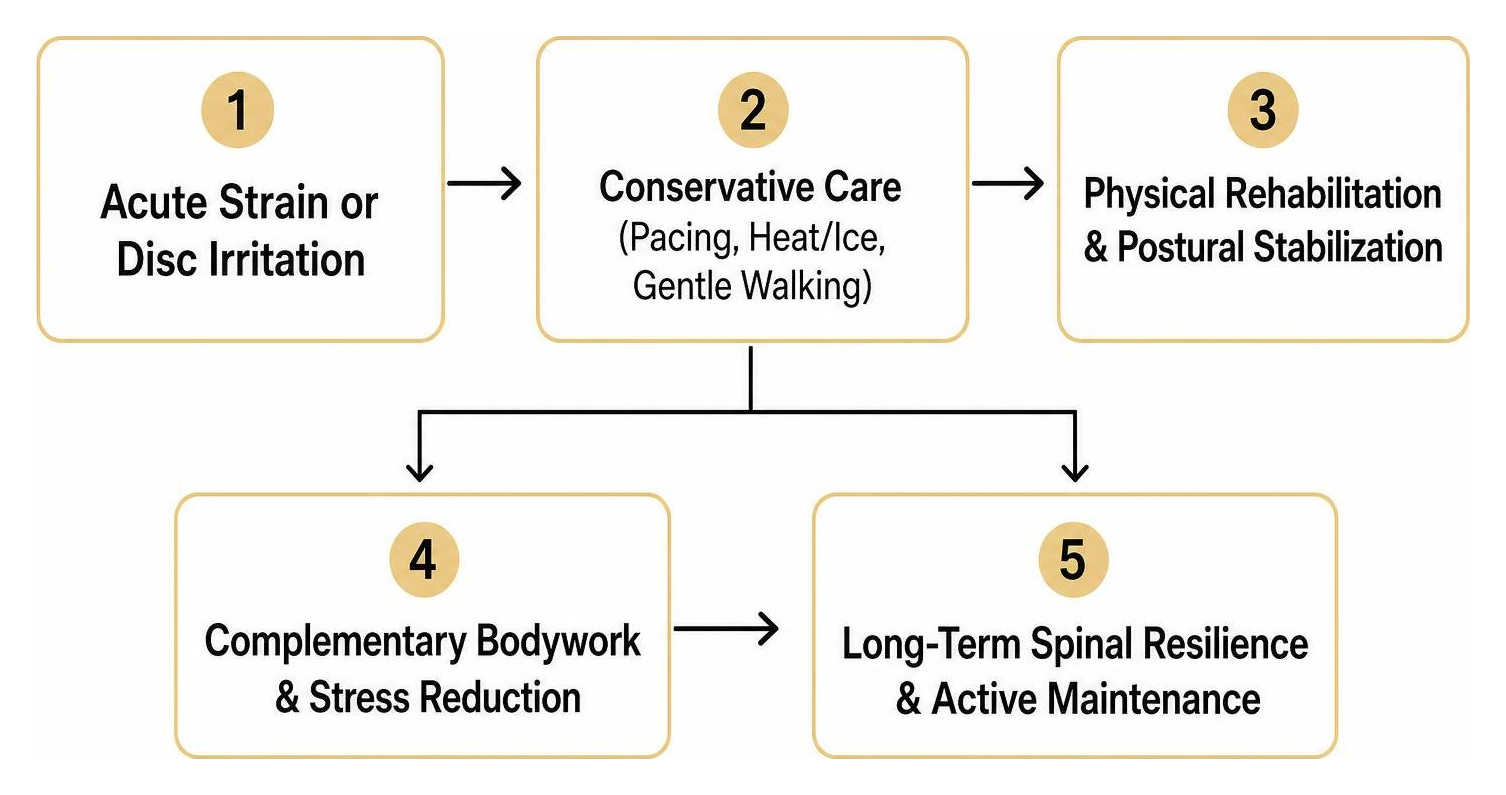
When red flags are absent, conservative non-invasive management serves as the gold standard for acute and subacute recovery. The historical advice to take strict bed rest has been completely replaced by modern movement science: remaining gently active speeds tissue recovery and prevents spinal deconditioning.

Targeted At-Home Back Treatment and Self-Care Steps
At home, practical adjustments help calm muscle spasms and restore comfort:
- Temperature Therapy: Use ice packs during the first 48 hours following an acute strain to dull sharp discomfort and reduce local swelling. After 48 hours, switch to moist heat pads or warm baths to encourage blood circulation and relax tense paraspinal muscles.
- Purposeful Movement: Rather than staying in bed, take short, frequent walks on flat surfaces. Walking lubricates facet joints, promotes spinal fluid exchange, and prevents postural stiffness.
- Ergonomic Tweaks: Modify sitting positions by supporting the lumbar curve with a rolled towel or lumbar cushion, and keep computer monitors at eye level.
- Pacing: Alternate light tasks with brief rest periods rather than attempting strenuous physical chores in a single session.
Physical Therapy and Active Rehabilitation
Structured rehabilitation bridges the gap between acute symptom relief and lasting spinal resilience. Modern clinical guidelines on low back pain and sciatica highlight exercise therapy as a primary pillar of functional recovery (NBK562933).
A licensed physical therapist designs an active rehabilitation plan focused on:
- Core and Lumbar Stabilization: Training the transversus abdominis, multifidus, and pelvic floor to create dynamic support around the vertebrae.
- Hip and Hamstring Flexibility: Relieving mechanical tension on the pelvis by stretching tight hip flexors, glutes, and hamstrings.
- Posture and Biomechanical Re-education: Teaching safe hip-hinging mechanics for lifting, bending, and everyday movement.
Evidence-Based Clinical and Medical Back Treatment Options
When discomfort persists beyond several weeks or limits basic daily activities, healthcare professionals offer multimodal medical and procedural options to control pain and support physical rehabilitation.

Over-the-Counter and Prescription Medications
Medications provide symptomatic relief so that individuals can actively participate in movement therapies. They are not intended as standalone cures:
- Non-Steroidal Anti-Inflammatory Drugs (NSAIDs): Medications such as ibuprofen and naproxen reduce inflammatory pathways. Because they carry risks of gastrointestinal irritation and cardiovascular strain, they should be used at the lowest effective dose for short periods.
- Topical Analgesics: Creams, gels, and patches containing capsaicin, lidocaine, or menthol provide local sensory distraction with minimal systemic absorption.
- Muscle Relaxants: Short courses may be prescribed for severe acute spasms. These medications can cause drowsiness, dizziness, and cognitive fatigue.
- Neuropathic Agents: For nerve-related pain radiating down the legs, certain nerve-modulating medications or low-dose antidepressants may be prescribed.
- Opioids: Opioid analgesics carry significant risks of dependency and tolerance without offering superior long-term functional recovery for chronic back issues; clinical guidelines strictly advise minimizing their use.
Interventional Procedures and Surgical Considerations
If structured conservative therapies do not provide adequate relief, interventional spinal procedures may be considered:
- Epidural Corticosteroid Injections: Placing anti-inflammatory steroids directly into the epidural space near compressed nerve roots can provide targeted short-term relief, typically lasting one to two months, offering a functional window for physical rehabilitation.
- Radiofrequency Ablation (Denervation): For chronic facet joint arthritis, radiofrequency energy can temporarily deactivate local sensory nerve branches transmitting pain signals.
- Surgical Procedures: Procedures such as microdiscectomy (removing herniated disc fragments) or laminectomy (relieving spinal canal narrowing) are typically reserved for patients with clear structural compression who exhibit persistent neurological deficits or have not responded to comprehensive conservative care. For acute structural injuries, reviewing comprehensive fractured back treatment options helps clarify how interventions like bracing or kyphoplasty stabilize compromised bone. Evidence-based resources such as the Mayo Clinic spine care guidelines offer further perspective on balancing conservative and surgical choices.
Condition-Specific Care and Lifestyle Interventions
Back pain is not a single ailment; effective care depends on addressing your spine’s specific structural demands and systemic health factors.
Targeted Management for Herniated Disks, Stenosis, and Sciatica
Different anatomical conditions require tailored therapeutic strategies:
- Lumbar Disc Herniation & Sciatica: Herniated discs pressing on the sciatic nerve often create sharp, radiating leg discomfort. Extension-based exercises, nerve flossing, and temporary inflammation reduction help the disc material regress naturally over time.
- Spinal Stenosis: Narrowing of the spinal canal often causes leg heaviness when standing or walking. Flexion-based routines (such as stationary cycling or leaning forward slightly) open the spinal canal space and alleviate pressure.
- Facet Joint Arthritis & Degenerative Changes: Age-related cartilage thinning responds well to low-impact aerobic movement, aquatic exercise, core stabilization, and targeted manual therapy to maintain joint motion.
Complementary and Holistic Back Treatment Modalities
Integrating evidence-backed holistic therapies helps down-regulate central nervous system sensitivity and release muscular holding patterns:
- Acupuncture: Fine-needle stimulation supports endogenous pain-relief pathways and is widely recognized for easing chronic lower back tension.
- Chiropractic & Manual Adjustments: Controlled spinal manipulation helps restore articular range of motion when combined with an active exercise program.
- Therapeutic Massage & Bodywork: Skilled soft-tissue work calms hypertonic paraspinal muscles, increases regional blood flow, and reduces psychological stress. Booking dedicated massage services or indulging in nourishing body treatments helps release upper and lower back stiffness while restoring physical equilibrium.
- Mind-Body Practices: Therapeutic yoga and mindfulness-based stress reduction (MBSR) re-train breathing mechanics and reduce central pain amplification.
Long-Term Lifestyle Adjustments and Ergonomics
Spinal health is deeply intertwined with daily habits. A landmark study published in BMJ Open revealed that adding just 20 minutes of moderate-to-vigorous physical activity and reducing daily sedentary sitting by 40 minutes significantly prevents back pain from worsening.
Additional systemic adjustments recommended in Harvard Health strategies for managing chronic back pain include:
- Anti-Inflammatory Nutrition: Incorporating whole foods, leafy greens, berries, nuts, and omega-3 fatty acids helps reduce systemic baseline inflammation.
- Weight and Load Optimization: Maintaining a healthy weight minimizes mechanical shear forces on the lower lumbar discs and facet joints.
- Desk and Movement Ergonomics: Break up seated work every 30 to 45 minutes with standing stretches, use active standing desks where practical, and support the lower back during long commutes.
Frequently Asked Questions About Back Pain Relief
How long does acute back pain usually take to resolve?
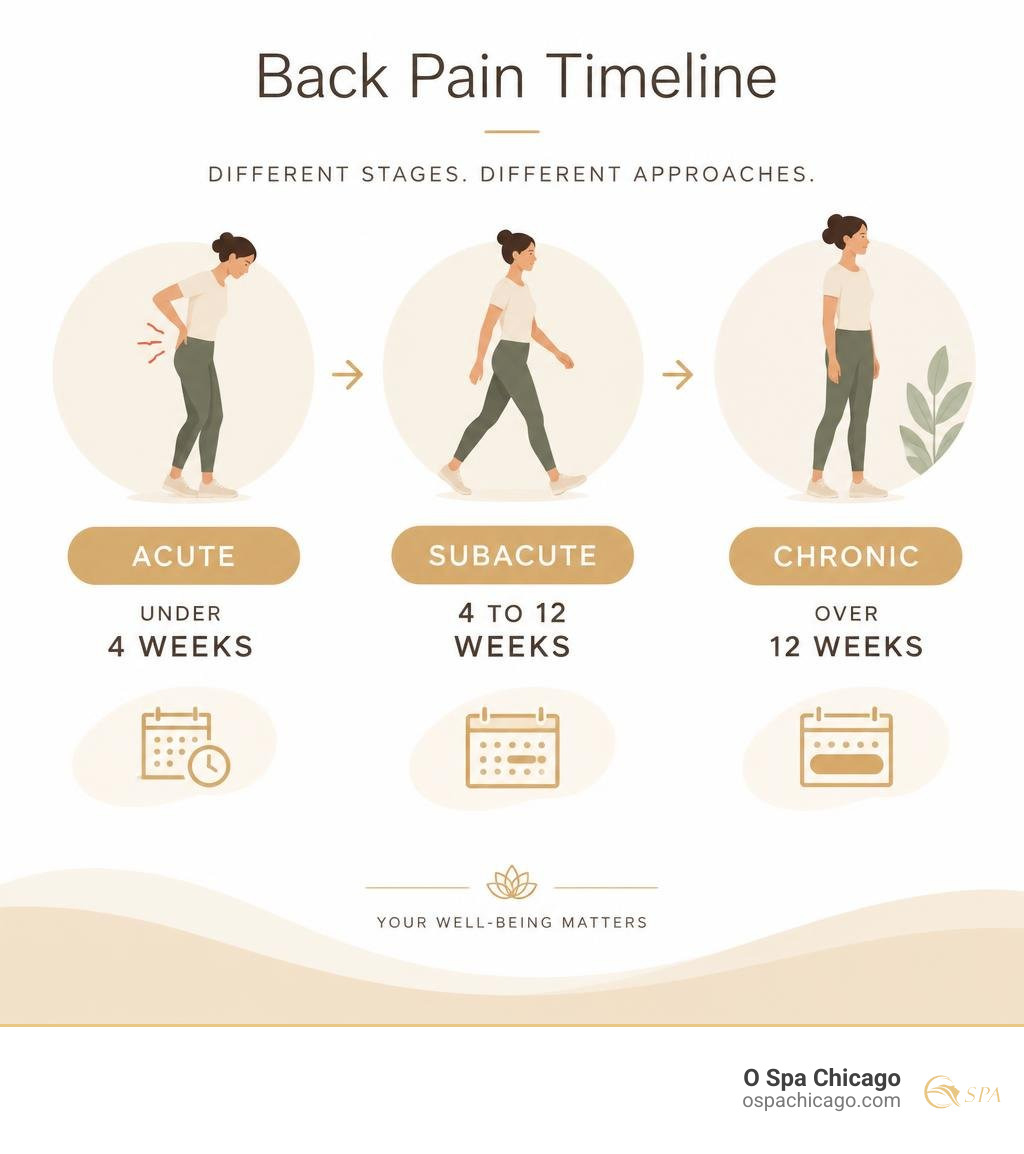
Most acute back pain improves significantly within four to six weeks with standard conservative self-care and light activity. If pain persists between four and 12 weeks, it is classified as subacute; pain extending beyond 12 weeks is considered chronic. Roughly one-third of individuals experience lingering or recurrent symptoms a year after an acute flare-up, which underscores the importance of long-term postural strength and active physical maintenance.
What questions should I prepare for my healthcare appointment?
To make the most of your medical evaluation, bring a clear log of your symptoms and ask:
- What is the most likely cause of my specific back symptoms?
- Do I need diagnostic imaging or nerve testing at this stage?
- What daily physical activities should I continue, and which should I temporarily modify?
- What are the potential side effects of any prescribed medications?
- How can physical therapy or complementary bodywork be integrated into my recovery plan?
- What movement strategies will prevent this pain from returning in the future?
Are cortisone injections a permanent solution for back pain?
No, epidural cortisone injections are not a permanent cure. They provide targeted anti-inflammatory relief that typically lasts between one and two months. Clinicians utilize this temporary reduction in pain as a therapeutic window, enabling patients to engage comfortably in the physical therapy and core rehabilitation necessary for sustained spinal stability.
Conclusion
Overcoming back pain requires a balanced, patient-centered approach that combines evidence-based medicine, structured movement rehabilitation, and consistent self-care. Rather than relying on prolonged rest or passive fixes, maintaining daily low-impact activity, supporting core musculature, and addressing postural stress provide the strongest foundation for lasting spinal health.
At O Spa Chicago, we believe true wellness flourishes when medical care is supported by restorative, tension-relieving self-care. Whether you are recovering from physical fatigue or looking to ease everyday muscular strain, exploring our spa services offers a tranquil setting in River North to reset your mind and body.