Couples Massage Near Me: 8 Ways to Know if It’s Right for You
August 8, 2026
The Best Thai Massage Spots Near You for Ultimate Bliss
August 13, 2026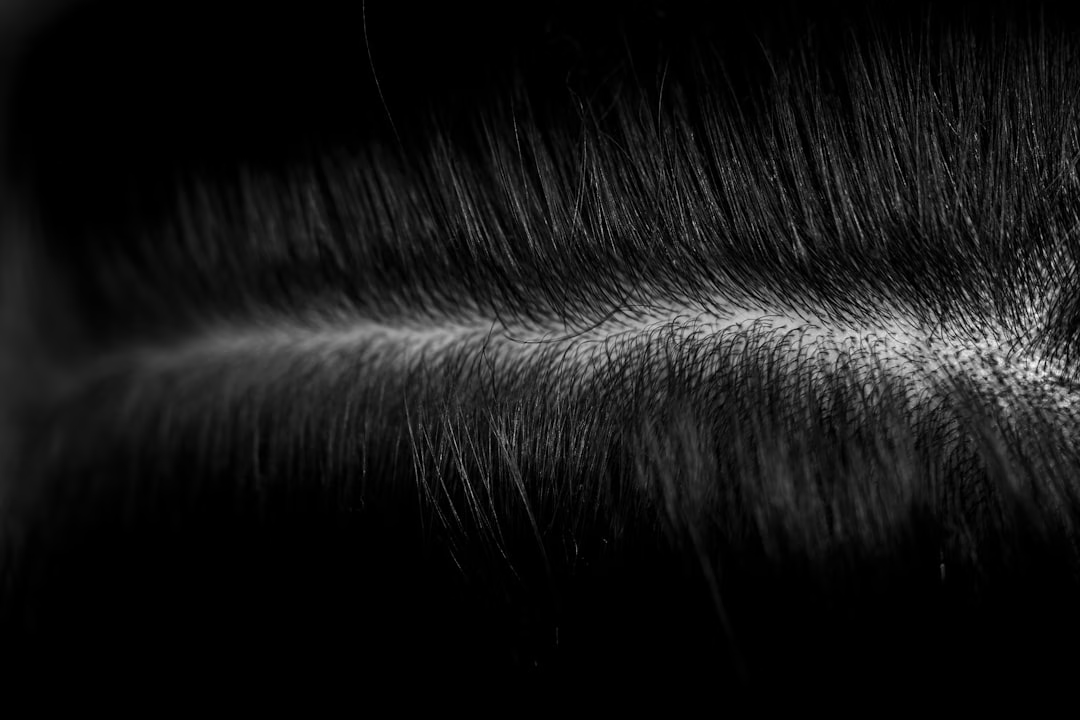
Why So Many People Are Still Struggling to Find the Best Scalp Treatment for Psoriasis
Finding the best scalp treatment for psoriasis is harder than it sounds — and if you’re dealing with itching, thick silvery flakes, or raw patches along your hairline, you already know that.
Here’s a quick look at the most effective options, ranked by treatment tier:
| Treatment Tier | Examples | Best For |
|---|---|---|
| OTC shampoos | Salicylic acid 3%, coal tar | Mild flaking and itch |
| Prescription topicals | Clobetasol, tazarotene shampoo | Moderate plaques |
| Combination therapy | Calcipotriene + betamethasone | Moderate-to-severe, long-term |
| In-office / systemic | Excimer laser, biologics | Severe or resistant cases |
Start with an OTC medicated shampoo for mild symptoms. If there’s no improvement after 4 weeks, see a dermatologist for prescription options.
Scalp psoriasis is far more common than most people realize. It affects roughly 80% of people who have psoriasis — and about half of all plaque psoriasis patients experience scalp flare-ups at some point.
The scalp is one of the trickiest areas to treat. Hair physically blocks creams and light from reaching the skin. Scales build up faster because they can’t shed naturally. And many people delay treatment because they mistake it for stubborn dandruff.
The physical discomfort is real — itching, tightness, soreness, and even temporary hair loss. But the emotional toll matters too. Visible flaking along the hairline or neck can affect confidence in ways that feel deeply personal.
The good news: treatment options have expanded significantly, and even severe scalp psoriasis can be well controlled with the right approach.
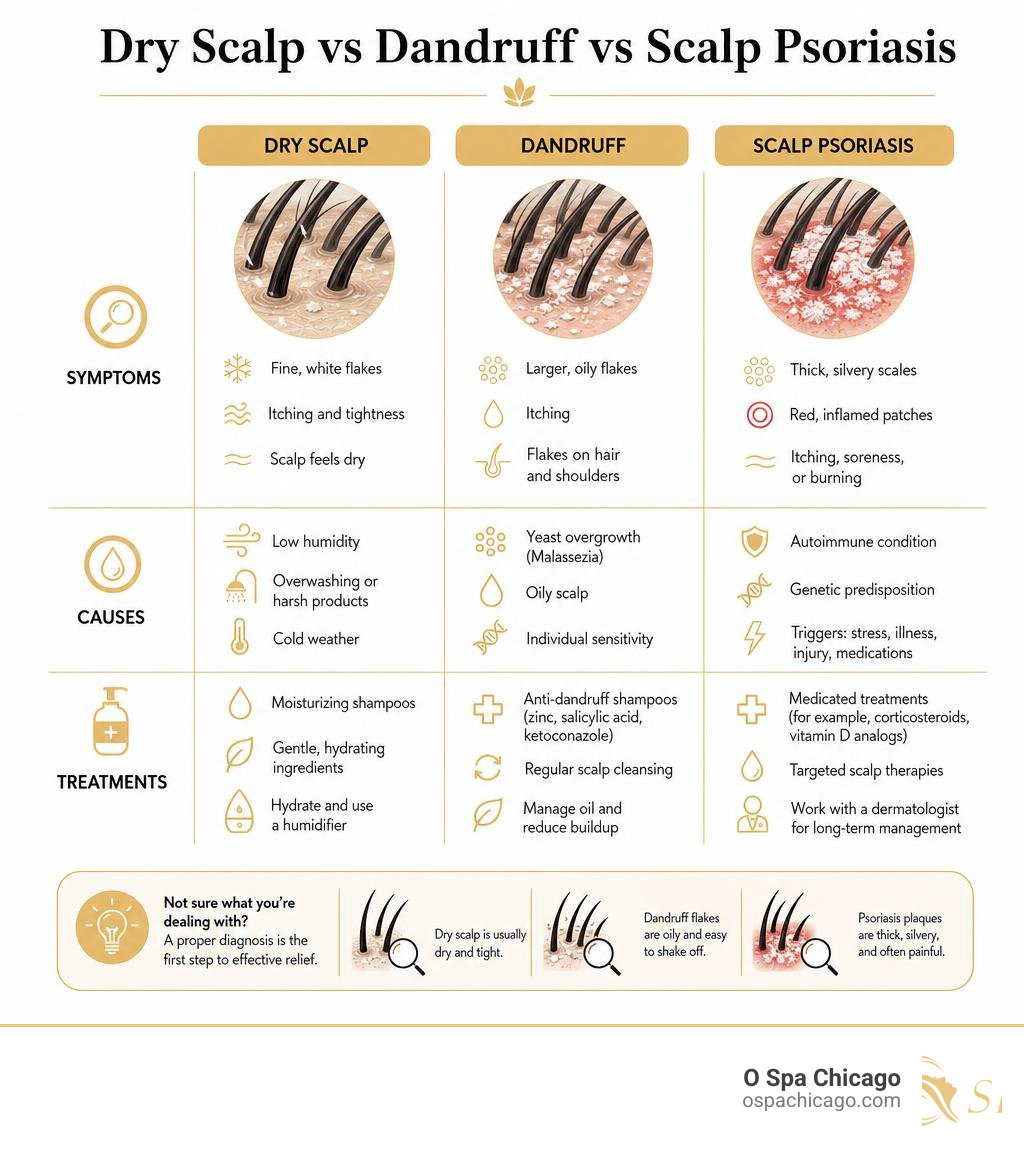
Best scalp treatment for psoriasis terms at a glance:
Choosing the Best Scalp Treatment for Psoriasis: Active Ingredients Compared
When searching for the best scalp treatment for psoriasis, navigating the over-the-counter (OTC) aisle can feel overwhelming. Different formulas target different aspects of the condition. To help you make an informed decision, we have broken down the primary active ingredients found in non-prescription medicated shampoos and topical treatments:
| Active Ingredient | Primary Mechanism of Action | Best For | Key Benefit |
|---|---|---|---|
| Salicylic Acid (1.8% to 3%) | Keratolytic (scale softener) | Thicker, crusty plaques | Removes cell buildup and preps scalp for other therapies |
| Coal Tar (0.5% to 5%) | Anti-inflammatory & cytostatic | Severe itching and rapid cell growth | Slows down skin cell overproduction and calms itching |
| Ketoconazole (1% to 2%) | Antifungal | Secondary yeast overgrowth | Addresses microbial imbalances that worsen inflammation |
For a comprehensive breakdown of how these compare to standard hair care products, you can explore the Scalp Psoriasis Medications: Over the Counter and Prescription guide. Let’s take a closer look at how these ingredients function on a physiological level to provide flaking reduction and itch relief.
Why Salicylic Acid is Often the Best Scalp Treatment for Psoriasis Scale Removal
Salicylic acid is a powerhouse keratolytic agent, meaning its primary job is to break down keratin—the protein that binds skin cells together. In scalp psoriasis, the immune system signals skin cells to grow at an accelerated rate, leading to thick, raised, and silvery plaques. These plaques act as a physical barrier, preventing other beneficial topical medications from absorbing into the skin.
By softening and lifting these stubborn plaques, salicylic acid clears the way. A prime example of an effective OTC formula is DailyMed – NIZORAL PSORIASIS- salicylic acid shampoo , which contains a maximum-strength 3% salicylic acid concentration. This sulfate-free, dye-free, and alcohol-free formula is designed to target intense skin cell buildup while remaining gentle enough on the hair shaft. It also features nourishing inactive ingredients like tea tree oil, green tea extract, and vitamin E to soothe irritation and keep the hair conditioned.
Coal Tar and Ketoconazole: Slowing Cell Turnover and Fighting Yeast
While salicylic acid specializes in removing existing scale, coal tar works to prevent new scale from forming. Coal tar is one of the oldest and most reliable psoriasis treatments. Its anti-inflammatory properties help slow down the rapid, out-of-control skin cell growth characteristic of psoriasis. By normalizing cell turnover, coal tar significantly reduces redness, swelling, and that persistent, maddening itch.
Ketoconazole, on the other hand, is an antifungal agent. While psoriasis is an autoimmune disease rather than a fungal infection, the warm, moist environment of a flaking scalp is highly susceptible to secondary yeast overgrowth (such as Malassezia). This yeast can trigger further inflammation and worsen your psoriasis symptoms. Utilizing an antifungal shampoo helps stabilize the scalp’s microbiome, eliminating secondary triggers and giving your skin a chance to heal.
Prescription Topicals: Corticosteroids and Combination Therapies
When over-the-counter options fail to provide adequate relief, it is time to transition to prescription-strength topicals. These are widely considered the first-line medical treatments for moderate-to-severe scalp psoriasis.
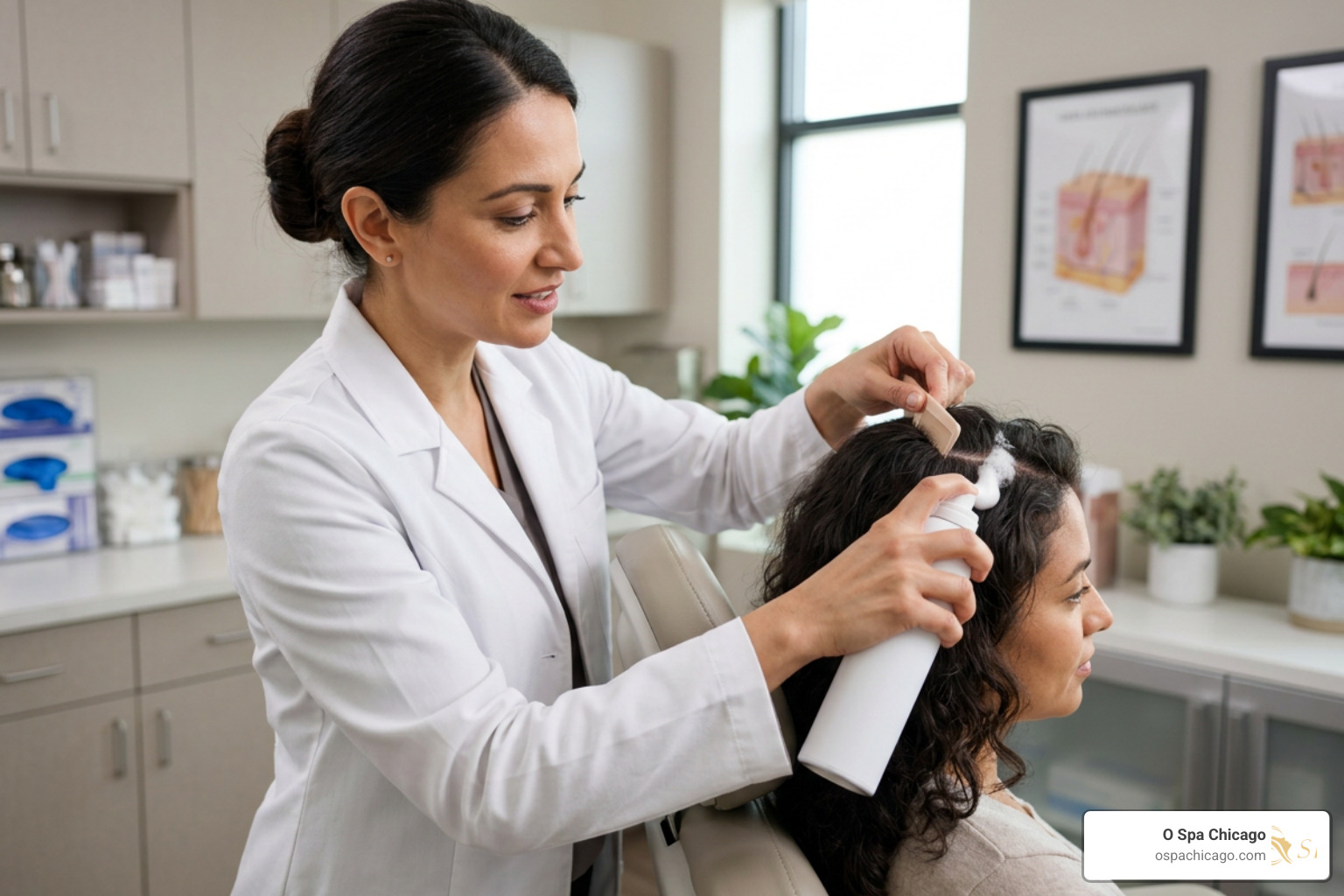
Prescription topicals come in a wide variety of formulations, including foams, sprays, lotions, gels, and shampoos. This variety is crucial because patient formulation preferences directly impact treatment adherence. For instance, some people dislike heavy ointments or greasy lotions that weigh down their hair, preferring lightweight foams or quick-drying sprays. Conversely, individuals with highly textured hair or very dry scalps may prefer moisturizing oils or rich lotions. Finding a vehicle that fits your daily routine and hair type is essential for long-term success.
When to Seek a Prescription for the Best Scalp Treatment for Psoriasis
If you have been using OTC medicated shampoos consistently for four weeks without experiencing a noticeable reduction in redness, scaling, or itching, it is highly recommended to consult a medical professional. Moderate-to-severe plaques require stronger anti-inflammatory interventions.
Dermatologists frequently prescribe high-potency corticosteroids, such as clobetasol propionate shampoo, which can be safely used daily for up to four weeks to bring acute flare-ups under control. Another highly targeted prescription option is tazarotene, a topical retinoid that helps normalize skin cell shedding. An example of this class of treatment is DailyMed – PSO THERA SCALP PSORIASIS- tazaratone shampoo , formulated with tazarotene 0.05% to directly control flaking and soothe inflammation.
However, potent corticosteroids must be managed carefully. Prolonged, unmonitored use can lead to local adverse reactions, such as skin thinning (atrophy), burning, folliculitis, or even systemic absorption leading to Hypothalamic-Pituitary-Adrenal (HPA) axis suppression.
If you are located in the Chicago area and need a professional medical diagnosis or a prescription-strength treatment plan, we recommend consulting a board-certified dermatologist to evaluate your symptoms and discuss clinical options.
The Power of Combination Therapy: Corticosteroids and Vitamin D Analogs
One of the most significant breakthroughs in topical psoriasis management is the combination of a potent corticosteroid with a vitamin D analog, specifically calcipotriene and betamethasone dipropionate. These two components work synergistically: the corticosteroid rapidly suppresses inflammation and itching, while the vitamin D analog slows down skin cell production and encourages normal cell maturation.
This combination is highly effective. According to the Calcipotriol plus betamethasone dipropionate gel compared with calcipotriol scalp solution in the treatment of scalp psoriasis: a randomized, controlled trial investigating efficacy and safety in a Chinese population , patients using the two-compound gel achieved an impressive 87.5% disease control rate at week 4, compared to just 50.8% of those using calcipotriol solution alone. Furthermore, the combination gel resulted in significantly fewer adverse drug reactions (18.6% vs 33.1%).
For detailed safety guidelines and dosage limits on this combination, refer to the HIGHLIGHTS OF PRESCRIBING INFORMATION for Taclonex Scalp. This treatment is typically applied once daily for up to 8 weeks, with a strict weekly limit of 100 grams to minimize the risk of hypercalcemia (excess calcium in the blood) and HPA axis suppression.
Emerging Non-Steroidal Topicals: Tacrolimus Microemulsions
To avoid the long-term risks of steroid-induced skin thinning, researchers have focused on developing non-steroidal alternatives. Topical calcineurin inhibitors, such as tacrolimus, have emerged as excellent options for sensitive areas like the face, hairline, and scalp.
Because the scalp has a thick epidermal barrier and hair follicles that block standard ointments, specialized delivery systems are required. A recent clinical breakthrough highlighted in the Efficacy and Safety of Topical Tacrolimus Microemulsion Applied Twice Daily in Patients with Mild to Moderate Scalp Psoriasis study demonstrates the power of microemulsion technology. Microemulsions feature low-viscosity vehicles with excellent spreadability and unique keratoemulsifying properties. This allows the active tacrolimus to penetrate deep into the skin via diffusion and solvent drag, successfully reducing epidermal hyperplasia without causing skin atrophy.
Advanced Interventions: Phototherapy, Systemics, and Biologics
When scalp psoriasis covers a large portion of the body or remains completely resistant to topical treatments, dermatologists escalate care to advanced systemic or light-based therapies.
Phototherapy and Laser Treatments for the Scalp
Phototherapy uses specific wavelengths of ultraviolet light to slow rapid skin cell growth and reduce inflammation. However, because hair acts as a natural shield against UV rays, traditional light boxes are often ineffective for scalp-focused treatment.
To overcome this, dermatologists utilize specialized tools:
- Handheld UVB Combs: These devices feature fiber-optic teeth that part the hair, allowing therapeutic narrowband UVB light to reach the scalp directly.
- 308-nm Excimer Lasers: A highly concentrated, targeted beam of UVB light is applied directly to the plaques. Studies show that patients can achieve significant scalp clearance after a series of twice-weekly, 10-minute sessions over several weeks.
- Excimer Lamps: Useful for treating broader areas of the scalp quickly and efficiently.
Systemic Medications and Biologics for Stubborn Plaques
For severe, stubborn cases, oral medications and injectable biologics provide systemic relief by targeting the root of the immune system’s overactivity:
- Oral Systemics: Traditional medications like methotrexate and cyclosporine help suppress the overactive immune response. Newer oral options include apremilast (a PDE-4 inhibitor), which clinical trials show cleared or almost cleared scalp plaques in 43% of patients by week 16.
- Biologics: These advanced therapies are grown from living cells and target highly specific inflammatory pathways. Biologics targeting interleukin-17 (IL-17) and interleukin-23 (IL-23)—such as secukinumab, ixekizumab, and guselkumab—have shown exceptional, rapid clearance rates specifically for scalp involvement, often restoring the skin to a completely clear state within 12 to 16 weeks.
Best Practices for Scalp Application and Hair-Friendly Care
Applying treatments to the scalp requires a delicate touch. Aggressive rubbing, scratching, or picking at scales can trigger the Koebner phenomenon—a well-documented medical occurrence where skin injury causes new psoriasis plaques to form in that exact spot.
To protect your hair and scalp, we recommend exploring our comprehensive resource, The Ultimate Guide to Scalp and Hair Treatment. If you are trying to differentiate between dry skin and active plaque buildup, our guide on The Best Dry Scalp and Dandruff Treatment Options for Instant Relief offers excellent diagnostic tips.
Step-by-Step Scale Removal and Application Technique
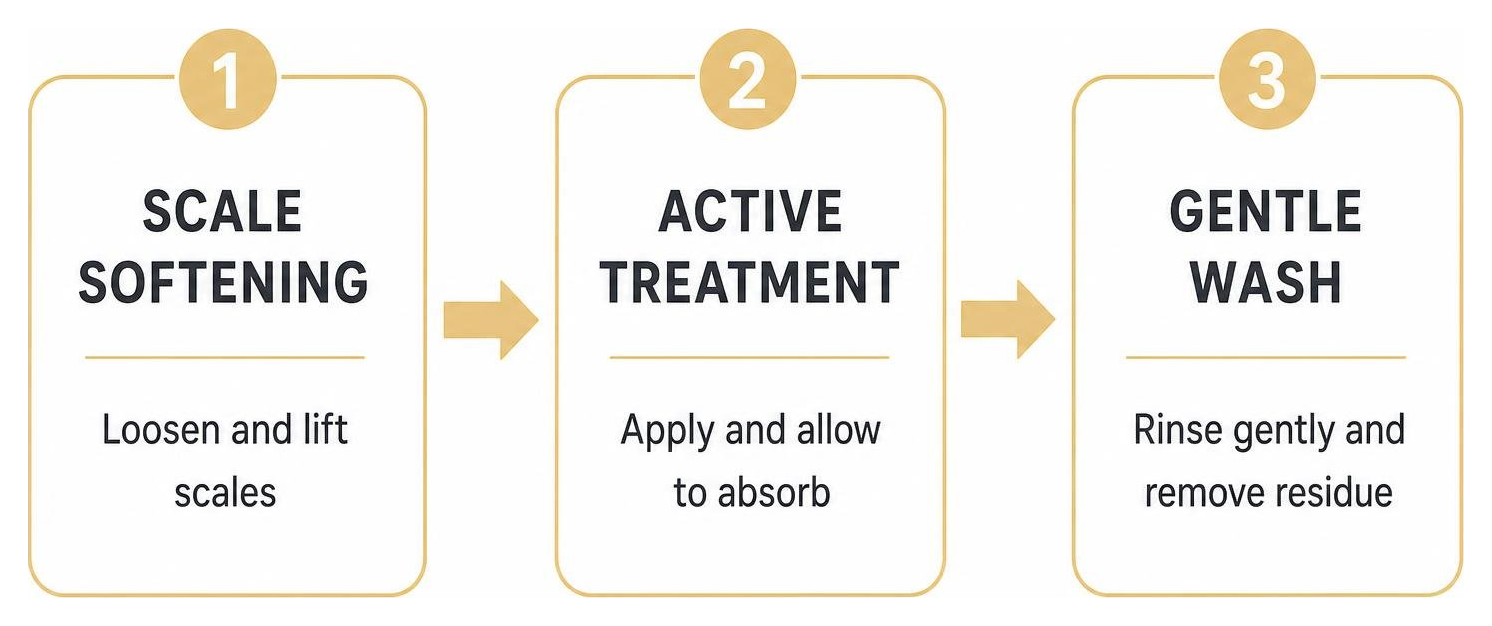
To safely remove scale and apply your medicated treatments without causing hair breakage or scalp irritation, follow this gentle, step-by-step sequence:
- Soften the Scale: Before applying medicated shampoos or steroids, apply a gentle emollient, natural oil, or dimethicone-based solution directly to the thick plaques.
- Occlude (Optional): Cover your head with a plastic shower cap for 30 to 60 minutes. This traps moisture and allows the oil to deeply penetrate and loosen the scales.
- Gentle Combing: Use a wide-tooth comb or a soft brush to gently lift away the softened scales. Never force or scrape a scale off if it is still firmly attached to the scalp.
- Apply Active Treatment: Part your hair section-by-section and apply your medicated shampoo, foam, or lotion directly to the exposed skin of the scalp, not the hair shafts.
- Wash Out Residue: Wash your hair with a gentle, non-medicated moisturizing shampoo to remove any medicinal scent or oily residue. To restore deep hydration to your hair strands after using drying medicated products, try one of the nourishing options found in Say Goodbye to Dry Hair with These Chicago Spa Hair Masks.
Frequently Asked Questions About Scalp Psoriasis
Can scalp psoriasis cause permanent hair loss?
Fortunately, scalp psoriasis itself does not usually cause permanent hair loss. However, the intense inflammation, combined with vigorous scratching or pulling off tight scales, can lead to temporary hair shedding (a condition known as telogen effluvium). Once the inflammation is controlled and the plaques clear, your hair follicles will typically recover, and normal hair regrowth will resume.
How long does it take to see results from scalp treatments?
Psoriasis is a chronic condition, and healing takes time. While high-potency corticosteroids can reduce itching and redness within a few days, it generally takes 4 to 8 weeks of consistent daily treatment to achieve adequate control over thick plaques. Patience, consistency, and close communication with your dermatologist are key.
Can I dye or color my hair if I have scalp psoriasis?
Yes, but timing is everything. The harsh chemicals in hair dyes, bleaches, and perms can cause severe chemical irritation and trigger a massive psoriasis flare-up. It is best to schedule hair color appointments during periods of remission when your scalp is clear. Always ask your stylist to perform a patch test first, and ensure they avoid applying chemicals directly to any active plaques.
Conclusion
Managing scalp psoriasis is a journey that requires a balance of medical science, gentle daily care, and a holistic approach to wellness. Whether you are using a targeted over-the-counter salicylic acid shampoo, starting a prescription combination gel, or exploring advanced systemic therapies, the ultimate goal is to restore comfort, confidence, and health to your skin.
At O Spa Chicago, located in the heart of River North, Chicago, IL, we believe in supporting your skin and scalp health through premium, personalized wellness experiences. While we do not provide medical treatments or write prescriptions, our luxury day spa offers deeply soothing, organic scalp treatments, professional hair masks, and relaxing wellness rituals designed to pamper your hair and lower stress—a known trigger for psoriasis flares.
If you are ready to treat yourself to a peaceful escape, we welcome walk-ins and same-day appointments. Explore our full range of organic treatments on our Spa Services page, or melt away tension with our restorative Massage Services. Let us help you look and feel your absolute best!