From Braces to Kyphoplasty: The Practical Guide to Fractured Back Treatment
October 3, 2026
A Comprehensive Guide to Effective Back Pain Relief
October 8, 2026
What Is the Best Oil for Head Massage?
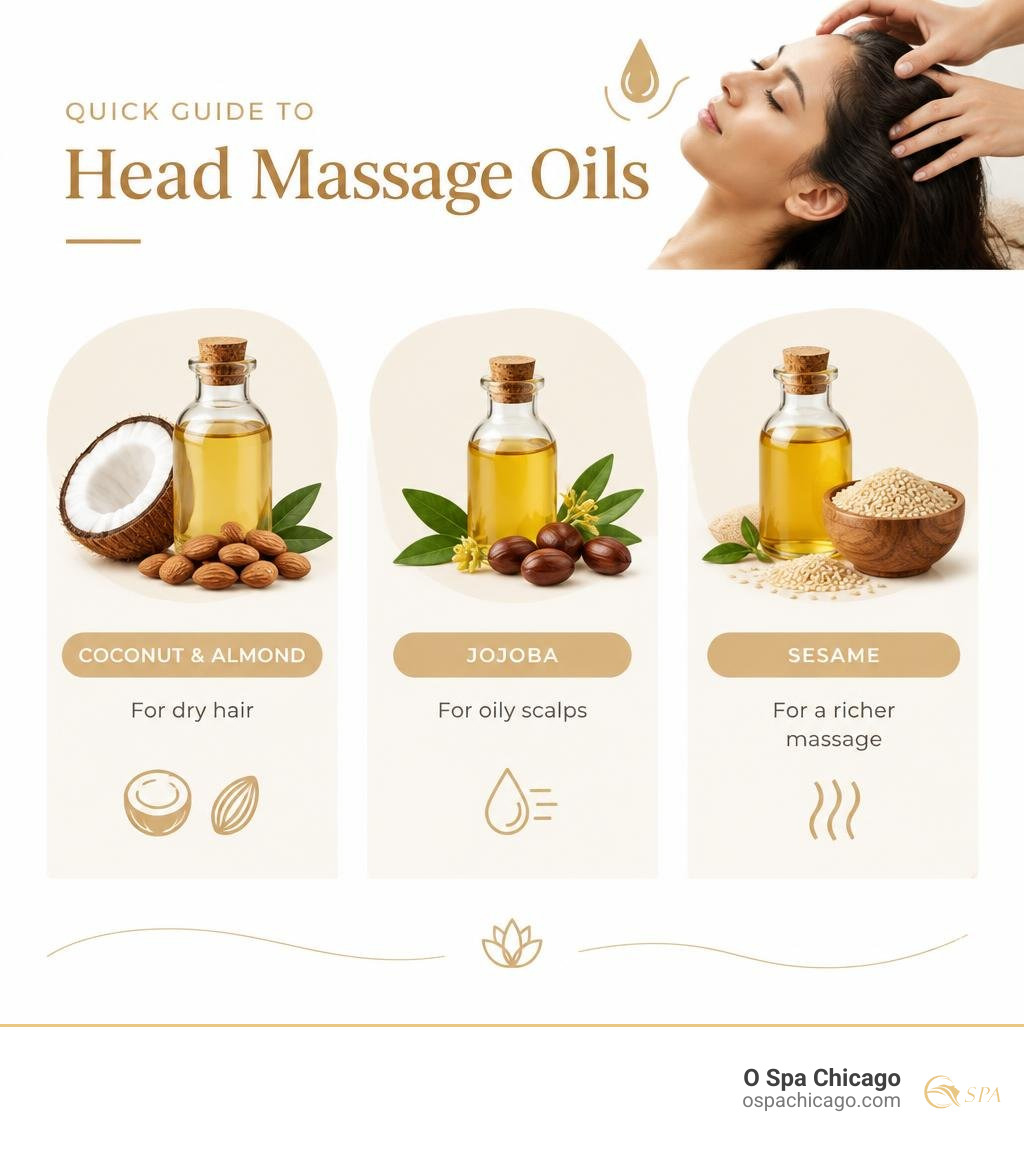
The best oil for head massage depends on your scalp. Try coconut or sweet almond oil for dry hair, lightweight jojoba for an oily scalp, and sesame oil if you prefer a richer, warming massage. If your scalp is sensitive, start with a plain, fragrance-free carrier oil and test a small area first.
A gentle massage can ease scalp tension and help you unwind, even when you have only a few minutes. Oil adds slip and can leave hair feeling softer, but no single oil is a proven fix for hair loss.
I’m June Liu, owner of O Spa Chicago, where I focus on personalized hair, scalp, and wellness care. That experience shapes how I help people choose the best oil for head massage: start with what feels comfortable on your scalp.
Best oil for head massage terminology:
How to Select the Best Oil for Head Massage: Carrier Oils Compared
When performing a rejuvenating cranial treatment, the base oil you select acts as the primary vehicle delivering hydration, barrier restoration, and mechanical glide. Carrier oils are cold-pressed vegetable and seed lipids packed with fatty acids, vitamins, and antioxidants. Rather than sitting passively on your skin, they interact directly with your scalp’s hydrolipidic barrier.
Understanding the specific viscosity, fatty acid profile, and comedogenic rating of each carrier allows you to tailor your session to your exact dermal needs. To help you navigate these options, consider our comprehensive overview in the ultimate guide to scalp and hair treatment.
| Carrier Oil | Viscosity | Primary Fatty Acid | Scalp Type Suitability | Absorption Rate |
|---|---|---|---|---|
| Sweet Almond | Medium-Light | Oleic & Linoleic Acid | Normal to Dry / Sensitive | Moderate |
| Virgin Coconut | Heavy (Solid <76°F) | Lauric Acid | Very Dry / Thick Coarse Hair | Slow to Moderate |
| Sesame Oil | Medium-Heavy | Linoleic & Oleic Acid | Dry / Aging / Stressed | Moderate |
| Jojoba Oil | Lightweight | Gadoleic Acid (Wax Esters) | Oily / Acne-Prone / Balanced | Fast |
| Argan Oil | Light-Medium | Oleic & Linoleic Acid | Frizzy / Brittle / Flaky | Fast |
| Grapeseed Oil | Very Light | Linoleic Acid | Fine Hair / Highly Congested | Very Fast |
Sweet Almond, Coconut, and Sesame Bases

These classic oils have served as the foundation for restorative head treatments for millennia, each offering unique biological advantages:
- Sweet Almond Oil: Rich in vitamins A and E, sweet almond oil delivers optimal slip without feeling suffocating. Its balanced profile of oleic and linoleic acids makes it exceptionally gentle for inflamed or sensitive skin.
- Virgin Coconut Oil: Celebrated for its high concentration of lauric acid—a medium-chain fatty acid with a low molecular weight—coconut oil can penetrate deep into the hair shaft rather than merely coating the cuticle. It is cooling in nature, making it ideal for soothing heated, irritated scalps.
- Black or White Sesame Oil: Considered the premier base in classical wellness traditions, unrefined sesame oil is naturally warming and deeply penetrating. It is rich in sesamol and sesamolin, natural antioxidants that help protect delicate dermal tissues while softening stiff scalp muscles during cool seasons.
Jojoba, Argan, and Lightweight Balancers
If you struggle with product buildup or an overactive sebaceous system, heavy lipids can leave your roots feeling weighed down. In these cases, lighter botanical oils provide ideal nourishment:
- Jojoba Oil: Technically a liquid wax ester rather than a true fat, jojoba almost perfectly mirrors human sebum. This unique chemical structure allows it to dissolve hardened sebaceous plugs around hair follicles while sending regulatory signals to normalize natural oil production. To explore how non-comedogenic hydration transforms hair vitality, read our guide to hydrate your head with these scalp moisturizers.
- Argan Oil: Packed with natural squalene, polyphenols, and vitamin E, argan oil absorbs rapidly to smooth frayed hair cuticles and calm flaking without leaving greasy residue.
Classical Ayurvedic Botanical Oils for Scalp and Mind
The art of oil-based head massage traces back over 3,000 years to the foundational texts of Ayurveda, such as the Charaka Samhita. In this holistic tradition, cranial oil massage is known as Shiroabhyanga.
Shiroabhyanga is designed not only to condition the hair but to balance the three biological energies or doshas:
- Vata (Air/Ether): Prone to dryness, flaking, and mental restlessness; pacified by warming sesame and almond oils.
- Pitta (Fire/Water): Prone to scalp inflammation, excess heat, and thinning; pacified by cooling coconut and herbal preparations.
- Kapha (Earth/Water): Prone to sluggish microcirculation and oiliness; balanced by lightweight, stimulating herbal oils.
Discover more about these traditional preparations in our article on the ancient botanical power of ayurvedic hair oil for hair growth.
What Is the Best Oil for Head Massage for Hair Growth?
When individuals ask about natural vitality and strand retention, botanical infusions derived from classical remedies remain the gold standard.
- Bhringraj (Eclipta alba): Revered as the “King of Hair,” Bhringraj is traditionally cooked into a sesame or coconut base. It helps revitalize dormant follicles and support hair density. For more evidence-based routines, see how thicker hair awaits with top growth treatments.
- Brahmi (Bacopa monnieri): Formulations like classical Brahmi Thailam utilize Medhya (mind-clarifying) botanicals. Brahmi calms localized inflammation and strengthens fragile roots, balancing excess heat around the crown.
Calming Medhya Botanicals for Stress and Sleep
Modern laboratory evaluations increasingly validate traditional cranial formulations. A prominent example is Jatamansi (Nardostachys jatamansi), a rhizome celebrated for calming the central nervous system.
In clinical characterizations using GC-MS analytical profiling, researchers identified 18 distinct bioactive peaks in Jatamansi-infused sesame oil compared to plain carrier oil (Chavan et al., 2024). These bioactive sesquiterpenes enhance cutaneous absorption and trigger neuro-sensory relaxation, providing psychological support and improving sleep quality when massaged into the scalp. For a deeper look at the standardization of this traditional preparation, see the PMC study on Nardostachys jatamansi head massage oil.
Tailoring Oils and Aromatherapy to Your Scalp Condition
Personalizing your massage formula ensures you address your specific scalp environment while enjoying an elevated sensory experience. To learn more about full-spectrum hair wellness, explore the complete guide to effective hair treatments.
How to Choose the Best Oil for Head Massage by Scalp Type
- Dry, Tight, or Flaking Scalp: Opt for oleic-rich carriers like sweet almond, virgin coconut, or avocado oil. These replenish depleted intercellular lipids and soften dry scales.
- Oily or Congested Scalp: Select lightweight, linoleic-rich lipids such as jojoba or grapeseed oil. Follow your massage with a balancing cleanse using our recommendations to get your head in the game with the best scalp care shampoo.
- Sensitive or Irritated Scalp: Use pure, cold-pressed fractionated coconut or jojoba oil infused with soothing botanicals like chamomile or calendula.
Essential Oil Enhancements for Scalp Stimulation
Adding 100% pure essential oils transforms your routine into a targeted aromatherapy ritual. Because essential oils are highly concentrated, always maintain a safe dilution ratio of 1% to 2% (approximately 3 to 6 drops of essential oil per 1 tablespoon / 15 ml of carrier oil):
- Rosemary Essential Oil (Rosmarinus officinalis): Renowned for invigorating microcirculation to hair follicles and delivering a fresh, tingling sensation.
- Lavender Essential Oil (Lavandula angustifolia): Delivers a gentle floral aroma that eases systemic stress, supports restorative sleep, and comforts irritated skin.
- Peppermint Essential Oil (Mentha piperita): Contains menthol to provide a cooling rush that stimulates sluggish scalp blood flow.
Note: Always perform a 24-hour patch test on your inner forearm before applying essential oil blends to your head.
Step-by-Step DIY Scalp Massage and Marma Point Activation
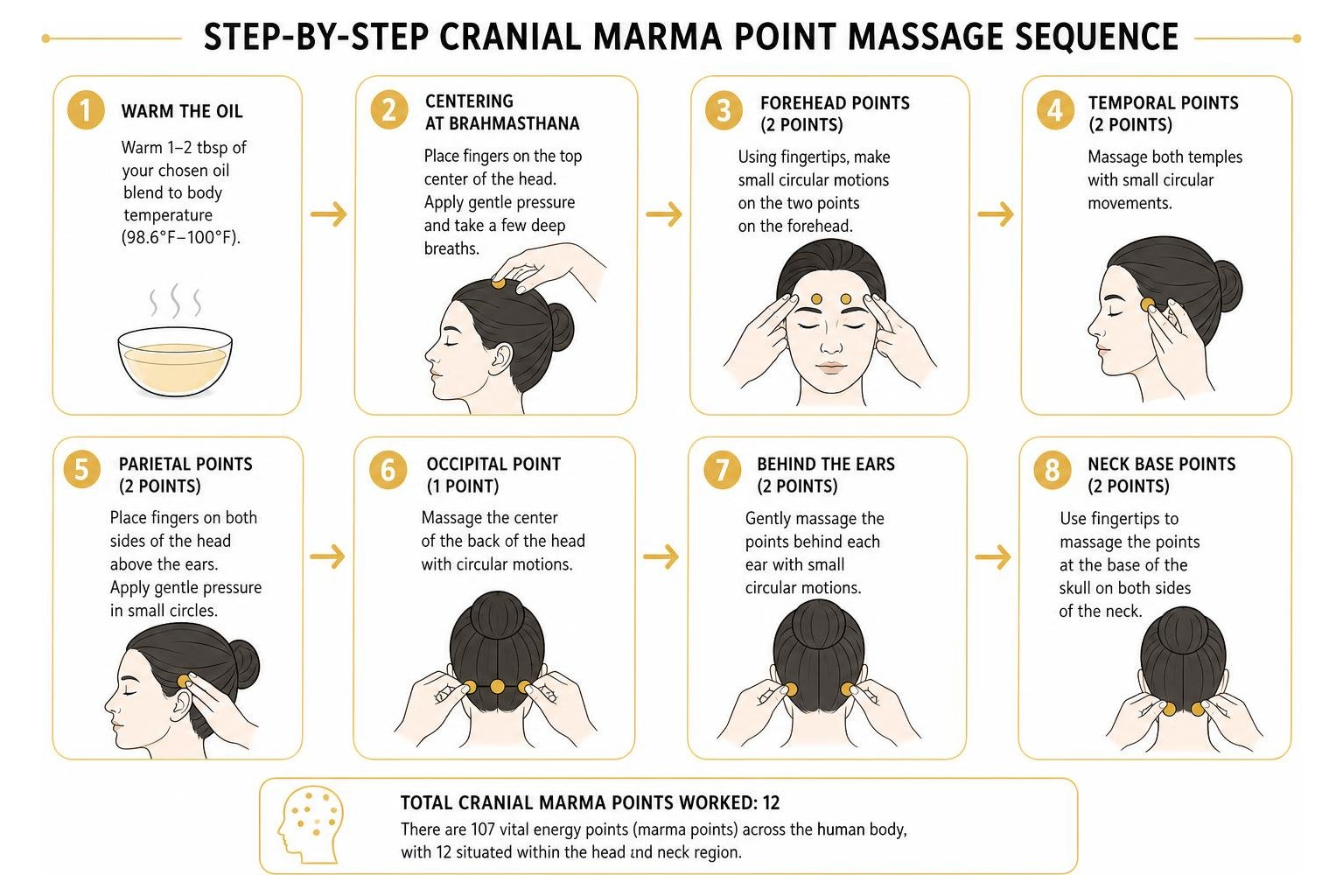
There are 107 vital energy points (marma points) across the human body, with 12 situated within the head and neck region. Stimulating these junctions during a massage enhances nervous system regulation, cranial lymphatic drainage, and circulatory flow.
Follow this step-by-step protocol to perform a professional-grade massage at home:
- Warming the Oil: Place 1 to 2 tablespoons of your chosen oil blend into a small heat-safe glass bowl. Warm it using a gentle double-boiler method until it reaches approximately body temperature (98.6°F to 100°F).
- Sectioning & Application: Part your hair down the center. Using your fingertips or a glass dropper, apply warm oil directly along the exposed scalp line. Create additional parallel parts across your head until the entire scalp is lightly coated.
- Activating Key Marma Points:
- Adhipati Marma (The Crown): Located at the highest point of the skull. Place the palm of your dominant hand flat over this center and apply gentle, circular rhythmic compressions.
- Simanta Marma (The Parting Lines): Use the pads of your fingers to perform sweeping, wave-like friction strokes along the sagittal suture from forehead to occiput.
- Sthapani Marma (Third Eye Center): Apply gentle circular thumb pressure between the eyebrows to dissolve ocular tension and mental fatigue.
- Krikatika & Manya Marmas (Occipital Base & Neck): Knead the muscular junctions where your skull meets the cervical spine using firm, upward strokes.
- Circulation Friction: Using the pads of all ten fingers (never your nails), apply medium circular pressure across the parietal sides, moving from the ears toward the crown.
- Warm Towel Wrap: Dampen a small cotton towel with warm water, wring out excess moisture, and wrap it around your oiled head for 10 to 15 minutes. The gentle steam opens hair cuticles and facilitates deep lipid absorption.
Frequently Asked Questions About Head Massage Oils
How long should you leave oil in your hair after a head massage?
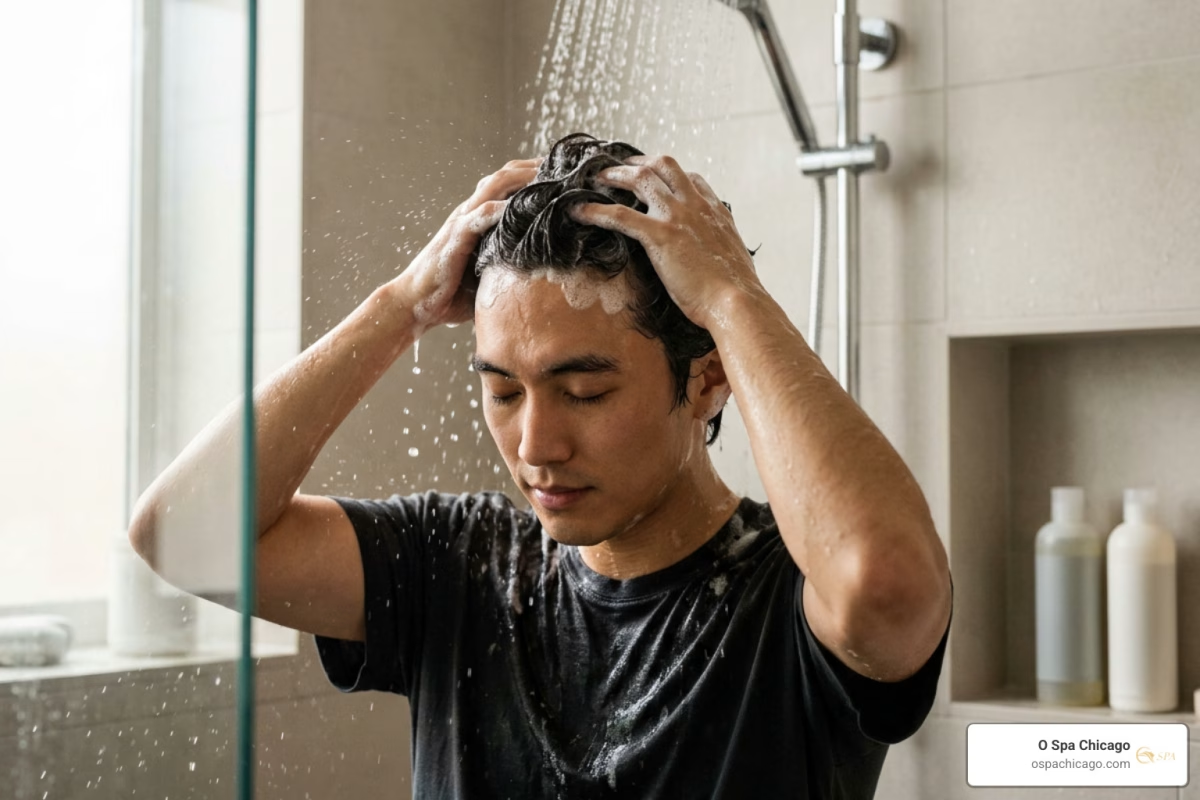
For optimal results, leave the oil on your scalp for 30 to 60 minutes. This timeframe allows the lipids and botanical compounds to penetrate the dermal layers and hair shafts. If you have severely dry hair or are using calming herbs like Jatamansi before bed, you can leave the oil on overnight wrapped in a silk scarf or soft towel turban. When washing it out, apply shampoo directly onto dry, oiled roots before adding water to emulsify the oils smoothly.
Can you perform an effective head massage without oil?
Yes. A dry scalp massage using clean fingertips or a soft silicone scalp massager is an excellent daily practice. Dry massage helps mobilize the galea aponeurotica (the fibrous scalp layer), stimulates microcirculation, and relieves cranial tension without requiring an immediate wash cycle.
What are the main contraindications for a scalp massage?
You should avoid vigorous cranial massage if you have:
- Open lesions, active abrasions, or unhealed scalp wounds
- Severe fungal infections or acute bacterial folliculitis
- An active migraine flare-up (where pressure may exacerbate throbbing sensations)
- Systemic fever or acute illness
Conclusion
Elevating your personal wellness routine with a warm oil scalp massage bridges time-tested botanical traditions and modern self-care. By thoughtfully selecting a carrier oil tailored to your scalp’s unique microbiome and pairing it with targeted botanical extracts, you can transform a simple weekly ritual into a deeply restorative practice.
If you are in the Chicago area and seeking an elevated wellness experience, visit us at O Spa. Located in River North, we invite you to unwind with our customized, organic scalp treatments, revitalizing facials, and professional rejuvenating spa services.
References
Chavan Bhagwan S, Gupta VS, Deshmukh VV, Sardeshmukh SS, Sardeshmukh SP. “Standardization and preliminary characterization of an ayurvedic stress-relieving head massage oil of Nardostachys jatamansi DC..” Journal of Ayurveda and integrative medicine, 2024. PMCID PMC10992859.