Chicago’s Best Kept Secrets for Swedish Massage and Scalp Therapy
September 26, 2026
The Ultimate Guide to Swedish Bodywork Benefits
October 1, 2026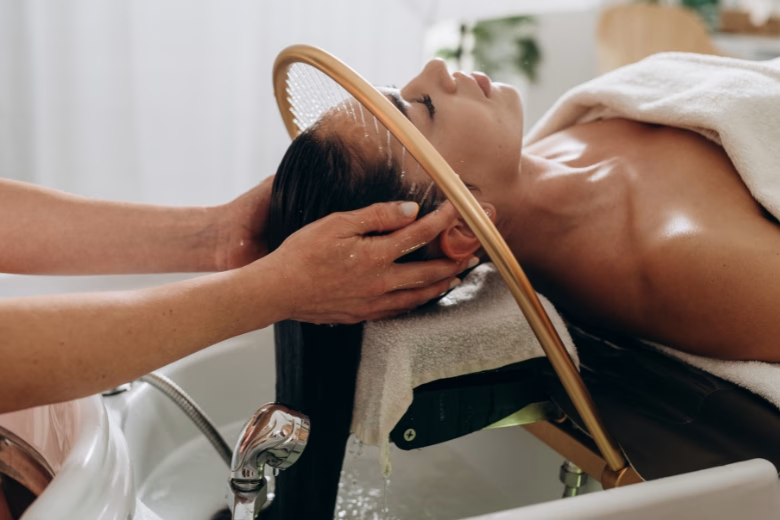
Find the Best Scalp Care Shampoo for Your Needs
The best scalp care shampoo is the one that matches the problem on your scalp, not just your hair type. Choose a gentle, hydrating formula with ingredients such as glycerin, hyaluronic acid, or ceramides for dryness and itch. Choose an anti-dandruff active, such as salicylic acid, piroctone olamine, zinc pyrithione, or selenium sulfide, for persistent flakes, oil, and dandruff. If your scalp is sensitive or eczema-prone, start with a fragrance-free, sulfate-free cleanser and avoid harsh scrubs or heavily scented oils.
A healthy scalp should feel comfortable: not tight, overly oily, itchy, red, or covered in buildup. The right shampoo can remove sweat, oil, and styling residue without stripping the protective barrier your scalp needs to stay balanced.
I am June Liu, owner of O Spa Chicago, where I focus on personalized, holistic care for hair, scalp, and skin. In this guide to the best scalp care shampoo, I will help you narrow down the ingredients and formulas worth your time, so your routine delivers visible comfort without adding another complicated step to your day.
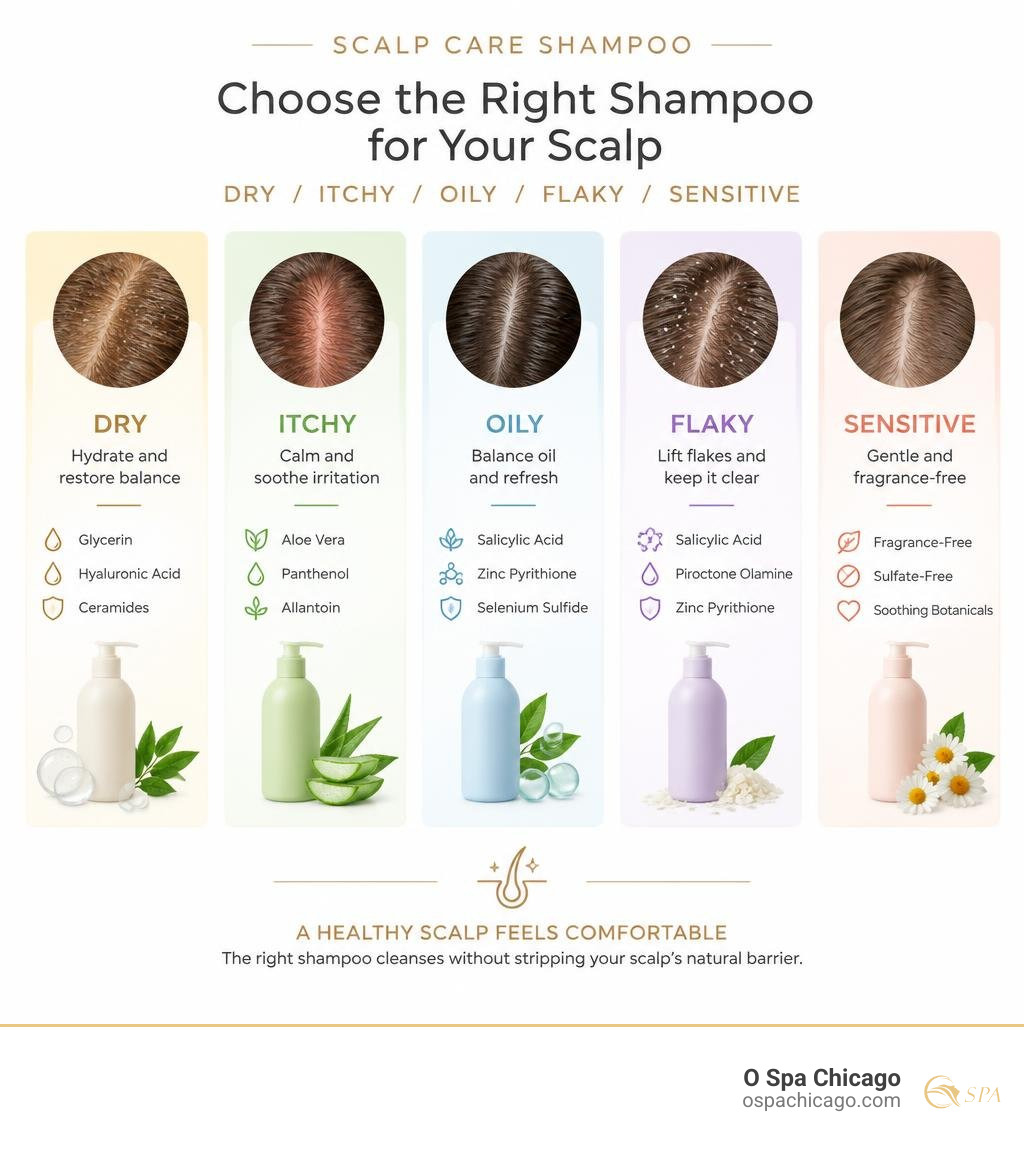
Best scalp care shampoo vocabulary:
- best medicated shampoo for seborrheic dermatitis
- best natural shampoo for seborrheic dermatitis
- healthy scalp products
Decoding Your Scalp Concerns: Dryness, Dandruff, and Oiliness
Understanding what is happening at root level makes choosing a cleanser straightforward. Up to 99% of your hair’s natural nourishment and strength comes from your scalp. When the skin barrier is irritated or off-balance, your follicles cannot perform at their peak.
Many people mistake dry scalp flakes for dandruff, yet they require entirely different treatment strategies.
| Feature | Dry Scalp | True Dandruff (Pityriasis Capitis) | Seborrheic Dermatitis |
|---|---|---|---|
| Primary Cause | Lack of moisture, cold weather, harsh surfactants | Overgrowth of Malassezia yeast feeding on sebum | Inflammatory reaction to yeast and excess oil |
| Flake Texture | Tiny, dry, white, powder-like | Large, oily, clumped, yellowish or white | Thick, sticky, greasy yellowish plaques |
| Scalp Sensation | Tightness, pulling, mild diffuse itch | Persistent itch, localized stinging | Intense itch, burning, tender redness |
| Oil Production | Low to normal sebum | Moderate to high sebum | Excessively oily |
| Ideal Shampoo Focus | Barrier repair, humectants (Hyaluronic acid, Urea) | Antifungals (Zinc Pyrithione, Piroctone Olamine) | Keratolytics & Antifungals (Salicylic acid, Selenium sulfide) |
Selecting between targeted dry scalp and dandruff treatment options starts with diagnosing whether your skin barrier lacks moisture or suffers from a microbial imbalance.
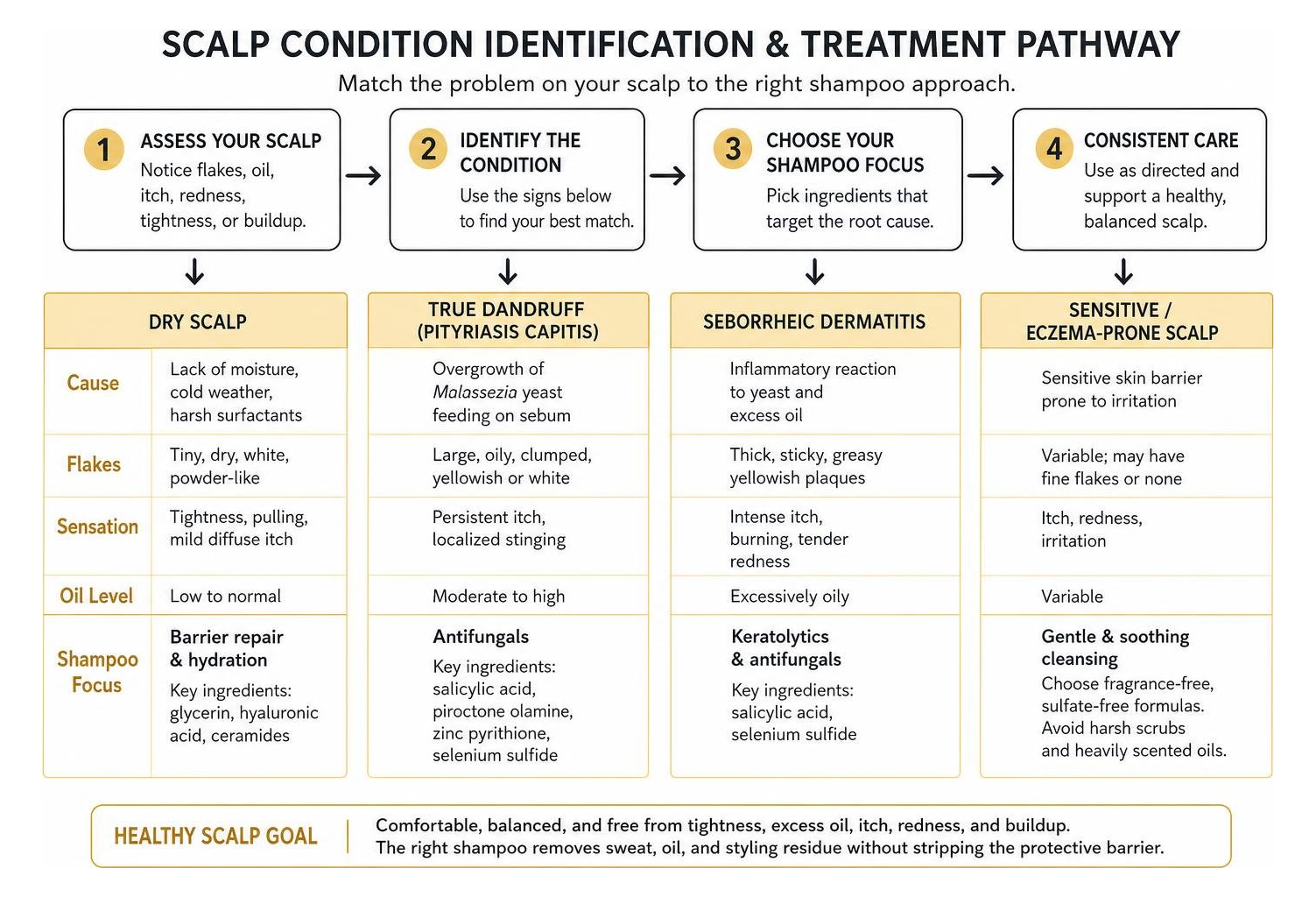
Dry Scalp vs. True Dandruff: Identifying the Root Cause
A dry scalp occurs when the skin loses hydration, often triggered by indoor heating, cold outdoor winds, or aggressive sulfates that strip natural sebum. The result is fine, white flakes that fall easily onto your shoulders, accompanied by a feeling of tight skin. In these cases, reaching for a medicated anti-dandruff shampoo can dry the tissue out even more. Instead, replenishing hydration with soothing products for an itchy dry scalp calms irritation quickly.
True dandruff stems from an overgrowth of Malassezia, a lipid-loving yeast naturally present on human skin. When Malassezia feeds on excess sebum, it produces oleic acid byproducts that trigger rapid skin cell turnover. This leads to larger, clumped, oily flakes that cling to the hair shafts.
Oily Buildup, Seborrheic Dermatitis, and Follicle Clogging
When excess sebum combines with dead skin cells and styling products, it forms a stubborn layer over the follicles. Left unaddressed, this oily accumulation can progress into seborrheic dermatitis, presenting with inflamed, red patches and thick, yellowish scales.
Using a targeted medicated shampoo for seborrheic dermatitis helps clear scale buildup and suppress microbial activity, restoring clarity to the follicle openings without causing structural damage to your hair lengths.
How to Choose the Best Scalp Care Shampoo for Your Scalp Type
Finding the right bottle requires balancing the needs of your scalp skin with the demands of your hair strands. Fine hair gets weighed down easily by rich oils, while coarse or textured hair requires formulas that protect fragile strands from moisture loss while treating the roots.

To build a routine that works, review comprehensive scalp and hair treatment protocols to see how in-salon clarifying and botanical steam therapies can support your home regimen.
Top Active Ingredients in the Best Scalp Care Shampoo Formulas
When evaluating shampoo labels, look for proven ingredients that address specific biological mechanisms:
- Zinc Pyrithione (1%): An antifungal and antibacterial agent that reduces Malassezia populations to relieve itching and flaking. Head & Shoulders utilizes this active in formulas like their Supreme Soothe & Strengthen Shampoo.
- Piroctone Olamine: A gentle antifungal agent that protects the scalp microflora and strengthens the cutaneous barrier against flaking.
- Salicylic Acid: A beta-hydroxy acid (BHA) that dissolves dead skin cell bonds, lifting scales and clearing congested hair follicles.
- Tea Tree Oil: A botanical essential oil packed with terpinen-4-ol, providing natural antimicrobial and anti-inflammatory relief for irritated roots.
- Hyaluronic Acid & Glycerin: Powerful humectants that draw water molecules into the stratum corneum, restoring deep tissue hydration. In consumer trials, 96% of participants using The Shampoo by Nécessaire with Hyaluronic Acid reported a more hydrated scalp, while 94% noticed reduced flaking over 12 weeks.
- Ceramides & Niacinamide (Vitamin B3): Essential lipids and vitamins that reinforce a compromised barrier, preventing trans-epidermal moisture loss. Formulations like Dove Scalp + Hair Therapy Hydrating Shampoo integrate Vitamin B3, Vitamin E, zinc, and peptides to nourish roots, with 92% of women reporting an instantly moisturized scalp.
For more inspiration on top-tier botanical cleansers and serums, explore curated edits of the best scalp treatments.
Finding the Best Scalp Care Shampoo for Sensitive and Eczema-Prone Skin
Scalps affected by atopic dermatitis, eczema, or contact allergies need hypoallergenic, non-stripping cleansers. Look for formulas bearing the National Eczema Association Seal of Acceptance. Avoid synthetic dyes, parabens, phthalates, and high concentrations of citrus extracts.
Colloidal oatmeal, soothing allantoin, and urea-infused formulations provide relief without stinging raw or broken skin. You can read an honest review of calming urea shampoo to see how urea gently softens stubborn flakes while locking in critical moisture.
Key Formulation Standards: Why Sulfate-Free and Fragrance-Free Matter
Harsh cleansing agents such as Sodium Lauryl Sulfate (SLS) and Sodium Laureth Sulfate (SLES) create rich lather, but they can strip away essential protective lipids. For compromised scalps, this disruption increases sensitivity and triggers reactive oil overproduction.
Opting for mild, plant-derived surfactants (such as sodium cocoyl isethionate or coco-glucoside) cleanses gently without compromising the skin’s acidic mantle (pH 5.5 to 6.5). Synthetic fragrances are among the top causes of cosmetic contact dermatitis. Fragrance-free formulas reduce the risk of allergic flare-ups, allowing active botanical extracts to soothe the tissue.
Pairing a mild cleanser with deeply hydrating scalp moisturizers keeps the skin supple between wash days.
Can Scalp Shampoos Prevent Thinning and Stimulate Growth?
While a shampoo cannot reverse genetic pattern baldness on its own, maintaining an unclogged, healthy scalp is vital for normal hair growth cycles. Chronic scalp inflammation, oxidative stress, and fungal buildup can cause premature hair shedding (telogen effluvium) and weaken anchoring around the hair bulb.

Key ingredients that support healthy density include:
- Rosemary Oil: Studies show rosemary extract improves microcirculation around the dermal papilla, supporting stronger strand growth.
- Peptides & Biotin: Strengthen the follicle matrix and improve elasticity along the root sheath.
- Caffeine: Penetrates the follicle to stimulate microcirculation and provide antioxidant defense against environmental stressors.
For persistent thinning, incorporating targeted effective hair growth treatments along with in-clinic scalp facials revitalizes sluggish follicles.
Scalp Care Routines: Usage Frequency and Best Practices
How you wash is just as important as the formula you use. Follow these practical steps to get the most out of your scalp care routine:
- Determine Your Frequency: Wash oily, active scalps daily or every other day to prevent sebum buildup. Wash dry, wavy, or coily hair types 1 to 2 times weekly with a hydrating cleanser.
- Master the Double Cleanse: If your scalp is oily or has styling buildup, use a clarifying shampoo first, followed by a treatment or hydrating shampoo on the second pass.
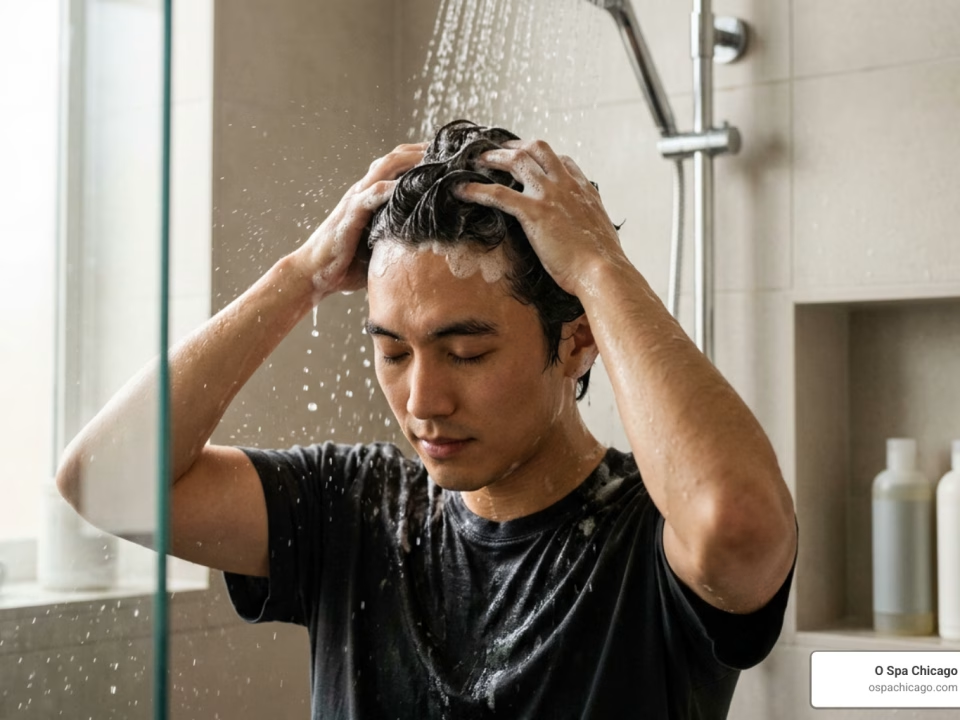
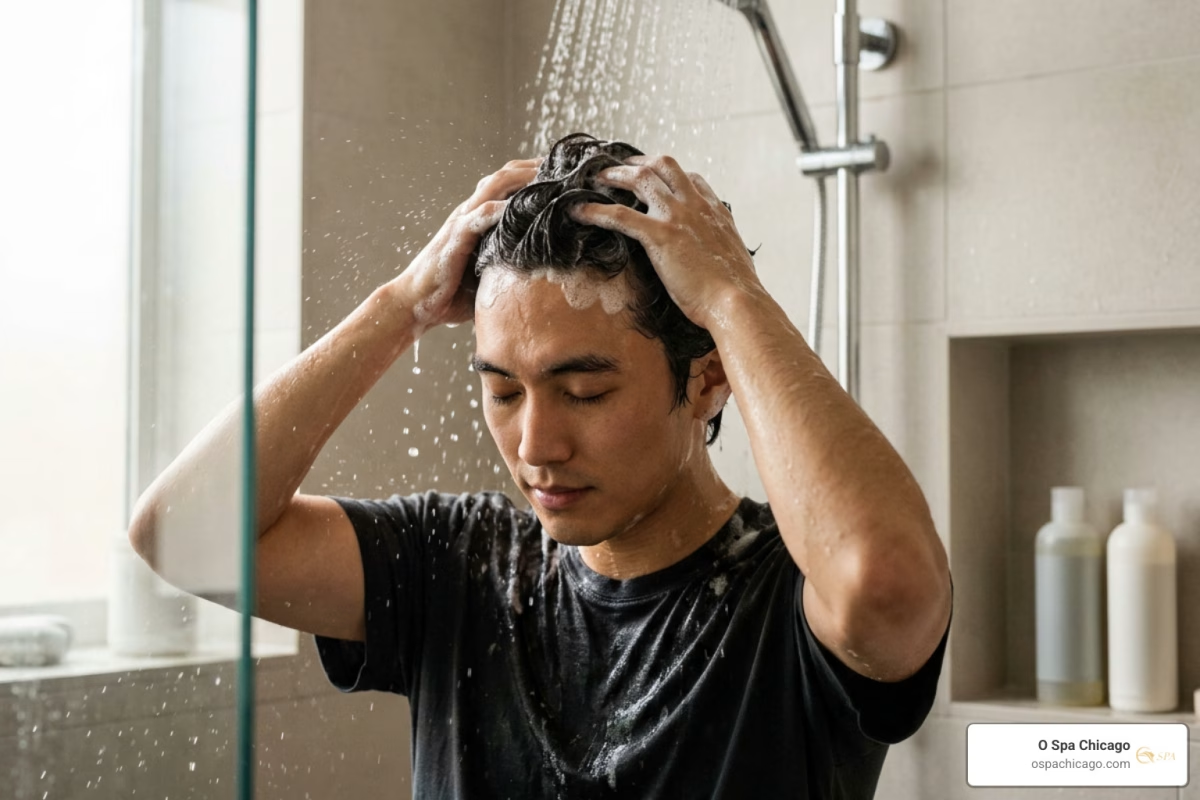
- Use Circular Massage Techniques: Work the lather into your roots using the soft pads of your fingertips (never your fingernails) in small circular motions for 60 to 90 seconds. This lifts dead skin and stimulates healthy blood flow.
- Mind the Water Temperature: Rinse with lukewarm water. Excessively hot water strips the skin barrier and triggers rebound redness.
Integrating regular weekly scalp care rituals ensures your skin stays balanced throughout changing seasons.
Frequently Asked Questions About Scalp Care Shampoos
What does a genuinely healthy scalp look like?
A healthy scalp is smooth, supple, and evenly toned with no visible redness, scaling, or flaking. Pores around each hair follicle should be clean and open, free from oily plugs or product buildup. Hair strands should emerge cleanly in small natural groupings from each follicle unit without tenderness or itching.
How long does it take for a scalp care shampoo to show visible results?
Hydrating formulas can relieve tightness and itching after the very first wash. For fungal dandruff or seborrheic dermatitis, anti-dandruff actives typically take 2 to 4 weeks of consistent use (2–3 times per week) to visibly reduce flaking, matching the skin’s natural 28-day cellular turnover cycle.
When should I see a dermatologist instead of relying on OTC shampoo?
Consult a board-certified dermatologist if you experience severe inflammation, painful crusting, cracked or bleeding skin, or yellow pus-filled bumps. You should also seek medical evaluation if over-the-counter formulas provide no improvement after 4 to 6 weeks, or if you notice sudden, patchy hair loss, which may indicate conditions like alopecia areata or scalp psoriasis.
Conclusion
Healthy, radiant hair starts with a well-balanced scalp. By identifying whether your scalp needs deep hydration, anti-dandruff actives, or gentle fragrance-free relief, you can choose a cleanser that keeps your roots clear and comfortable.
At O Spa Chicago, located in the heart of River North, we provide personalized head spa rituals, organic hair masks, and botanical scalp therapies tailored to your unique hair profile. Walk-ins and same-day appointments are always welcome. Explore our full menu of luxury organic spa services to experience dedicated root-to-tip care firsthand.